

Microphytobenthos in Contrasting Coastal Ecosystems: Biology and Dynamics
III
'"
• Gas
5
• Organic
. .
"0 ,
-;:;
oVitaJ
2
...
o Water
0
c
0
Mineral
-:::
"
E
...
Dry mud
Mixed bed
Wet sand
Dry sand
Wet mud
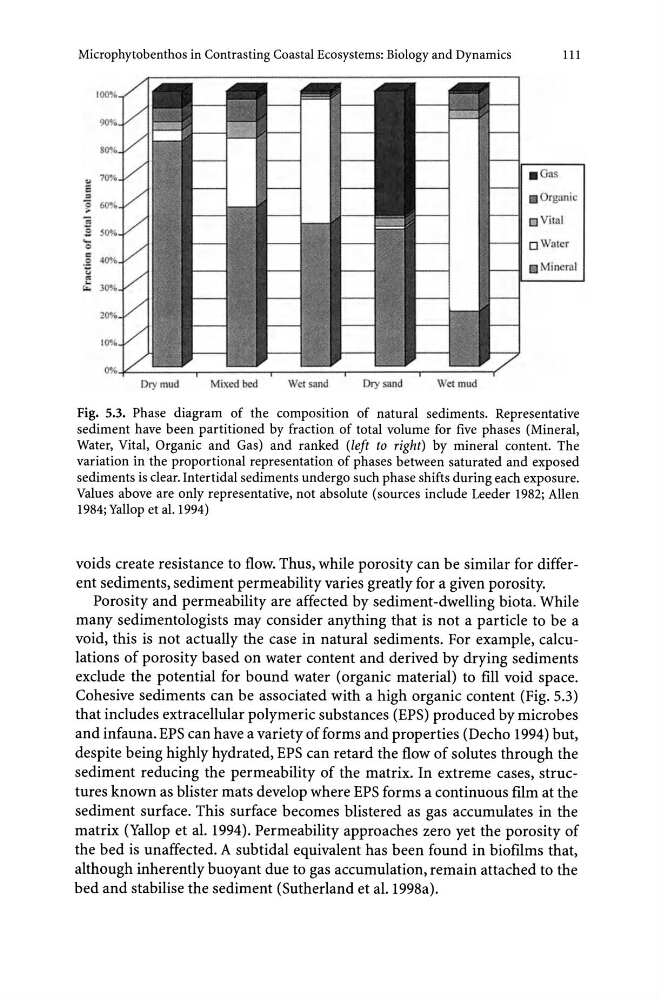
Fig. 5.3. Phase diagram of the compoSItion of natural sediments. Representative
sediment have been partitioned by fraction of total volume for five phases (Mineral,
Water, Vital, Organic and Gas) and ranked (left to right) by mineral content. The
variation in the proportional representation of phases between saturated and exposed
sediments is clear. Intertidal sediments undergo such phase shifts during each exposure.
Values above are only representative, not absolute (sources include Leeder 1982; Allen
1984; Yallop et al. 1994)
voids create resistance to flow. Thus, while porosity can be similar for different sediments, sediment permeability varies greatly for a given porosity.
Porosity and permeability are affected by sediment-dwelling biota. While
many sedimentologists may consider anything that is not a particle to be a
void, this is not actually the case in natural sediments. For example, calculations of porosity based on water content and derived by drying sediments
exclude the potential for bound water (organic material) to fill void space.
Cohesive sediments can be associated with a high organic content (Fig. 5.3)
that includes extracellular polymeric substances (EPS) produced by microbes
and in fauna. EPS can have a variety of forms and properties (Decho 1994) but,
despite being highly hydrated, EPS can retard the flow of solutes through the
sediment reducing the permeability of the matrix. In extreme cases, structures known as blister mats develop where EPS forms a continuous film at the
sediment surface. This surface becomes blistered as gas accumulates in the
matrix (Yallop et al. 1994). Permeability approaches zero yet the porosity of
the bed is unaffected. A subtidal equivalent has been found in biofilms that,
although inherently buoyant due to gas accumulation, remain attached to the
bed and stabilise the sediment (Sutherland et al. 1998a).
III
'"
• Gas
5
• Organic
. .
"0 ,
-;:;
oVitaJ
2
...
o Water
0
c
0
Mineral
-:::
"
E
...
Dry mud
Mixed bed
Wet sand
Dry sand
Wet mud
Fig. 5.3. Phase diagram of the compoSItion of natural sediments. Representative
sediment have been partitioned by fraction of total volume for five phases (Mineral,
Water, Vital, Organic and Gas) and ranked (left to right) by mineral content. The
variation in the proportional representation of phases between saturated and exposed
sediments is clear. Intertidal sediments undergo such phase shifts during each exposure.
Values above are only representative, not absolute (sources include Leeder 1982; Allen
1984; Yallop et al. 1994)
voids create resistance to flow. Thus, while porosity can be similar for different sediments, sediment permeability varies greatly for a given porosity.
Porosity and permeability are affected by sediment-dwelling biota. While
many sedimentologists may consider anything that is not a particle to be a
void, this is not actually the case in natural sediments. For example, calculations of porosity based on water content and derived by drying sediments
exclude the potential for bound water (organic material) to fill void space.
Cohesive sediments can be associated with a high organic content (Fig. 5.3)
that includes extracellular polymeric substances (EPS) produced by microbes
and in fauna. EPS can have a variety of forms and properties (Decho 1994) but,
despite being highly hydrated, EPS can retard the flow of solutes through the
sediment reducing the permeability of the matrix. In extreme cases, structures known as blister mats develop where EPS forms a continuous film at the
sediment surface. This surface becomes blistered as gas accumulates in the
matrix (Yallop et al. 1994). Permeability approaches zero yet the porosity of
the bed is unaffected. A subtidal equivalent has been found in biofilms that,
although inherently buoyant due to gas accumulation, remain attached to the
bed and stabilise the sediment (Sutherland et al. 1998a).