

416
N. Gorelikova, N. Patyk-Kara, I. Chizova, J.Plakht, A. Sivtsov
Table 1 Characteristics of samples from Makhtesh Ramon and their geomorphic levels
Sample
Number of
Level type
Absolute
Relative Age
determinations
heightin thousands of
yearsb
(TL analysis)
RVE-l
5
Ancient bottom
400>2000 6
RVE-2
10
Ancient bottom
400>2000b
RVE-l
5
Ancient bottom
400>2000b
RVT-9
5
Terrace
30
375 ± 95
RVT-20
8
Terrace
30
443 ± 110
RVP-l
4
Pediment
25
>300 b
RVP-l
3
Pediment
25
>300 b
6/MR
5
Pediment
25
>300 b
RVT-18
5
Terrace
25
240 ± 48
RVT-18KP
4
Terrace
25
240 ± 48
RVT-16
5
Terrace
15-16
111 ± 22
RVT-19
3
Terrace
15-16
143 ± 29
RVT-17
5
Terrace
15-16
48 ± 12
RVP-3
4
Pediment
10
48 ± 12
RVT-15
4
Terrace
5.5
35 ± 9
• Absolute height in m above sea level; other values are relative heights above the surrounding area in m.
bEstimated age based on stratigraphy, time marks in sediments below, etc.
A
VI
]30
I ZO
110
i o
1000
_AllUVium _
Bedrock
1500
Distance
ZOOO
meters
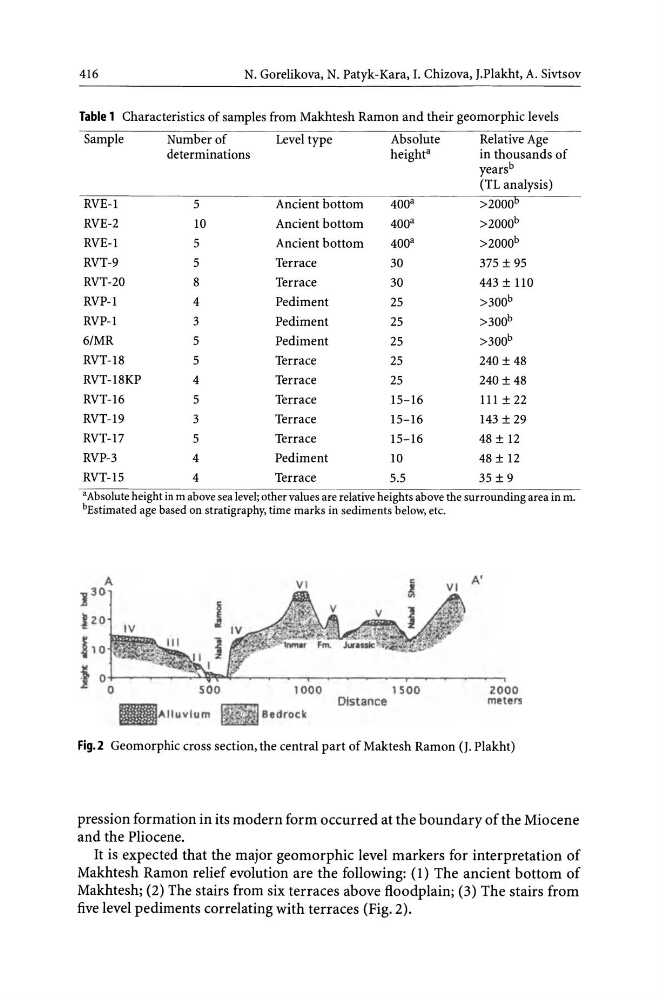
Fig.2 Geomorphic cross section, the central part of Maktesh Ramon 0. Plakht)
pression formation in its modern form occurred at the boundary of the Miocene
and the Pliocene.
It is expected that the major geomorphic level markers for interpretation of
Makhtesh Ramon relief evolution are the following: (1) The ancient bottom of
Makhtesh; (2) The stairs from six terraces above floodplain; (3) The stairs from
five level pediments correlating with terraces (Fig. 2).
N. Gorelikova, N. Patyk-Kara, I. Chizova, J.Plakht, A. Sivtsov
Table 1 Characteristics of samples from Makhtesh Ramon and their geomorphic levels
Sample
Number of
Level type
Absolute
Relative Age
determinations
heightin thousands of
yearsb
(TL analysis)
RVE-l
5
Ancient bottom
400>2000 6
RVE-2
10
Ancient bottom
400>2000b
RVE-l
5
Ancient bottom
400>2000b
RVT-9
5
Terrace
30
375 ± 95
RVT-20
8
Terrace
30
443 ± 110
RVP-l
4
Pediment
25
>300 b
RVP-l
3
Pediment
25
>300 b
6/MR
5
Pediment
25
>300 b
RVT-18
5
Terrace
25
240 ± 48
RVT-18KP
4
Terrace
25
240 ± 48
RVT-16
5
Terrace
15-16
111 ± 22
RVT-19
3
Terrace
15-16
143 ± 29
RVT-17
5
Terrace
15-16
48 ± 12
RVP-3
4
Pediment
10
48 ± 12
RVT-15
4
Terrace
5.5
35 ± 9
• Absolute height in m above sea level; other values are relative heights above the surrounding area in m.
bEstimated age based on stratigraphy, time marks in sediments below, etc.
A
VI
]30
I ZO
110
i o
1000
_AllUVium _
Bedrock
1500
Distance
ZOOO
meters
Fig.2 Geomorphic cross section, the central part of Maktesh Ramon 0. Plakht)
pression formation in its modern form occurred at the boundary of the Miocene
and the Pliocene.
It is expected that the major geomorphic level markers for interpretation of
Makhtesh Ramon relief evolution are the following: (1) The ancient bottom of
Makhtesh; (2) The stairs from six terraces above floodplain; (3) The stairs from
five level pediments correlating with terraces (Fig. 2).