

186
W. Ritzrau . H. Fohrmann
partICle seMhng
~
"0
0
4::
ro
* ......
Q)
I/)
•••
Q)
particles of
CJ
..c
differential settling
various sizes
...
0
Q)
processes
>
-0
-0
ro
E
.....
V
c
t= #f
0
turbulent aggregation
/J)
c
Q)
turbulent shear
....
~
x
Q)
ti :'
ro
u
:e
Q)
0
>
resuspension
particle destruction
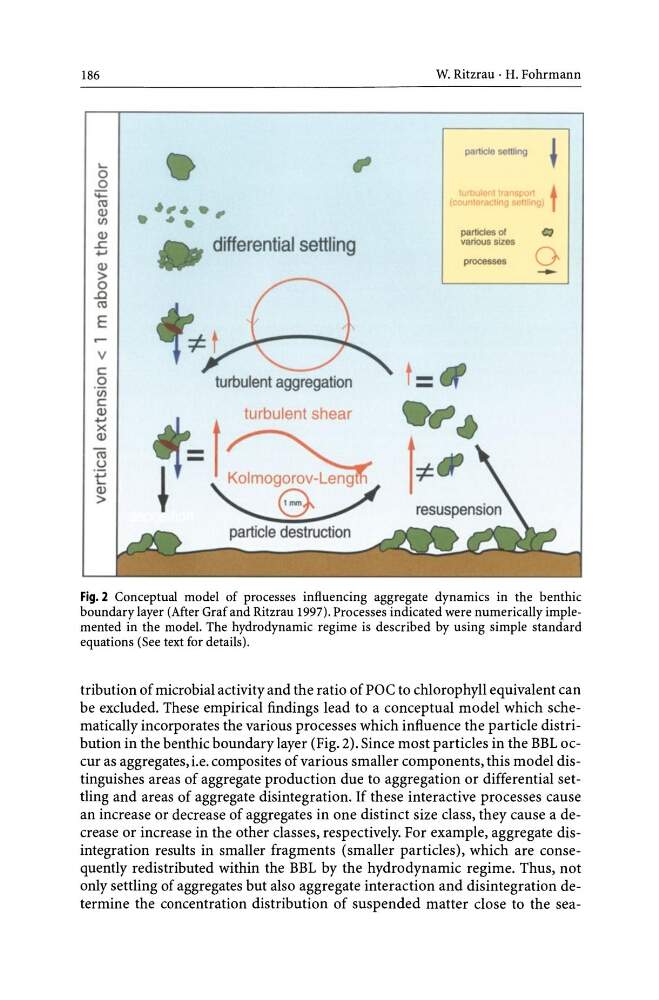
Fig. 2 Conceptual model of processes influencing aggregate dynamics in the benthic
boundary layer (After Graf and Ritzrau 1997). Processes indicated were numerically implemented in the model. The hydrodynamic regime is described by using simple standard
equations (See text for details).
tribution of microbial activity and the ratio of poe to chlorophyll equivalent can
be excluded. These empirical findings lead to a conceptual model which schematically incorporates the various processes which influence the particle distribution in the benthic boundary layer (Fig. 2). Since most particles in the BBL occur as aggregates, i.e. composites of various smaller components, this model distinguishes areas of aggregate production due to aggregation or differential settling and areas of aggregate disintegration. If these interactive processes cause
an increase or decrease of aggregates in one distinct size class, they cause a decrease or increase in the other classes, respectively. For example, aggregate disintegration results in smaller fragments (smaller particles), which are consequently redistributed within the BBL by the hydrodynamic regime. Thus, not
only settling of aggregates but also aggregate interaction and disintegration determine the concentration distribution of suspended matter close to the sea-
W. Ritzrau . H. Fohrmann
partICle seMhng
~
"0
0
4::
ro
* ......
Q)
I/)
•••
Q)
particles of
CJ
..c
differential settling
various sizes
...
0
Q)
processes
>
-0
-0
ro
E
.....
V
c
t= #f
0
turbulent aggregation
/J)
c
Q)
turbulent shear
....
~
x
Q)
ti :'
ro
u
:e
Q)
0
>
resuspension
particle destruction
Fig. 2 Conceptual model of processes influencing aggregate dynamics in the benthic
boundary layer (After Graf and Ritzrau 1997). Processes indicated were numerically implemented in the model. The hydrodynamic regime is described by using simple standard
equations (See text for details).
tribution of microbial activity and the ratio of poe to chlorophyll equivalent can
be excluded. These empirical findings lead to a conceptual model which schematically incorporates the various processes which influence the particle distribution in the benthic boundary layer (Fig. 2). Since most particles in the BBL occur as aggregates, i.e. composites of various smaller components, this model distinguishes areas of aggregate production due to aggregation or differential settling and areas of aggregate disintegration. If these interactive processes cause
an increase or decrease of aggregates in one distinct size class, they cause a decrease or increase in the other classes, respectively. For example, aggregate disintegration results in smaller fragments (smaller particles), which are consequently redistributed within the BBL by the hydrodynamic regime. Thus, not
only settling of aggregates but also aggregate interaction and disintegration determine the concentration distribution of suspended matter close to the sea-