

Digital Database of Modern Evaporites and their Predicted Distribution Based on Results...
153
.' t
1.
\k ... .,
.. . -
!. . .
•
" }
\
. .. .
"-- .
:1 .J •.
. .
, "
. .'
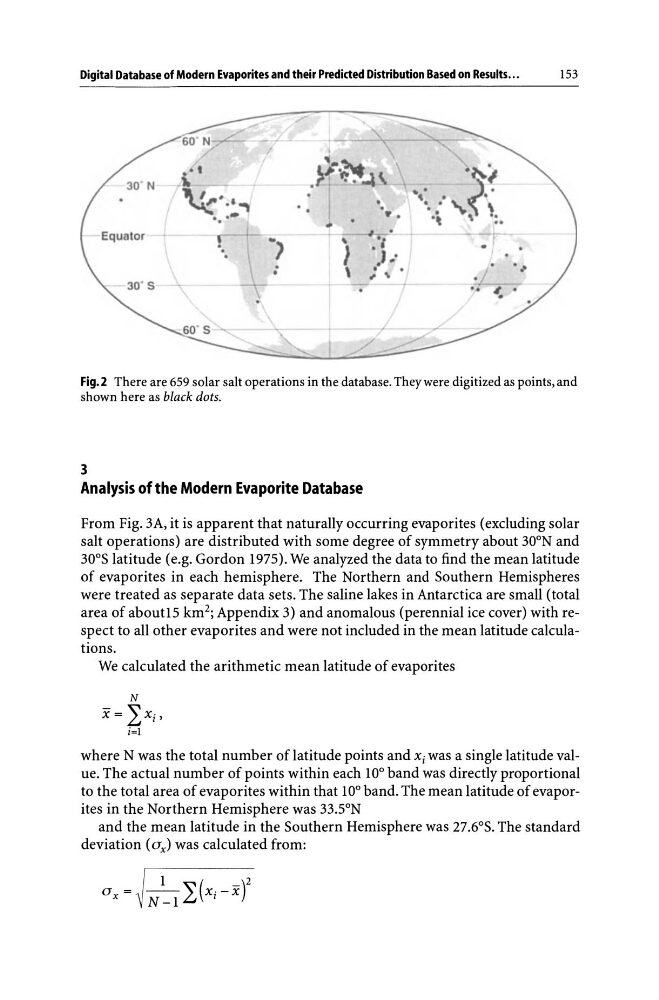
Fig.2 There are 659 solar salt operations in the database. They were digitized as points, and
shown here as black dots.
3
Analysis of the Modern Evaporite Database
From Fig. 3A, it is apparent that naturally occurring evaporites (excluding solar
salt operations) are distributed with some degree of symmetry about 30 0 N and
30 0 S latitude (e.g. Gordon 1975). We analyzed the data to find the mean latitude
of evaporites in each hemisphere. The Northern and Southern Hemispheres
were treated as separate data sets. The saline lakes in Antarctica are small (total
area of about15 km 2 j Appendix 3) and anomalous (perennial ice cover) with respect to all other evaporites and were not included in the mean latitude calculations.
We calculated the arithmetic mean latitude of evaporites
where N was the total number of latitude points and Xi was a single latitude value. The actual number of points within each 10° band was directly proportional
to the total area of evaporites within that 10° band. The mean latitude of evaporites in the Northern Hemisphere was 33.5°N
and the mean latitude in the Southern Hemisphere was 27.6°S. The standard
deviation (ox) was calculated from:
153
.' t
1.
\k ... .,
.. . -
!. . .
•
" }
\
. .. .
"-- .
:1 .J •.
. .
, "
. .'
Fig.2 There are 659 solar salt operations in the database. They were digitized as points, and
shown here as black dots.
3
Analysis of the Modern Evaporite Database
From Fig. 3A, it is apparent that naturally occurring evaporites (excluding solar
salt operations) are distributed with some degree of symmetry about 30 0 N and
30 0 S latitude (e.g. Gordon 1975). We analyzed the data to find the mean latitude
of evaporites in each hemisphere. The Northern and Southern Hemispheres
were treated as separate data sets. The saline lakes in Antarctica are small (total
area of about15 km 2 j Appendix 3) and anomalous (perennial ice cover) with respect to all other evaporites and were not included in the mean latitude calculations.
We calculated the arithmetic mean latitude of evaporites
where N was the total number of latitude points and Xi was a single latitude value. The actual number of points within each 10° band was directly proportional
to the total area of evaporites within that 10° band. The mean latitude of evaporites in the Northern Hemisphere was 33.5°N
and the mean latitude in the Southern Hemisphere was 27.6°S. The standard
deviation (ox) was calculated from: