

2.5 Lake Sediments
STAGES OF
LAKE LEVEL AND I OR
ION CONCENTRATION
a
BIOGENIC CARBONATE
(BIOHER MS . STROMATOLlTES.
ONCOIDS)
, ---\--------_ ~gi~ _____ ~~EEI~I~A~~N_~ ____ _ _ _
LOW Mg -CALCITE
INCREASE
< 2
~.}
~
SABKHA
IN ION CON-------- ----------Shl~--Mg -CALCITE
2
CENTRATION
AND Mg /Ca
__ 2~1: ______ J, ___ l ___ L
ARAGONITE
4
FALL OF LAKE LEVEL (OR INCREASE
/
IN ION CONCENTRATION) "REGULAR
IRREGULAR
(CLIMATIC VARIATIONS)
e
f
H-t-H~~ ROCK SALT AND
OTHER EVAPORITES
GYPSUM AND
CLAY
DOLOMITIC
MARL
CALC. TO
DOLOMITIC
MARL
C ALC
MARL
z ORG. C
(BLACK.·
SHALE)
GYPSUM
DOLOMITE
DOLOMITIC
LIMESTONE
~;e~- LIMESTONE
LAKE EXTENSION WITH FALLING
WATER LEVEL (STAGES 1 TO 4)
9
STAGE 4
EVAPORITES
d
{ARAGONTE)
OOLotvtTIC
MARLS
LITTORAL
CARBONATE
WITH OOIDS,
ETC ,
85
WATER RICH IN
Ca ++ .Mg ++ . HCOj
LITTORAL
CARBONATE
MUD CRACKS.
GYPSUM XX
CALCAREOUS
MARL
BEACH
SANDS .
FLUVIAL
SANDS .
ALLUVIAL
FAN
LON Mg-CALCITE : :?
AfI() BIOGENIC
. :::
CARBONATE
.. /?
.'::":,'
: . . '
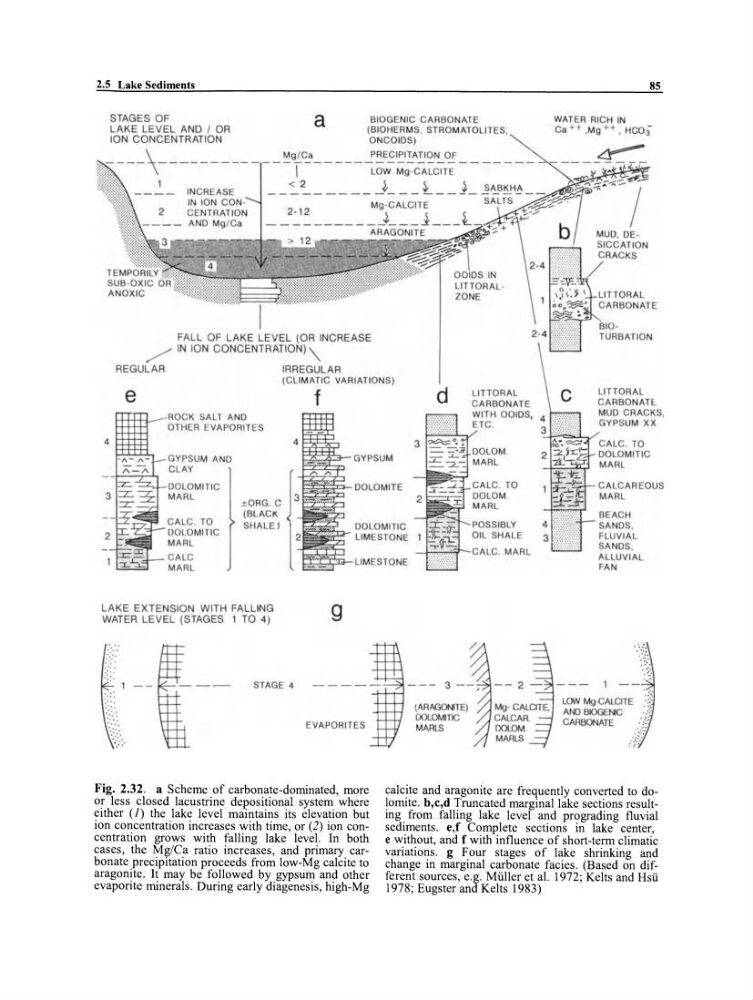
Fig. 2.32. a Scheme of carbonate-dominated, more
or less closed lacustrine depositional system where
either (I) the lake level maintains its elevation but
ion concentration increases with time, or (2) ion concentration grows with falling lake level. In both
cases, the Mg/Ca ratio increases, and primary carbonate precipitation proceeds from low-Mg calcite to
aragonite. It may be followed by gypsum and other
evaporite minerals. During early diagenesis, high-Mg
calcite and aragonite are frequently converted to dolomite. b,c,d Truncated marginal lake sections resulting from falling lake level and prograding fluvial
sediments. e,f Complete sections in lake center,
e without, and f with influence of short-term climatic
variations. g Four stages of lake shrinking and
change in marginal carbonate facies. (Based on different sources, e.g. Müller et al. 1972; Kelts and Hsü
1978; Eugster and Kelts 1983)
STAGES OF
LAKE LEVEL AND I OR
ION CONCENTRATION
a
BIOGENIC CARBONATE
(BIOHER MS . STROMATOLlTES.
ONCOIDS)
, ---\--------_ ~gi~ _____ ~~EEI~I~A~~N_~ ____ _ _ _
LOW Mg -CALCITE
INCREASE
< 2
~.}
~
SABKHA
IN ION CON-------- ----------Shl~--Mg -CALCITE
2
CENTRATION
AND Mg /Ca
__ 2~1: ______ J, ___ l ___ L
ARAGONITE
4
FALL OF LAKE LEVEL (OR INCREASE
/
IN ION CONCENTRATION) "REGULAR
IRREGULAR
(CLIMATIC VARIATIONS)
e
f
H-t-H~~ ROCK SALT AND
OTHER EVAPORITES
GYPSUM AND
CLAY
DOLOMITIC
MARL
CALC. TO
DOLOMITIC
MARL
C ALC
MARL
z ORG. C
(BLACK.·
SHALE)
GYPSUM
DOLOMITE
DOLOMITIC
LIMESTONE
~;e~- LIMESTONE
LAKE EXTENSION WITH FALLING
WATER LEVEL (STAGES 1 TO 4)
9
STAGE 4
EVAPORITES
d
{ARAGONTE)
OOLotvtTIC
MARLS
LITTORAL
CARBONATE
WITH OOIDS,
ETC ,
85
WATER RICH IN
Ca ++ .Mg ++ . HCOj
LITTORAL
CARBONATE
MUD CRACKS.
GYPSUM XX
CALCAREOUS
MARL
BEACH
SANDS .
FLUVIAL
SANDS .
ALLUVIAL
FAN
LON Mg-CALCITE : :?
AfI() BIOGENIC
. :::
CARBONATE
.. /?
.'::":,'
: . . '
Fig. 2.32. a Scheme of carbonate-dominated, more
or less closed lacustrine depositional system where
either (I) the lake level maintains its elevation but
ion concentration increases with time, or (2) ion concentration grows with falling lake level. In both
cases, the Mg/Ca ratio increases, and primary carbonate precipitation proceeds from low-Mg calcite to
aragonite. It may be followed by gypsum and other
evaporite minerals. During early diagenesis, high-Mg
calcite and aragonite are frequently converted to dolomite. b,c,d Truncated marginal lake sections resulting from falling lake level and prograding fluvial
sediments. e,f Complete sections in lake center,
e without, and f with influence of short-term climatic
variations. g Four stages of lake shrinking and
change in marginal carbonate facies. (Based on different sources, e.g. Müller et al. 1972; Kelts and Hsü
1978; Eugster and Kelts 1983)