

46
I
JREVAS~S~E~~~:;iiii : SPLAY
I
LAKE
Chapter 2 Continental Sediments
\ \ \ \
\
\ \ \
LEVEE
PEAT
LACUSTRINE
SILT AND
LEVEE
FLOOD·
PLAIN
CL AY
---.1'==1
5-10
m
ROOTS
CHANNEL
r-,--';;:::.-.'L.- F I L L
FLOODPLAIN
CREVASSE
SPLAY OR
LEVEE
CHANNEL
FILL
t
STACKED
CHANNEL
FILL
I
I
I
I
I
1
CREVASSE
SPLAY
MUD
LUMPS
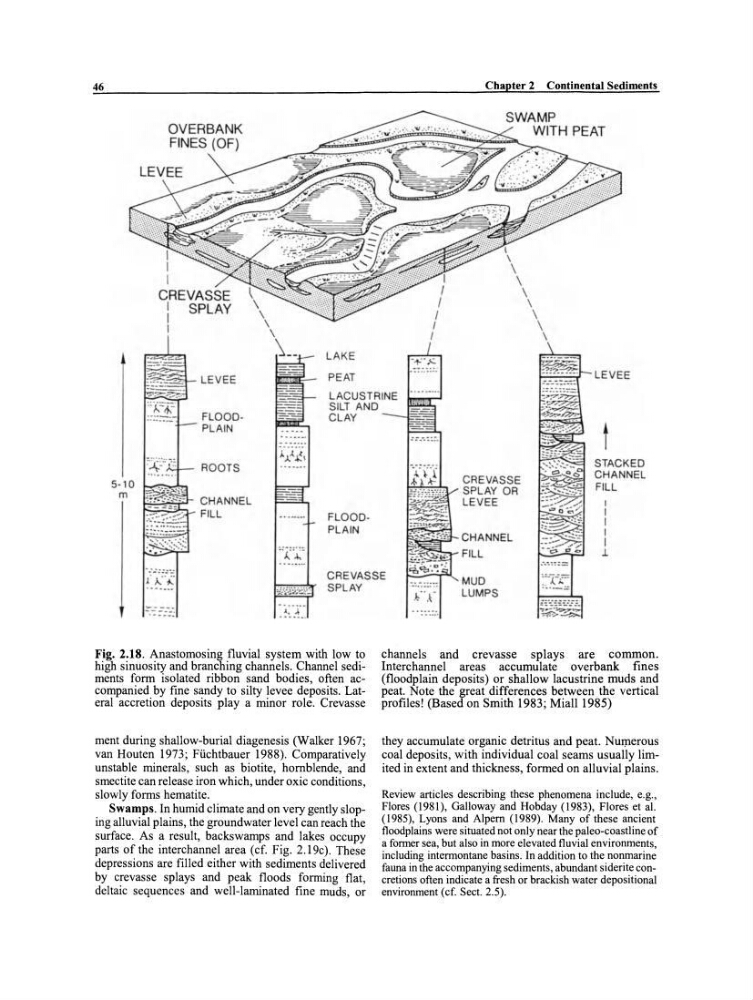
Fig. 2.18. Anastomosing fluvial system with low to
high sinuosity and branching channels. Channel sediments form isolated ribbon sand bodies, often accompanied by fine sandy to silty levee deposits. Lateral accretion deposits play a minor role. Crevasse
ment during shallow-burial diagenesis (Walker 1967;
van Houten 1973; Füchtbauer 1988). Comparatively
unstable minerals, such as biotite, hornblende, and
smectite can release iron which, und er oxic conditions,
slowly forms hematite.
Swamps. In humid climate and on very gently sloping alluvial plains, the groundwater level can reach the
surface. As a result, backswamps and lakes occupy
parts of the interchannel area (cf. Fig. 2.l9c). These
depressions are filled either with sediments delivered
by crevasse splays and peak floods forrning flat,
deltaic sequences and well-Iaminated fine muds, or
channels and crevasse splays are common.
Interchannel areas accumulate overbank fines
(floodplain deposits) or shallow lacustrine muds and
peat. Note the great differences between the vertical
profiles! (Based on Smith 1983; Miall1985)
they accumulate organic detritus and peat. Nurperous
coal deposits, with individual coal seams usually limited in extent and thickness, formed on alluvial plains.
Review articles describing these phenomena include, e.g.,
Flores (1981), Galloway and Hobday (1983), Flores et al.
(1985), Lyons and Alpern (1989). Many of these ancient
floodplains were situated not only near the paleo-coastline of
a former sea, but also in more e1evated fluvial environments,
including intermontane basins. In addition to the nonmarine
fauna in the accompanying sediments, abundant siderite concretions often indicate a fresh or brackish water depositional
environment (cf. Sect. 2.5).
I
JREVAS~S~E~~~:;iiii : SPLAY
I
LAKE
Chapter 2 Continental Sediments
\ \ \ \
\
\ \ \
LEVEE
PEAT
LACUSTRINE
SILT AND
LEVEE
FLOOD·
PLAIN
CL AY
---.1'==1
5-10
m
ROOTS
CHANNEL
r-,--';;:::.-.'L.- F I L L
FLOODPLAIN
CREVASSE
SPLAY OR
LEVEE
CHANNEL
FILL
t
STACKED
CHANNEL
FILL
I
I
I
I
I
1
CREVASSE
SPLAY
MUD
LUMPS
Fig. 2.18. Anastomosing fluvial system with low to
high sinuosity and branching channels. Channel sediments form isolated ribbon sand bodies, often accompanied by fine sandy to silty levee deposits. Lateral accretion deposits play a minor role. Crevasse
ment during shallow-burial diagenesis (Walker 1967;
van Houten 1973; Füchtbauer 1988). Comparatively
unstable minerals, such as biotite, hornblende, and
smectite can release iron which, und er oxic conditions,
slowly forms hematite.
Swamps. In humid climate and on very gently sloping alluvial plains, the groundwater level can reach the
surface. As a result, backswamps and lakes occupy
parts of the interchannel area (cf. Fig. 2.l9c). These
depressions are filled either with sediments delivered
by crevasse splays and peak floods forrning flat,
deltaic sequences and well-Iaminated fine muds, or
channels and crevasse splays are common.
Interchannel areas accumulate overbank fines
(floodplain deposits) or shallow lacustrine muds and
peat. Note the great differences between the vertical
profiles! (Based on Smith 1983; Miall1985)
they accumulate organic detritus and peat. Nurperous
coal deposits, with individual coal seams usually limited in extent and thickness, formed on alluvial plains.
Review articles describing these phenomena include, e.g.,
Flores (1981), Galloway and Hobday (1983), Flores et al.
(1985), Lyons and Alpern (1989). Many of these ancient
floodplains were situated not only near the paleo-coastline of
a former sea, but also in more e1evated fluvial environments,
including intermontane basins. In addition to the nonmarine
fauna in the accompanying sediments, abundant siderite concretions often indicate a fresh or brackish water depositional
environment (cf. Sect. 2.5).