

11.7 Preservation and Recycling of Older Sediments·
Global mass balances
(all va lues for solid sediment or rock in l<.m 3 /a,
values of subduction zone for past 30 Ma)
Magmatic are
are 0.6
(a) Frontal accretion
+
+
+
539
Modern total sediment yield 7.5
(Modern mean denudation rate 50 mm/ka)
Erosion
~
-
-i.
<....
--~
_.~
.
~ •••••••••• , ••• :;u:;::::==
1,
+
Fold-thrust belt
,
+
+
+
+
+: Older
+
'} +
O
Continental
+
I cont.
" core
+ .
growth 1.5-2.0
+
+
v Decollement
(c) By-passing sediment .
1.0
+
+
+
+
+
D
Uplift
'\ +
t
+
+
Juvenile igneous
rocks 1.65
Past 30 Ma: a+b+c = 1.9
Modern: cycling of nonsubducting sediment c. 5.5
(d) Subduction erosion: 1.1 (long-term 0.9) not considered
(Long-term rate of subcrustally subducted sediment: b + c + d
1.6)
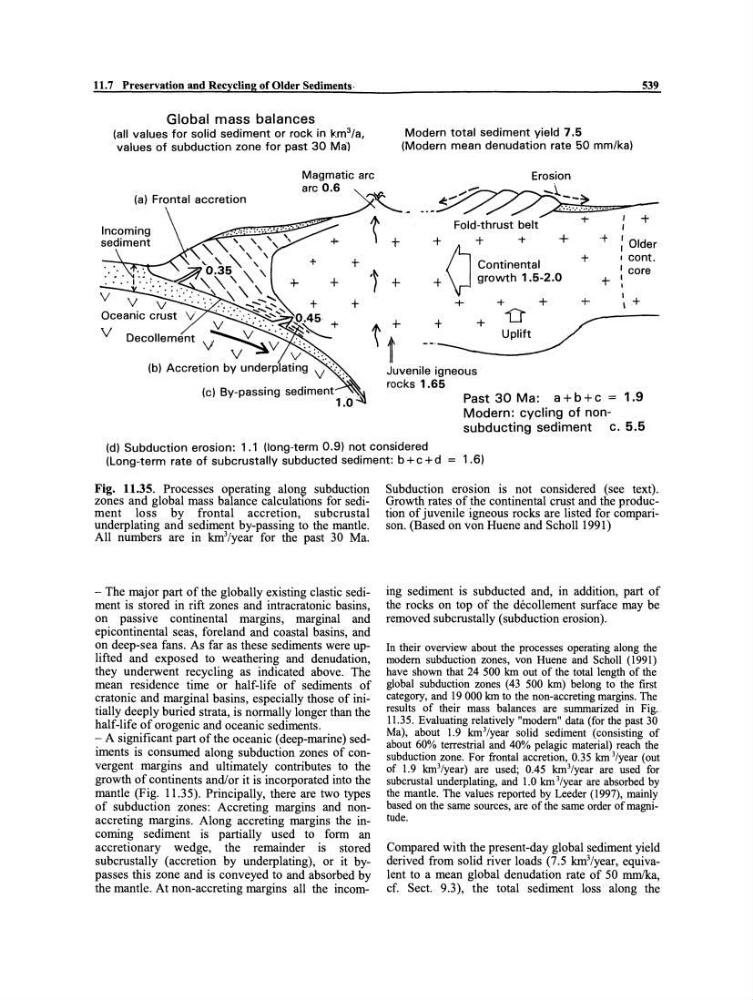
Fig. 11.35. Processes operating alon~ subduction
zones and global mass balance calculatlons for sediment loss by frontal accretion, subcrustal
underplating and sediment by-passing to the mantle.
All numbers are in km 3 /year for the past 30 Ma.
- The major part of the globally existing clastic sediment is stored in rift zones and intracratonic basins,
on passive continental margins, marginal and
epicontinental seas, fore land and coastal basins, and
on deep-sea fans. As far as these sediments were uplifted and exposed to weathering and denudation,
they underwent recycling as indicated above. The
mean residence time or half-life of sediments of
cratonic and marginal basins, especially those of initially deeply buried strata, is normally longer than the
half-life of orogenie and oceanic sediments.
- A significant part of the oceanic (deep-marine) sediments is consumed along subduction zones of convergent margins and ultimately contributes to the
growth of continents and/or it is incorporated into the
mantle (Fig. 11.35). Principally, there are two types
of subduction zones: Accreting margins and nonaccreting margins. Along accreting margins the incoming sediment is partially used to form an
accretionary wedge, the remainder is stored
subcrustally (accretion by underplating), or it bypasses this zone and is conveyed to and absorbed by
the mantle. At non-accreting margins all the incomSubduction erosion is not considered (see text).
Growth rates of the continental crust and the production of juvenile igneous rocks are listed for comparison. (Based on von Huene and Scholl 1991)
ing sediment is subducted and, in addition, part of
the rocks on top of the decollement surface may be
removed subcrustally (subduction erosion).
In their overview about the processes operating along the
modem subduction zones, von Huene and Scholl (1991)
have shown that 24 500 km out of the total length of the
global subduction zones (43 500 km) belong to the first
category, and 19 000 km to the non-accreting margins. Tbe
results of their mass balances are summarized in Fig.
11.35. Evaluating relatively "modem" data (for the past 30
Ma), about 1.9 km 3 /year solid sediment (consisting of
about 60% terrestrial and 40% pelagic material) reach the
subduction zone. For frontal accretion, 0.35 km 3/year (out
of 1.9 km 3 /year) are used; 0.45 km 3 /year are used for
subcrustal underplating, and 1.0 km 3/year are absorbed by
the mantle. Tbe values reported by Leeder (1997), mainly
based on the same sources, are of the same order of magnitude.
Compared with the present-day global sediment yield
derived from solid river loads (7.5 krn 3 /year, equivalent to a mean global denudation rate of 50 mmlka,
cf. Sect. 9.3), the total sediment 10ss along the
Global mass balances
(all va lues for solid sediment or rock in l<.m 3 /a,
values of subduction zone for past 30 Ma)
Magmatic are
are 0.6
(a) Frontal accretion
+
+
+
539
Modern total sediment yield 7.5
(Modern mean denudation rate 50 mm/ka)
Erosion
~
-
-i.
<....
--~
_.~
.
~ •••••••••• , ••• :;u:;::::==
1,
+
Fold-thrust belt
,
+
+
+
+
+: Older
+
'} +
O
Continental
+
I cont.
" core
+ .
growth 1.5-2.0
+
+
v Decollement
(c) By-passing sediment .
1.0
+
+
+
+
+
D
Uplift
'\ +
t
+
+
Juvenile igneous
rocks 1.65
Past 30 Ma: a+b+c = 1.9
Modern: cycling of nonsubducting sediment c. 5.5
(d) Subduction erosion: 1.1 (long-term 0.9) not considered
(Long-term rate of subcrustally subducted sediment: b + c + d
1.6)
Fig. 11.35. Processes operating alon~ subduction
zones and global mass balance calculatlons for sediment loss by frontal accretion, subcrustal
underplating and sediment by-passing to the mantle.
All numbers are in km 3 /year for the past 30 Ma.
- The major part of the globally existing clastic sediment is stored in rift zones and intracratonic basins,
on passive continental margins, marginal and
epicontinental seas, fore land and coastal basins, and
on deep-sea fans. As far as these sediments were uplifted and exposed to weathering and denudation,
they underwent recycling as indicated above. The
mean residence time or half-life of sediments of
cratonic and marginal basins, especially those of initially deeply buried strata, is normally longer than the
half-life of orogenie and oceanic sediments.
- A significant part of the oceanic (deep-marine) sediments is consumed along subduction zones of convergent margins and ultimately contributes to the
growth of continents and/or it is incorporated into the
mantle (Fig. 11.35). Principally, there are two types
of subduction zones: Accreting margins and nonaccreting margins. Along accreting margins the incoming sediment is partially used to form an
accretionary wedge, the remainder is stored
subcrustally (accretion by underplating), or it bypasses this zone and is conveyed to and absorbed by
the mantle. At non-accreting margins all the incomSubduction erosion is not considered (see text).
Growth rates of the continental crust and the production of juvenile igneous rocks are listed for comparison. (Based on von Huene and Scholl 1991)
ing sediment is subducted and, in addition, part of
the rocks on top of the decollement surface may be
removed subcrustally (subduction erosion).
In their overview about the processes operating along the
modem subduction zones, von Huene and Scholl (1991)
have shown that 24 500 km out of the total length of the
global subduction zones (43 500 km) belong to the first
category, and 19 000 km to the non-accreting margins. Tbe
results of their mass balances are summarized in Fig.
11.35. Evaluating relatively "modem" data (for the past 30
Ma), about 1.9 km 3 /year solid sediment (consisting of
about 60% terrestrial and 40% pelagic material) reach the
subduction zone. For frontal accretion, 0.35 km 3/year (out
of 1.9 km 3 /year) are used; 0.45 km 3 /year are used for
subcrustal underplating, and 1.0 km 3/year are absorbed by
the mantle. Tbe values reported by Leeder (1997), mainly
based on the same sources, are of the same order of magnitude.
Compared with the present-day global sediment yield
derived from solid river loads (7.5 krn 3 /year, equivalent to a mean global denudation rate of 50 mmlka,
cf. Sect. 9.3), the total sediment 10ss along the