

10.5 Organic Matter Preservation in Marine Sediments
473
SEDIMENTATION RATES. SR (m/ Ma), FOR DIFFERENT
POROSITIES (25, 50, 75 %: SR25 , SRso , SR 75 )
z
o
j:
< a::
... z
UJ
(J
Z
o
(J
z
o ID a::
<
(J
(J
Z
<
10
~0. 2
o
5
I
10
11
I1
11
11
I
5
I
I
5
10 , i
10
decreaelng
BOL
50 ,
100
I
50
100
, , , i
50
100
500 ,
10, 00 SR 75
500 SR 50
, ,
50q SR 25
5
3
z
0.2
"11. 0
O.l~~.-~--r-~~rT------.----r--r-~~-r~----~
= ""T'"""--r--r ........ "'I"'T~ 0.1
2
3
5
10
20
50
100
200
500
1000
INORGANIC ACCUMULATION RATE I AR I = F, (g/ m 2 • a)
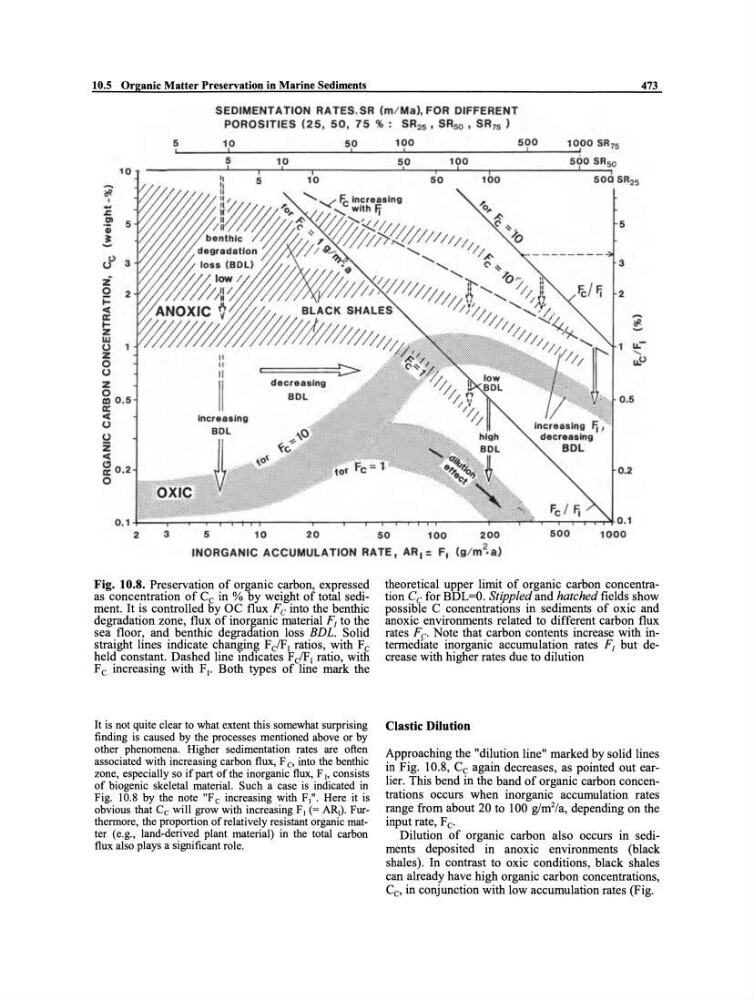
Fig. 10.8. Preservation of organie earbon, expressed
as eoneentration of Ce in % by weight of total sediment. It is eontrolled by OC flux Fe into the benthie
degradation zone, flux of inorganie material F[ to the
sea floor, and benthie degradation loss BDL. Solid
straight lines indieate ehanging FeIF 1 ratios, with Fe
held eonstant. Dashed line indieates FeIF 1 ratio, with
Fe inereasing with F 1 • Both types of line mark the
It is not quite clear to what extent this somewhat surprising
finding is caused by the processes mentioned above or by
other phenomena. Higher sedimentation rates are often
associated with increasing carbon flux, Fe, into the benthic
zone, especially so if part of the inorganic flux, F h consists
of biogenic skeletal material. Such a case is indicated in
Fig. 10.8 by the note "Fe increasing with F .... Here it is
obvious that Ce will grow with increasing F, (= AR,). Furthermore, the proportion of relatively resistant organic matter (e.g., land-derived plant material) in the total carbon
flux also plays a significant role.
theoretieal upper limit of organie earbon eoneentration Ce for BDL=O. Stippled and hatched fields show
possible C eoneentrations in sediments of oxie and
anoxie environments related to different earbon flux
rates Fe. Note that earbon eontents inerease with intermediate inorganie aeeumulation rates F[ but deerease with higher rates due to dilution
Clastie Dilution
Approaehing the "dilution line" marked by solid lines
in Fig. 10.8, Ce again deereases, as pointed out earlier. This bend in the band of organie earbon eoneentrations oeeurs when inorganie aeeumulation rates
range from about 20 to 100 g/m 2 /a, depending on the
input rate, Fe.
Dilution of organie earbon also oeeurs in sediments deposited in anoxie environments (blaek
shales). In contrast to oxie eonditions, blaek shales
ean already have high organie earbon eoneentrations,
Ce, in eonjunetion with 10w aeeumulation rates (Fig.
473
SEDIMENTATION RATES. SR (m/ Ma), FOR DIFFERENT
POROSITIES (25, 50, 75 %: SR25 , SRso , SR 75 )
z
o
j:
< a::
... z
UJ
(J
Z
o
(J
z
o ID a::
<
(J
(J
Z
<
10
~0. 2
o
5
I
10
11
I1
11
11
I
5
I
I
5
10 , i
10
decreaelng
BOL
50 ,
100
I
50
100
, , , i
50
100
500 ,
10, 00 SR 75
500 SR 50
, ,
50q SR 25
5
3
z
0.2
"11. 0
O.l~~.-~--r-~~rT------.----r--r-~~-r~----~
= ""T'"""--r--r ........ "'I"'T~ 0.1
2
3
5
10
20
50
100
200
500
1000
INORGANIC ACCUMULATION RATE I AR I = F, (g/ m 2 • a)
Fig. 10.8. Preservation of organie earbon, expressed
as eoneentration of Ce in % by weight of total sediment. It is eontrolled by OC flux Fe into the benthie
degradation zone, flux of inorganie material F[ to the
sea floor, and benthie degradation loss BDL. Solid
straight lines indieate ehanging FeIF 1 ratios, with Fe
held eonstant. Dashed line indieates FeIF 1 ratio, with
Fe inereasing with F 1 • Both types of line mark the
It is not quite clear to what extent this somewhat surprising
finding is caused by the processes mentioned above or by
other phenomena. Higher sedimentation rates are often
associated with increasing carbon flux, Fe, into the benthic
zone, especially so if part of the inorganic flux, F h consists
of biogenic skeletal material. Such a case is indicated in
Fig. 10.8 by the note "Fe increasing with F .... Here it is
obvious that Ce will grow with increasing F, (= AR,). Furthermore, the proportion of relatively resistant organic matter (e.g., land-derived plant material) in the total carbon
flux also plays a significant role.
theoretieal upper limit of organie earbon eoneentration Ce for BDL=O. Stippled and hatched fields show
possible C eoneentrations in sediments of oxie and
anoxie environments related to different earbon flux
rates Fe. Note that earbon eontents inerease with intermediate inorganie aeeumulation rates F[ but deerease with higher rates due to dilution
Clastie Dilution
Approaehing the "dilution line" marked by solid lines
in Fig. 10.8, Ce again deereases, as pointed out earlier. This bend in the band of organie earbon eoneentrations oeeurs when inorganie aeeumulation rates
range from about 20 to 100 g/m 2 /a, depending on the
input rate, Fe.
Dilution of organie earbon also oeeurs in sediments deposited in anoxie environments (blaek
shales). In contrast to oxie eonditions, blaek shales
ean already have high organie earbon eoneentrations,
Ce, in eonjunetion with 10w aeeumulation rates (Fig.