

458
Chapter 10 Sedimentation Rates and Organie Matter
BIOGENIC SEDIMENTS
SILICICLASTIC SEDIMENTS
•
u.a:z
cm/ka
500
~
0 1
oOen
:J
Cl )w _ _ O· W . - - - --I- Cl)Z 0 1
..Jf-~
e(:-f-- - - - - - - - - - - _
_ Z ~
I-: - - ce I- I-: - ...I U.
J:
a:
ua:-«e( wl
«
-ceo
m/Ma
5000
e( 0
...1...1
W U.
Z
...I
..Je(w
u.Cl. ~
Cl. ..J~e(
200
~ CI)
~
(!)~CI)
..J~ ti: I
~ W..J
-H~-+- W - ~---------- z u . :
e(:...J - O~> Cl e( wa:
J:
-
CI)
w . . J
0 W
i 'i::l
2000
CI) ~
W
Z
W
i=0 ~I
I, ..Ja:O
~ _ I-W - 8 --CI) ~_ t::
~ _ ~ -;1 _ _ _ I -_ .L-_-.-_-;"'_.:1' ~u.::.(!).:;...:u. =-+ 1000
CI) ::l
~ ~ CI) ~ w a:e(
0 " 1 1
!I'
100
Cl.
Z
Clwc(f-«..J
'-'
,
O
' z
U
L"
I
W
I,
50
>-- t- - -;( 0 ~ - Q -------,..---- r- --'-_ ..---1 __ Cl. _-J._-I_~_-I-~ 500
I (!)
~)( I Cl a. Cl
~
~ I
9
~
1 Cl)e( xCl)a:w e(
I;-:! I
CI)
•
1
tt U x:.::: e( w a : l ~.
.:
I ~
20 h - W - r - )( - U U e - g -----~- '-' -f- -I--"I - - ~ --I---!--h---IrJ{ ..::..=....-+ 200
I;
a:
x :5 S:2 ~ 0
:J
i
w
Iw
1 1
I ;
x Cl (!) a:
N
>:
en I
z
Cl
tT
~,
10
e( 0 - 0 w -
«
, e ( -
0 - --I-- - l- -IL- -I-----I- 100
! I
x '...lu.
Cl)N
..J
U.
Cl .a:
I
I
x j w l - :
W
U
,
I
x
Cl.«~0
a:
5 1
x -!- - 1f-----: , O __ ~
I
.~ --,~--I--+--I!--'_-+ 50
I
1
x '
CI)
CI)
1
Cl.
I
I
I
I
x 1
Cl
: : l '
I z
::l
I
CI)
I
I
I :: ~ 8 ~
~ ~
1
W
i 1
2
I I x --r-- '-.J - U - 0
-+---t---+- ~ _L. I --+--+ 20
I
xi O : J 0
I ffi
I
I
I
..J
I
I
1 : 1
~
en W
1 ~ I
, I
1
1
I
I I I I
~ a:
I
1 9 -+--+---+1--"'-1 1 --1-1--+--+ 10
I
i I 1 !
:
I : 1
I
I
1
i
1
I
0.5 I
I 1
1
,
I
I
1
I
1 x I
I I
1
1
I
I
1 I 1 1 I
1
1 :
1
I
I
I
I
I
1
1
I
I I
1 1
;
I
1 1 I
,
I
I
1 I
I
0.2 I
,
I
1 I I
I '
I
I
t
I
I
I
1
I
I
1 1 I 1
I I
,
I
,
I I
~
I
!
i 1
0 . 1~--+-~-~+-T-+--7-T-~~-7--+-~~--r--+--+--+-~-4-~
1
I
:
: I : ,I
: ; 1 I : I, I
1
1
EVAPORITE I CARB.
I , I
' I
,
I I
,
FLUVIAL
BASIN I
I SHELF
CONT . CLASTIC I
1 PRODELTA ' LAKE
FILL OF
t
1 I
I I 1 I
I
RISE
SHELF
, SLOPE
I
,
GRABEN
I REEFS I
I l lSOLATEO I
I
t
t
1
I
1 DELTA
:
'I
I
I 1 P~ATFORM I SEA LEVEL : 1 I I I PLAIN I
~d.t'i-J..il --+-t--r- - - - I -
-1-~--l -
1"~
I I ,
I I
I
I
I ~t1"$l:T::>
-----;.
MINOR OR
NEGLIGABLE
SILICICLASTIC INPUT
, I
,
I
C
, : cco l'
:
e
1----+-IN
t 1
I
I }I
, . "",fi
_Ji@y.ß""
OEEp ·SEA FAN
* SEDIMENTATION RATE LlMITED BY SUBSIOENCE
SIGNIFANT
SILICICLASTIC
SOURCE
]
5
2
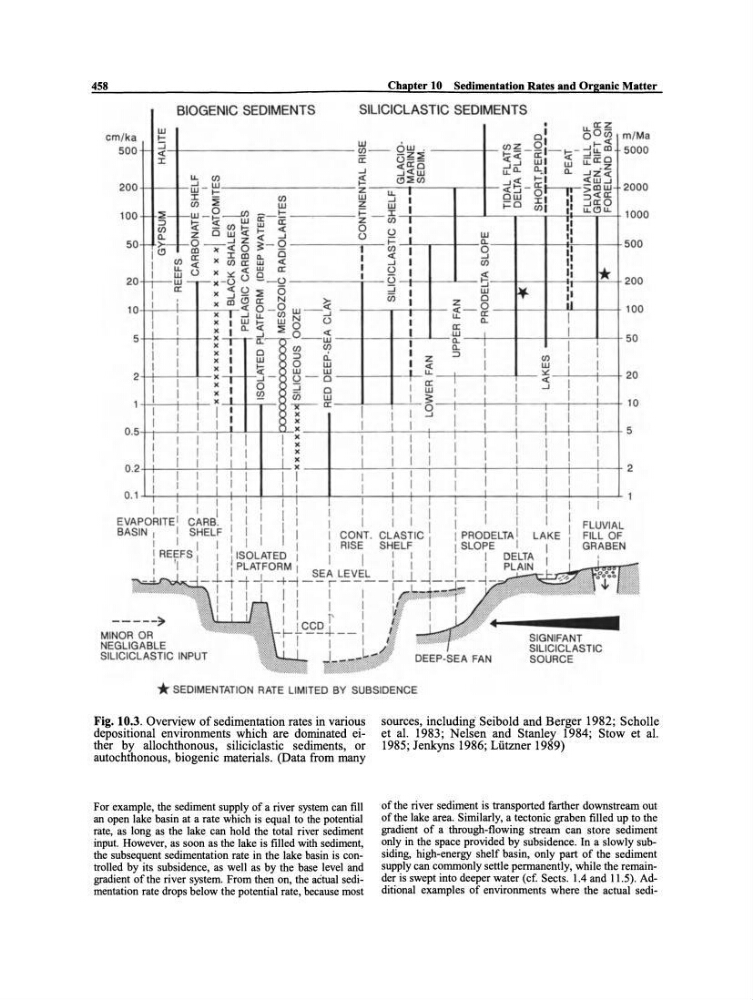
Fig. 10.3. Overview of sedimentation rates in various
depositional environments which are dominated either by allochthonous, siliciclastic sediments, or
autochthonous, biogenic materials. (Data from many
sources, including Seibold and Berger 1982; Scholle
et al. 1983; Nelsen and Stanley 1984; Stowet al.
1985; Jenkyns 1986; Lützner 1989)
For example, the sediment supply of a river system can fill
an open lake basin at a rate which is equal to the potential
rate, as long as the lake can hold the total river sediment
input. However, as soon as the lake is filled with sediment,
the subsequent sedimentation rate in the lake basin is controlled by its subsidence, as weil as by the base level and
gradient of the river system. From then on, the actual sedimentation rate drops below the potential rate, because most
of the river sediment is transported farther downstream out
of the lake area. Similarly, a tectonic graben filled up to the
gradient of a through-flowing stream can store sediment
only in the space provided by subsidence. In a slowly subsiding, high-energy shelf basin, only part of the sediment
supply can commonly settle permanently, while the remainder is swept into deeper water (cf. Sects. 1.4 and 11.5). Additional examples of environments where the actual sedi-
Chapter 10 Sedimentation Rates and Organie Matter
BIOGENIC SEDIMENTS
SILICICLASTIC SEDIMENTS
•
u.a:z
cm/ka
500
~
0 1
oOen
:J
Cl )w _ _ O· W . - - - --I- Cl)Z 0 1
..Jf-~
e(:-f-- - - - - - - - - - - _
_ Z ~
I-: - - ce I- I-: - ...I U.
J:
a:
ua:-«e( wl
«
-ceo
m/Ma
5000
e( 0
...1...1
W U.
Z
...I
..Je(w
u.Cl. ~
Cl. ..J~e(
200
~ CI)
~
(!)~CI)
..J~ ti: I
~ W..J
-H~-+- W - ~---------- z u . :
e(:...J - O~> Cl e( wa:
J:
-
CI)
w . . J
0 W
i 'i::l
2000
CI) ~
W
Z
W
i=0 ~I
I, ..Ja:O
~ _ I-W - 8 --CI) ~_ t::
~ _ ~ -;1 _ _ _ I -_ .L-_-.-_-;"'_.:1' ~u.::.(!).:;...:u. =-+ 1000
CI) ::l
~ ~ CI) ~ w a:e(
0 " 1 1
!I'
100
Cl.
Z
Clwc(f-«..J
'-'
,
O
' z
U
L"
I
W
I,
50
>-- t- - -;( 0 ~ - Q -------,..---- r- --'-_ ..---1 __ Cl. _-J._-I_~_-I-~ 500
I (!)
~)( I Cl a. Cl
~
~ I
9
~
1 Cl)e( xCl)a:w e(
I;-:! I
CI)
•
1
tt U x:.::: e( w a : l ~.
.:
I ~
20 h - W - r - )( - U U e - g -----~- '-' -f- -I--"I - - ~ --I---!--h---IrJ{ ..::..=....-+ 200
I;
a:
x :5 S:2 ~ 0
:J
i
w
Iw
1 1
I ;
x Cl (!) a:
N
>:
en I
z
Cl
tT
~,
10
e( 0 - 0 w -
«
, e ( -
0 - --I-- - l- -IL- -I-----I- 100
! I
x '...lu.
Cl)N
..J
U.
Cl .a:
I
I
x j w l - :
W
U
,
I
x
Cl.«~0
a:
5 1
x -!- - 1f-----: , O __ ~
I
.~ --,~--I--+--I!--'_-+ 50
I
1
x '
CI)
CI)
1
Cl.
I
I
I
I
x 1
Cl
: : l '
I z
::l
I
CI)
I
I
I :: ~ 8 ~
~ ~
1
W
i 1
2
I I x --r-- '-.J - U - 0
-+---t---+- ~ _L. I --+--+ 20
I
xi O : J 0
I ffi
I
I
I
..J
I
I
1 : 1
~
en W
1 ~ I
, I
1
1
I
I I I I
~ a:
I
1 9 -+--+---+1--"'-1 1 --1-1--+--+ 10
I
i I 1 !
:
I : 1
I
I
1
i
1
I
0.5 I
I 1
1
,
I
I
1
I
1 x I
I I
1
1
I
I
1 I 1 1 I
1
1 :
1
I
I
I
I
I
1
1
I
I I
1 1
;
I
1 1 I
,
I
I
1 I
I
0.2 I
,
I
1 I I
I '
I
I
t
I
I
I
1
I
I
1 1 I 1
I I
,
I
,
I I
~
I
!
i 1
0 . 1~--+-~-~+-T-+--7-T-~~-7--+-~~--r--+--+--+-~-4-~
1
I
:
: I : ,I
: ; 1 I : I, I
1
1
EVAPORITE I CARB.
I , I
' I
,
I I
,
FLUVIAL
BASIN I
I SHELF
CONT . CLASTIC I
1 PRODELTA ' LAKE
FILL OF
t
1 I
I I 1 I
I
RISE
SHELF
, SLOPE
I
,
GRABEN
I REEFS I
I l lSOLATEO I
I
t
t
1
I
1 DELTA
:
'I
I
I 1 P~ATFORM I SEA LEVEL : 1 I I I PLAIN I
~d.t'i-J..il --+-t--r- - - - I -
-1-~--l -
1"~
I I ,
I I
I
I
I ~t1"$l:T::>
-----;.
MINOR OR
NEGLIGABLE
SILICICLASTIC INPUT
, I
,
I
C
, : cco l'
:
e
1----+-IN
t 1
I
I }I
, . "",fi
_Ji@y.ß""
OEEp ·SEA FAN
* SEDIMENTATION RATE LlMITED BY SUBSIOENCE
SIGNIFANT
SILICICLASTIC
SOURCE
]
5
2
Fig. 10.3. Overview of sedimentation rates in various
depositional environments which are dominated either by allochthonous, siliciclastic sediments, or
autochthonous, biogenic materials. (Data from many
sources, including Seibold and Berger 1982; Scholle
et al. 1983; Nelsen and Stanley 1984; Stowet al.
1985; Jenkyns 1986; Lützner 1989)
For example, the sediment supply of a river system can fill
an open lake basin at a rate which is equal to the potential
rate, as long as the lake can hold the total river sediment
input. However, as soon as the lake is filled with sediment,
the subsequent sedimentation rate in the lake basin is controlled by its subsidence, as weil as by the base level and
gradient of the river system. From then on, the actual sedimentation rate drops below the potential rate, because most
of the river sediment is transported farther downstream out
of the lake area. Similarly, a tectonic graben filled up to the
gradient of a through-flowing stream can store sediment
only in the space provided by subsidence. In a slowly subsiding, high-energy shelf basin, only part of the sediment
supply can commonly settle permanently, while the remainder is swept into deeper water (cf. Sects. 1.4 and 11.5). Additional examples of environments where the actual sedi-