

392
b
ELASTIC OR
VISCO - ELASnC
L1THOSPHERE
FLEXURAL DOWNWARPING
AIRY·TYPE
Chapter 8 Subsidence
ISOSTATIC COMPENSATION
TIME·
DEPENDENT
SUBSIDENCE
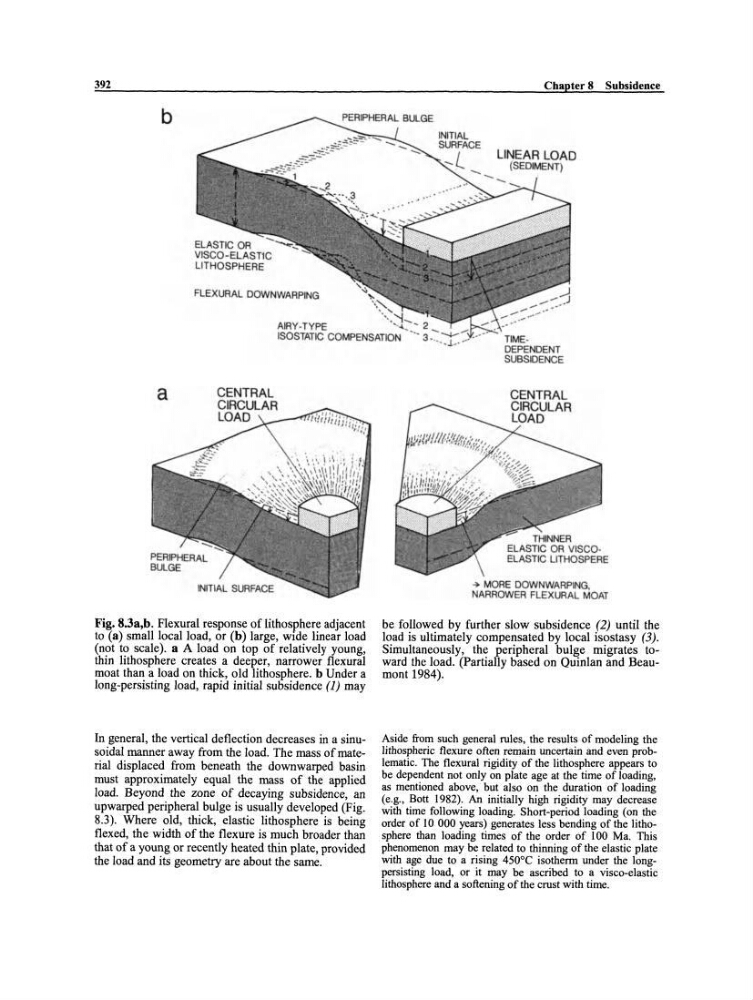
Fig. S.3a,b. Flexural response of lithosphere adjaeent
to (a) small loeal load, or (b) large, wide linear load
(not to seale). a A load on top of relatively young,
thin lithosphere ereates a deeper, narrower flexural
moat than a load on thick, old lithosphere. b Under a
long-persisting load, rapid initial subsidenee (1) may
In general, the vertieal defleetion deereases in a sinusoidal manner away from the load. The mass of material displaeed from beneath the downwarped basin
must approximately equal the rnass of the applied
load. Beyond the zone of deeaying subsidenee, an
upwarped peripheral bulge is usually developed (Fig.
8.3). Where oId, thiek, elastie lithosphere is being
flexed, the width of the flexure is much broader than
that of a young or recently heated thin plate, provided
the load and its geometry are about the same.
-+ MORE DOWNWARPING,
NARROWER FLEXURAL MOAT
be followed by further slow subsidenee (2) until the
load is ultimately eompensated by loeal isostasy (3).
Simultaneously, the peripheral bulge migrates toward the load. (Partially based on Quinlan and Beaumont 1984).
Aside from sueh general rules, the results of modeling the
lithospherie flexure often remain uncertain and even problematic. The flexural rigidity of the lithosphere appears to
be dependent not only on plate age at the time of loading,
as mentioned above, but also on the duration of loading
(e.g., Bott 1982). An initially high rigidity may decrease
with time following loading. Short-period loading (on the
order of 10 000 years) generates less bending of the lithosphere than loading times of the order öf 100 Ma. This
phenomenon may be related to thinning of the elastie plate
with age due to a rising 450°C isotherm under the longpersisting load, or it may be ascribed to a visco-elastic
lithosphere and a softening of the erust with time.
b
ELASTIC OR
VISCO - ELASnC
L1THOSPHERE
FLEXURAL DOWNWARPING
AIRY·TYPE
Chapter 8 Subsidence
ISOSTATIC COMPENSATION
TIME·
DEPENDENT
SUBSIDENCE
Fig. S.3a,b. Flexural response of lithosphere adjaeent
to (a) small loeal load, or (b) large, wide linear load
(not to seale). a A load on top of relatively young,
thin lithosphere ereates a deeper, narrower flexural
moat than a load on thick, old lithosphere. b Under a
long-persisting load, rapid initial subsidenee (1) may
In general, the vertieal defleetion deereases in a sinusoidal manner away from the load. The mass of material displaeed from beneath the downwarped basin
must approximately equal the rnass of the applied
load. Beyond the zone of deeaying subsidenee, an
upwarped peripheral bulge is usually developed (Fig.
8.3). Where oId, thiek, elastie lithosphere is being
flexed, the width of the flexure is much broader than
that of a young or recently heated thin plate, provided
the load and its geometry are about the same.
-+ MORE DOWNWARPING,
NARROWER FLEXURAL MOAT
be followed by further slow subsidenee (2) until the
load is ultimately eompensated by loeal isostasy (3).
Simultaneously, the peripheral bulge migrates toward the load. (Partially based on Quinlan and Beaumont 1984).
Aside from sueh general rules, the results of modeling the
lithospherie flexure often remain uncertain and even problematic. The flexural rigidity of the lithosphere appears to
be dependent not only on plate age at the time of loading,
as mentioned above, but also on the duration of loading
(e.g., Bott 1982). An initially high rigidity may decrease
with time following loading. Short-period loading (on the
order of 10 000 years) generates less bending of the lithosphere than loading times of the order öf 100 Ma. This
phenomenon may be related to thinning of the elastie plate
with age due to a rising 450°C isotherm under the longpersisting load, or it may be ascribed to a visco-elastic
lithosphere and a softening of the erust with time.