

30
Chapter 2 Continental Sediments
longitudinal
section
BRAIDED SYSTEM
low sinuosity channels,
mobile, high gradient
and high stream power,
predominantly bed load
MUD-DOMINATED
LOW GRADIENT
SYSTEM
(±anastomosing)
'~
channels partly straight,
partly sinuous, but
rather stable
OXBOW LAKE SEDIMENT
MEANDERING SYSTEM
low gradient, low stream
power, mainly suspended
and mixed load (ratio
bed load/susp. load< 3)
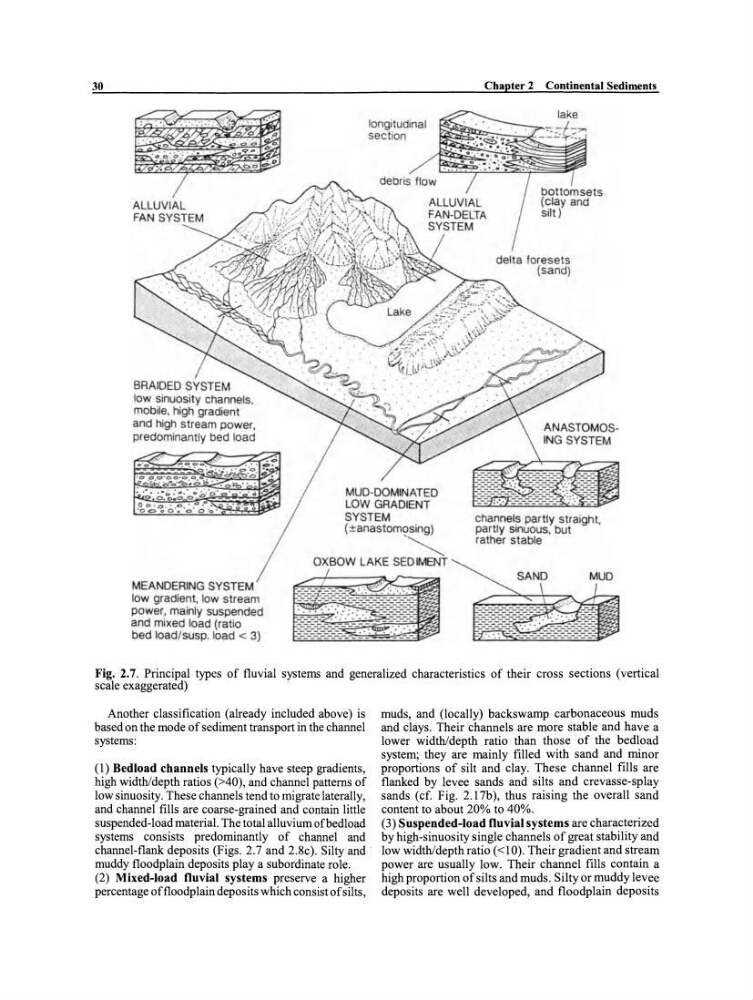
Fig. 2.7. Principal types of fluvial systems and generalized characteristics of their cross sections (vertical
scale exaggerated)
Another classification (already included above) is
based on the mode of sediment transport in the channel
systems:
(1) Bedload channels typically have steep gradients,
high width/depth ratios (>40), and channel patterns of
low sinuosity. These channels tend to migrate laterally,
and channel fills are coarse-grained and contain little
suspended-load material. The total alluvium ofbedload
systems consists predominantly of channel and
channel-flank deposits (Figs. 2.7 and 2.8c). Silty and .
muddy floodplain deposits playasubordinate role.
(2) Mixed-load fluvial systems preserve a higher
percentage of floodplain deposits which consist of silts,
muds, and (locally) backswamp carbonaceous muds
and clays. Their channeis are more stable and have a
lower width/depth ratio than those of the bedload
system; they are mainly filled with sand and rninor
proportions of silt and clay. These channel fills are
flanked by levee sands and silts and crevasse-splay
sands (cf. Fig. 2.17b), thus raising the overall sand
content to about 20% to 40%.
(3) Suspended-Ioad fluvial systems are characterized
by high-sinuosity single channels of great stability and
low width/depth ratio « 1 0). Their gradient and stream
power are usually low. Their channel fills contain a
high proportion of silts and muds. Silty or muddy levee
deposits are weIl developed, and floodplain deposits
Chapter 2 Continental Sediments
longitudinal
section
BRAIDED SYSTEM
low sinuosity channels,
mobile, high gradient
and high stream power,
predominantly bed load
MUD-DOMINATED
LOW GRADIENT
SYSTEM
(±anastomosing)
'~
channels partly straight,
partly sinuous, but
rather stable
OXBOW LAKE SEDIMENT
MEANDERING SYSTEM
low gradient, low stream
power, mainly suspended
and mixed load (ratio
bed load/susp. load< 3)
Fig. 2.7. Principal types of fluvial systems and generalized characteristics of their cross sections (vertical
scale exaggerated)
Another classification (already included above) is
based on the mode of sediment transport in the channel
systems:
(1) Bedload channels typically have steep gradients,
high width/depth ratios (>40), and channel patterns of
low sinuosity. These channels tend to migrate laterally,
and channel fills are coarse-grained and contain little
suspended-load material. The total alluvium ofbedload
systems consists predominantly of channel and
channel-flank deposits (Figs. 2.7 and 2.8c). Silty and .
muddy floodplain deposits playasubordinate role.
(2) Mixed-load fluvial systems preserve a higher
percentage of floodplain deposits which consist of silts,
muds, and (locally) backswamp carbonaceous muds
and clays. Their channeis are more stable and have a
lower width/depth ratio than those of the bedload
system; they are mainly filled with sand and rninor
proportions of silt and clay. These channel fills are
flanked by levee sands and silts and crevasse-splay
sands (cf. Fig. 2.17b), thus raising the overall sand
content to about 20% to 40%.
(3) Suspended-Ioad fluvial systems are characterized
by high-sinuosity single channels of great stability and
low width/depth ratio « 1 0). Their gradient and stream
power are usually low. Their channel fills contain a
high proportion of silts and muds. Silty or muddy levee
deposits are weIl developed, and floodplain deposits