

7.9 Cyclo- and Event Stratigraphy
369
a LONG-DIST ANCE CYCLE CORRELA TION
(WESTERN INTERIOR, USA, LATE CRH.1
c CYCLIC BEDDING
CARBONATE-POOR
INTERVAL (RICH IN C-ORG )
HIGH SS
PROGRADATIONAL
SHOREFACE
PARASEQUENCES
SHORELINE MIGRATION
LOW SS
5·' m
PRIMARY
PRODUCTIVITY
m _ ~ . :&"", ,~:~: "" %! ' ! ' ! . !
tJ~:@"" tili ! ' ! ' ! . !
%'"-,! . "" ;r! ' ! ' ! . !
·t~ ~r.f "" l.i:: ! ' ! ' ! . !
:t:~rn
SRT= TuTAL SED . RATE
NOTE : CYCLIC BEDDING IS CAUSED
BY SLiGHT VARIATIONS IN PRIMARY
PRODUCTION AND OXYGEN CON TENT
OF BOTTOM WATER
b SEA-LEVEL CONTROL OF CYCLIC BEDDING
CLASTIC INPUT
~
TIME -+
, .. _, _. {, ... _- _ . . . , : , : . : : : , , : : : : : : : : +::~::,;}t;A;@hill0
CARBONATE-RICH
INTERVAL (POOR IN C-ORGI
LST
TST
HST I
LST
--....... ,..,.~ I
... . .. ... . . .. ....
I····· .......... :-:::::::~~;:::.:. .. ..:. ~ - ~· ~-:.::.:t ::-:~::-:-:-··········· ·:.
......... .. .... ;. . ..;. -- DYSAEROBIC
. .:..:.: ........ ...... .
~ ~ ~ ~
- ~ ~ -
SUBOXIC TO
DYSAEROBICi ~ - - -
T ANAEROBIC
PLANKTONIC CARBONATE
PRODUCTION
NO BE~~'~~ ·;r ·-· =~··RH~~~~I~ ~~~~I~~';\·_ ·~;~: ! ~~\~~DI DING
RHYTHMS
± C-ORG-RICH
RHYTHMS
SR T = 1. 13
SR OM = 0.02
CLASTIC RHYTHMS
C-ORG ~ RICH SHALE
OR C-ORG -RICH SHALE
OR CLASTIC RHYTHMS
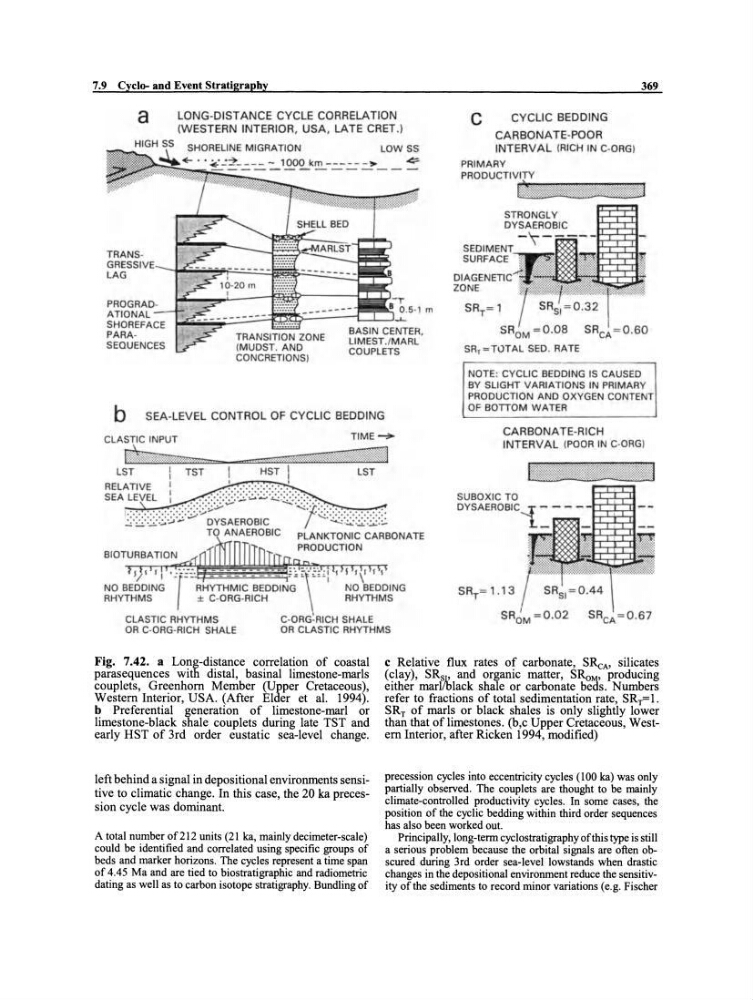
Fig. 7.42. a Long-distance correlation of coastal
parasequences with distal, basinal limestone-marls
couplets, Greenhorn Member (Upper Cretaceous),
Western Interior, USA. (After EIder et al. 1994).
b Preferential generation of limestone-marl or
limestone-black shale couplets during late TST and
early HST of 3rd order eustatic sea-level change.
left behind a signal in depositional environments sensitive to climatic change. In this case, the 20 ka precession cycle was dominant.
A total number of 212 units (21 ka, mainly decimeter-scale)
could be identified and correlated using specific groups of
beds and marker horizons. The cycles represent a time span
of 4.45 Ma and are tied to bio stratigraphie and radiometrie
dating as weil as to carbon isotope stratigraphy. Bundling of
c Relative flux rates of carbonate, SRcA> silicates
(clay), SRs1, and organic matter, SRoM' producing
either marl/black shale or carbonate beds. Numbers
refer to fractions of total sedimentation rate, SR T = 1.
SR T of marls or black shales is only slightly lower
than that of limestones. (b,c Upper Cretaceous, Western Interior, after Ricken 1994, modified)
precession cycles into eccentricity cycles (100 ka) was only
partially observed. The couplets are thought to be mainly
climate-controlled productivity cycles. In some cases, the
position of the cyclic bedding within third order sequences
has also been worked out.
Principally, long-term cyclostratigraphy ofthis type is still
a serious problem because the orbital signals are often obscured during 3rd order sea-Ievel lowstands when drastic
changes in the depositional environment reduce the sensitivity ofthe sediments to record minor variations (e.g. Fischer
369
a LONG-DIST ANCE CYCLE CORRELA TION
(WESTERN INTERIOR, USA, LATE CRH.1
c CYCLIC BEDDING
CARBONATE-POOR
INTERVAL (RICH IN C-ORG )
HIGH SS
PROGRADATIONAL
SHOREFACE
PARASEQUENCES
SHORELINE MIGRATION
LOW SS
5·' m
PRIMARY
PRODUCTIVITY
m _ ~ . :&"", ,~:~: "" %! ' ! ' ! . !
tJ~:@"" tili ! ' ! ' ! . !
%'"-,! . "" ;r! ' ! ' ! . !
·t~ ~r.f "" l.i:: ! ' ! ' ! . !
:t:~rn
SRT= TuTAL SED . RATE
NOTE : CYCLIC BEDDING IS CAUSED
BY SLiGHT VARIATIONS IN PRIMARY
PRODUCTION AND OXYGEN CON TENT
OF BOTTOM WATER
b SEA-LEVEL CONTROL OF CYCLIC BEDDING
CLASTIC INPUT
~
TIME -+
, .. _, _. {, ... _- _ . . . , : , : . : : : , , : : : : : : : : +::~::,;}t;A;@hill0
CARBONATE-RICH
INTERVAL (POOR IN C-ORGI
LST
TST
HST I
LST
--....... ,..,.~ I
... . .. ... . . .. ....
I····· .......... :-:::::::~~;:::.:. .. ..:. ~ - ~· ~-:.::.:t ::-:~::-:-:-··········· ·:.
......... .. .... ;. . ..;. -- DYSAEROBIC
. .:..:.: ........ ...... .
~ ~ ~ ~
- ~ ~ -
SUBOXIC TO
DYSAEROBICi ~ - - -
T ANAEROBIC
PLANKTONIC CARBONATE
PRODUCTION
NO BE~~'~~ ·;r ·-· =~··RH~~~~I~ ~~~~I~~';\·_ ·~;~: ! ~~\~~DI DING
RHYTHMS
± C-ORG-RICH
RHYTHMS
SR T = 1. 13
SR OM = 0.02
CLASTIC RHYTHMS
C-ORG ~ RICH SHALE
OR C-ORG -RICH SHALE
OR CLASTIC RHYTHMS
Fig. 7.42. a Long-distance correlation of coastal
parasequences with distal, basinal limestone-marls
couplets, Greenhorn Member (Upper Cretaceous),
Western Interior, USA. (After EIder et al. 1994).
b Preferential generation of limestone-marl or
limestone-black shale couplets during late TST and
early HST of 3rd order eustatic sea-level change.
left behind a signal in depositional environments sensitive to climatic change. In this case, the 20 ka precession cycle was dominant.
A total number of 212 units (21 ka, mainly decimeter-scale)
could be identified and correlated using specific groups of
beds and marker horizons. The cycles represent a time span
of 4.45 Ma and are tied to bio stratigraphie and radiometrie
dating as weil as to carbon isotope stratigraphy. Bundling of
c Relative flux rates of carbonate, SRcA> silicates
(clay), SRs1, and organic matter, SRoM' producing
either marl/black shale or carbonate beds. Numbers
refer to fractions of total sedimentation rate, SR T = 1.
SR T of marls or black shales is only slightly lower
than that of limestones. (b,c Upper Cretaceous, Western Interior, after Ricken 1994, modified)
precession cycles into eccentricity cycles (100 ka) was only
partially observed. The couplets are thought to be mainly
climate-controlled productivity cycles. In some cases, the
position of the cyclic bedding within third order sequences
has also been worked out.
Principally, long-term cyclostratigraphy ofthis type is still
a serious problem because the orbital signals are often obscured during 3rd order sea-Ievel lowstands when drastic
changes in the depositional environment reduce the sensitivity ofthe sediments to record minor variations (e.g. Fischer