

368
Chapter 7 Sequences, Minor CycIes, and Event Stratigraphy
HIGH-FREQUENCY CARBONATE CYCLES (SUBTIDAL)
ON BIOCLASTIC RAMP
,
CONTINUOUS I SEDIMENT
DEPOSITION : BYPASSING,
I REWORKING
I
I
I
I
I SEA-FLOOR
I CEMENTATION I
: CEMENTATION,I AND EROSION I __ _
I REWORKING
I
:
I
WAVE ACTION
I
ZONE OF ABRASION
~ MULTIGENERATION
HARDGROUNDS
GR,
WK
(TEMPESTITES
AND HCS )
GR, GRAINSTONE
PK, PACKSTONE
WK , WACKESTONE
BF, BAFFLESTONE
ML, MARL
HG , HARDGROUND OR
FIRMGROUND
BIOT, BIOTURBA TED
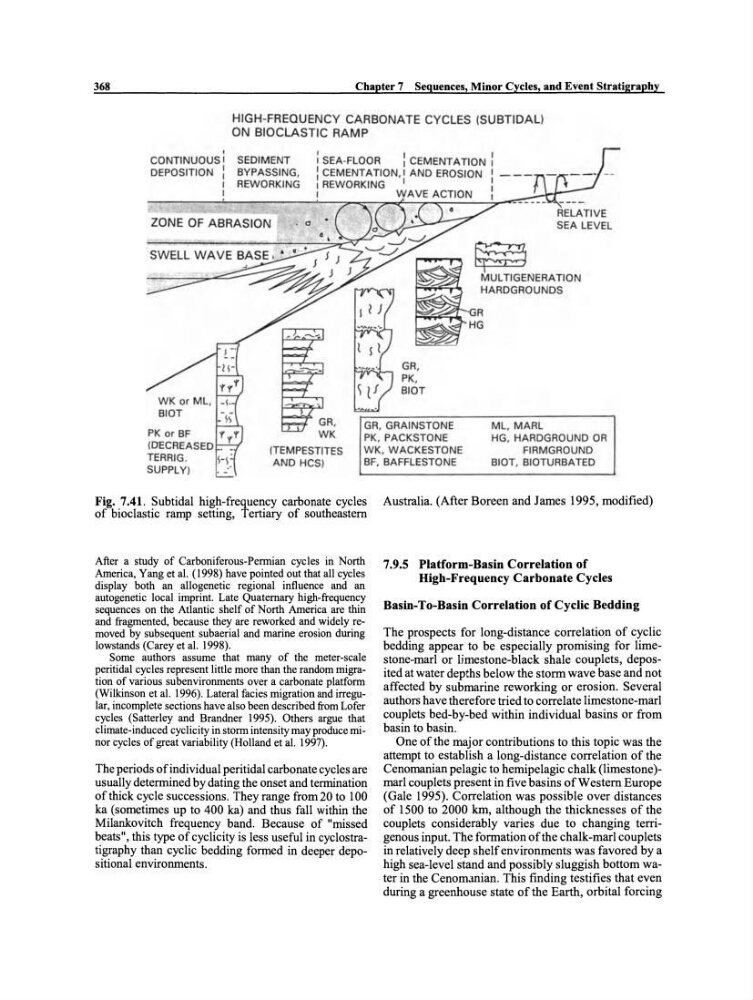
Fig. 7.41. Subtidal high-frequency carbonate cycles
of bioclastic ramp setting, Tertiary of southeastern
After a study of Carboniferous-Permian eyc1es in North
Arnerica, Yang et al. (1998) have pointed out that all eyc1es
display both an allogenetic regional influenee and an
autogenetie loeal imprint. Late Quatemary high-frequency
sequences on the Atlantie shelf of North Arneriea are thin
and fragmented, because they are reworked and widely removed by subsequent subaerial and marine erosion during
lowstands (Carey et al. 1998).
Some authors assume that many of the meter-scale
peritidal cyc1es represent little more than the random migration of various subenvironments over a carbonate platform
(Wilkinson et al. 1996). Lateral facies migration and irregular, incomplete seetions have also been described from Lofer
cycles (Satterley and Brandner 1995). Others argue that
climate-induced cyclicity in storm intensity may produee minor eycles of great variability (Holland et al. 1997).
The periods of individual peritidal carbonate cycles are
usually determined by dating the onset and termination
of thick cycle successions. They range from 20 to 100
ka (sometimes up to 400 ka) and thus fall within the
Milankovitch frequency band. Because of "rnissed
beats", this type of cyclicity is less useful in cyclostratigraphy than cyclic bedding formed in deeper depositional environments.
Australia. (After Boreen and James 1995, modified)
7.9.5 Platform-Basin Correlation of
High-Frequency Carbonate Cycles
Basin-To-Basin Correlation of Cyclic Bedding
The prospects for long-distance correlation of cyclic
bedding appear to be especially prornising for limestone-marl or limestone-black shale couplets, deposited at water depths below the storm wave base and not
affected by submarine reworking or erosion. Several
authors have therefore tried to correlate limestone-marl
couplets bed-by-bed within individual basins or from
basin to basin.
One ofthe major contributions to this topic was the
attempt to establish a long-distance correlation of the
Cenomanian pelagic to hemipelagic chalk (limestone )mari couplets present in five basins ofWestern Europe
(Gale 1995). Correlation was possible over distances
of 1500 to 2000 km, although the thicknesses of the
couplets considerably varies due to changing terrigenous input. The formation ofthe chalk-marl couplets
in relatively deep shelf environments was favored by a
high sea-level stand and possibly sluggish bottom water in the Cenom.mian. This finding testifies that even
during a greenhouse state of the Earth, orbital forcing
Chapter 7 Sequences, Minor CycIes, and Event Stratigraphy
HIGH-FREQUENCY CARBONATE CYCLES (SUBTIDAL)
ON BIOCLASTIC RAMP
,
CONTINUOUS I SEDIMENT
DEPOSITION : BYPASSING,
I REWORKING
I
I
I
I
I SEA-FLOOR
I CEMENTATION I
: CEMENTATION,I AND EROSION I __ _
I REWORKING
I
:
I
WAVE ACTION
I
ZONE OF ABRASION
~ MULTIGENERATION
HARDGROUNDS
GR,
WK
(TEMPESTITES
AND HCS )
GR, GRAINSTONE
PK, PACKSTONE
WK , WACKESTONE
BF, BAFFLESTONE
ML, MARL
HG , HARDGROUND OR
FIRMGROUND
BIOT, BIOTURBA TED
Fig. 7.41. Subtidal high-frequency carbonate cycles
of bioclastic ramp setting, Tertiary of southeastern
After a study of Carboniferous-Permian eyc1es in North
Arnerica, Yang et al. (1998) have pointed out that all eyc1es
display both an allogenetic regional influenee and an
autogenetie loeal imprint. Late Quatemary high-frequency
sequences on the Atlantie shelf of North Arneriea are thin
and fragmented, because they are reworked and widely removed by subsequent subaerial and marine erosion during
lowstands (Carey et al. 1998).
Some authors assume that many of the meter-scale
peritidal cyc1es represent little more than the random migration of various subenvironments over a carbonate platform
(Wilkinson et al. 1996). Lateral facies migration and irregular, incomplete seetions have also been described from Lofer
cycles (Satterley and Brandner 1995). Others argue that
climate-induced cyclicity in storm intensity may produee minor eycles of great variability (Holland et al. 1997).
The periods of individual peritidal carbonate cycles are
usually determined by dating the onset and termination
of thick cycle successions. They range from 20 to 100
ka (sometimes up to 400 ka) and thus fall within the
Milankovitch frequency band. Because of "rnissed
beats", this type of cyclicity is less useful in cyclostratigraphy than cyclic bedding formed in deeper depositional environments.
Australia. (After Boreen and James 1995, modified)
7.9.5 Platform-Basin Correlation of
High-Frequency Carbonate Cycles
Basin-To-Basin Correlation of Cyclic Bedding
The prospects for long-distance correlation of cyclic
bedding appear to be especially prornising for limestone-marl or limestone-black shale couplets, deposited at water depths below the storm wave base and not
affected by submarine reworking or erosion. Several
authors have therefore tried to correlate limestone-marl
couplets bed-by-bed within individual basins or from
basin to basin.
One ofthe major contributions to this topic was the
attempt to establish a long-distance correlation of the
Cenomanian pelagic to hemipelagic chalk (limestone )mari couplets present in five basins ofWestern Europe
(Gale 1995). Correlation was possible over distances
of 1500 to 2000 km, although the thicknesses of the
couplets considerably varies due to changing terrigenous input. The formation ofthe chalk-marl couplets
in relatively deep shelf environments was favored by a
high sea-level stand and possibly sluggish bottom water in the Cenom.mian. This finding testifies that even
during a greenhouse state of the Earth, orbital forcing