

7.9 Cyclo- and Event Stratigraphy
363
DEEP SEA
DEEP SEA RISE
WITHIN RANGE
COVERED WJTH
MARGINAL
DEEP SEA
OUTER SHELF
DEEP CARBONATE RAMP
EPICONTINENTAL SEA
OF LYSOCLlNE
CARBONATE
EXCHANGE
OFC01l-;"
PLANKTONIC
CARBONATE PROe.
(SINCE JURASSIC)
VARYING
INFLUX OF
HYDROGEN
CARBONATE
' 1' .: iL.::: :- • ';':;:i;::":~" - - . ' ~' ... , ..... - - . ""(':" "" .:. P. : ':: -'-' :'" .... :._.
DEPTH RANGE OF
STORM-INDUCED
BOTTOM CURRENTS
~
f'"
:!: PERIODS OF
~ ~ , (
OXYGEN MINIMU~
~SBm • • ~r.:!: SOME DISSOLUTION OF CARBONATE
:!: DISSOLUTION
OF CARBONATE
MUD
TURBIDITE
·CLAYSTONE
MARL
SUCCESSION
\ . (
" ?;..,\""
'i 'i .
=- ;:-;)
, , .
-i-+\
j~j
:!: THIN
MARLY
INTERBED
PREDOMINANTLY
PELAGIC
LIMESTONES
(EXTENSIVE DISSOLUTION,
THIN COUPLETS)
=""'--,;. INCREASING CARBONATE CONTENT
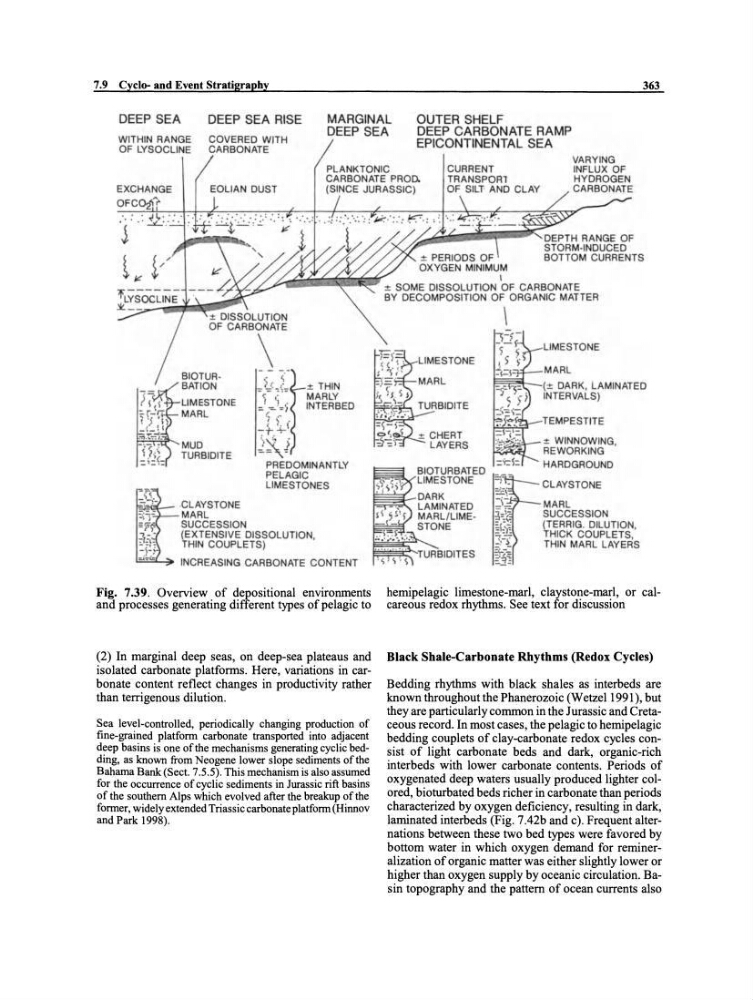
Fig. 7.39. Overview of depositional environments
and processes generating different types of pelagic to
(2) In marginal deep seas, on deep-sea plateaus and
isolated carbonate platforms. Here, variations in carbonate content reflect changes in productivity rather
than terrigenous dilution.
Sea level-controlled, periodically changing production of
fine-grained platform carbonate transported into adjacent
deep basins is one ofthe mechanisms generating cyc1ic bedding, as known from Neogene lower slope sediments ofthe
Bahama Bank (Sect. 7.5.5). This mechanism is also assumed
for the occurrence of cyc1ic sediments in Jurassic rift basins
of the southem Alps which evolved after the breakup of the
former, widely extended Triassic carbonate platform (Hinnov
and Park 1998).
BY DECOMPOSITION OF ORGANIC MATTER
LIMESTONE
BIOTURBATED
""""""'""'~LlMESTONE
e::::==:;;iI-- DA R K
LAMINATED
MARLfLlME·
STONE
..... ..... TURBIDITES
. ~ ~ . s
\
LIMESTONE
MARL
(:!: DARK, LAMINATED
INTERVALS)
TEMPESTITE
:!: WINNOWING,
REWORKING
HARDGROUND
CLAYSTONE
MARL
SUCCESSION
(TERRIG. DILUTION,
THICK COUPLETS,
THIN MARL LAYERS
hemipelagic limestone-marl, claystone-marl, or calcareous redox rhythms. See text for discussion
Black Shale-Carbonate Rhythms (Redox Cycles)
Bedding rhythms with black shales as interbeds are
known throughout the Phanerozoic (W etzeI1991), but
they are particularly common in the Jurassie and Cretaceous record. In most cases, the pelagic to hemipelagic
bedding couplets of clay-carbonate redox cycles consist of light carbonate beds and dark, organic-rich
interbeds with lower carbonate contents. Periods of
oxygenated deep waters usually produced lighter co 1ored, bioturbated beds richer in carbonate than periods
characterized by oxygen deficiency, resulting in dark,
laminated interbeds (Fig. 7.42b and c). Frequent alternations between these two bed types were favored by
bottom water in which oxygen demand for remineralization of organic matter was either slightly lower or
higher than oxygen supply by oceanic circulation. Basin topography and the pattern of ocean currents also
363
DEEP SEA
DEEP SEA RISE
WITHIN RANGE
COVERED WJTH
MARGINAL
DEEP SEA
OUTER SHELF
DEEP CARBONATE RAMP
EPICONTINENTAL SEA
OF LYSOCLlNE
CARBONATE
EXCHANGE
OFC01l-;"
PLANKTONIC
CARBONATE PROe.
(SINCE JURASSIC)
VARYING
INFLUX OF
HYDROGEN
CARBONATE
' 1' .: iL.::: :- • ';':;:i;::":~" - - . ' ~' ... , ..... - - . ""(':" "" .:. P. : ':: -'-' :'" .... :._.
DEPTH RANGE OF
STORM-INDUCED
BOTTOM CURRENTS
~
f'"
:!: PERIODS OF
~ ~ , (
OXYGEN MINIMU~
~SBm • • ~r.:!: SOME DISSOLUTION OF CARBONATE
:!: DISSOLUTION
OF CARBONATE
MUD
TURBIDITE
·CLAYSTONE
MARL
SUCCESSION
\ . (
" ?;..,\""
'i 'i .
=- ;:-;)
, , .
-i-+\
j~j
:!: THIN
MARLY
INTERBED
PREDOMINANTLY
PELAGIC
LIMESTONES
(EXTENSIVE DISSOLUTION,
THIN COUPLETS)
=""'--,;. INCREASING CARBONATE CONTENT
Fig. 7.39. Overview of depositional environments
and processes generating different types of pelagic to
(2) In marginal deep seas, on deep-sea plateaus and
isolated carbonate platforms. Here, variations in carbonate content reflect changes in productivity rather
than terrigenous dilution.
Sea level-controlled, periodically changing production of
fine-grained platform carbonate transported into adjacent
deep basins is one ofthe mechanisms generating cyc1ic bedding, as known from Neogene lower slope sediments ofthe
Bahama Bank (Sect. 7.5.5). This mechanism is also assumed
for the occurrence of cyc1ic sediments in Jurassic rift basins
of the southem Alps which evolved after the breakup of the
former, widely extended Triassic carbonate platform (Hinnov
and Park 1998).
BY DECOMPOSITION OF ORGANIC MATTER
LIMESTONE
BIOTURBATED
""""""'""'~LlMESTONE
e::::==:;;iI-- DA R K
LAMINATED
MARLfLlME·
STONE
..... ..... TURBIDITES
. ~ ~ . s
\
LIMESTONE
MARL
(:!: DARK, LAMINATED
INTERVALS)
TEMPESTITE
:!: WINNOWING,
REWORKING
HARDGROUND
CLAYSTONE
MARL
SUCCESSION
(TERRIG. DILUTION,
THICK COUPLETS,
THIN MARL LAYERS
hemipelagic limestone-marl, claystone-marl, or calcareous redox rhythms. See text for discussion
Black Shale-Carbonate Rhythms (Redox Cycles)
Bedding rhythms with black shales as interbeds are
known throughout the Phanerozoic (W etzeI1991), but
they are particularly common in the Jurassie and Cretaceous record. In most cases, the pelagic to hemipelagic
bedding couplets of clay-carbonate redox cycles consist of light carbonate beds and dark, organic-rich
interbeds with lower carbonate contents. Periods of
oxygenated deep waters usually produced lighter co 1ored, bioturbated beds richer in carbonate than periods
characterized by oxygen deficiency, resulting in dark,
laminated interbeds (Fig. 7.42b and c). Frequent alternations between these two bed types were favored by
bottom water in which oxygen demand for remineralization of organic matter was either slightly lower or
higher than oxygen supply by oceanic circulation. Basin topography and the pattern of ocean currents also