

362
Chapter 7 Sequences, Minor CycIes, and Event Stratigraphy
CHANGE IN
PRIMARY
COMPOS.
RATE OF
SEDIM.
l310TURBATION
a CYCLIC BEDOING
COMPONENT A
(CaC031
GOMPONENT B
r CLAY")
MEAN COMPOSITION
b TURBIDITES
BACKGROUND
SEDIMENT
ACCUrLATION
!---III
,
EROSION
MEAN COMPOSITION
l
bzm~&zzmm ~~:
I"- - ~
ANOXIC
p"'I)IPXIC
,",- - -~
EXPOSURE
·SEDIMENT
BUILDUP
I
I
I
I
I
I
I
--/<'/-"--. ~
I
I
I
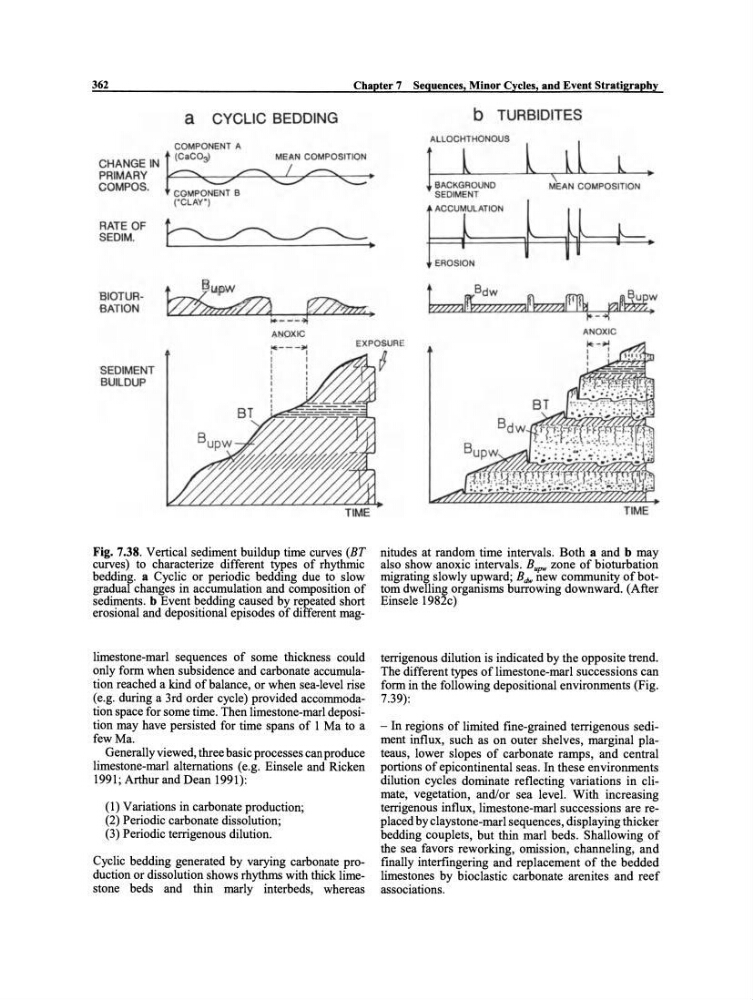
Fig. 7.38. Vertical sediment buildup time curves (BT
curves) to characterize different types of rhythmic
bedding. a Cyclic or periodic bedding due to slow
gradual changes in accumulation and composition of
sediments. b Event bedding caused by repeated short
erosional and depositional episodes of different maglimestone-marl sequences of some thickness could
only form when subsidence and carbonate accumulati on reached a kind of balance, or when sea-Ievel rise
(e.g. during a 3rd order cycle) provided acconunodation space for some time. Then limestone-marl deposition may have persisted for time spans of I Ma to a
fewMa.
Generally viewed, three basic processes can produce
limestone-marl alternations (e.g. Einseie and Ricken
1991; Arthur and Dean 1991):
( 1) Variations in carbonate production;
(2) Periodic carbonate dissolution;
(3) Periodic terrigenous dilution.
Cyclic bedding generated by varying carbonate production or dissolution shows rhythrns with thick limestone beds and thin marly interbeds, whereas
nitudes at random time intervals. Both a and b may
also show anoxic intervals. B upw zone of bioturbation
migrating slowly upward; B dw new community ofbottom dwelling organisrns burrowing downward. (After
Einseie 1982c)
terrigenous dilution is indicated by the opposite trend.
The different types of limestone-marl successions can
form in the following depositional environments (Fig.
7.39):
- In regions of limited fine-grained terrigenous sediment influx, such as on outer shelves, marginal plateaus, 10wer slopes of carbonate ramps, and central
portions of epicontinental seas. In these environments
dilution cycles dominate reflecting variations in climate, vegetation, andlor sea level. With increasing
terrigenous influx, limestone-marl successions are replaced by claystone-marl sequences, displaying thicker
bedding couplets, but thin mari beds. Shallowing of
the sea favors reworking, omission, channeling, and
finally interfingering and replacement of the bedded
limestones by bioclastic carbonate arenites and reef
associations.
Chapter 7 Sequences, Minor CycIes, and Event Stratigraphy
CHANGE IN
PRIMARY
COMPOS.
RATE OF
SEDIM.
l310TURBATION
a CYCLIC BEDOING
COMPONENT A
(CaC031
GOMPONENT B
r CLAY")
MEAN COMPOSITION
b TURBIDITES
BACKGROUND
SEDIMENT
ACCUrLATION
!---III
,
EROSION
MEAN COMPOSITION
l
bzm~&zzmm ~~:
I"- - ~
ANOXIC
p"'I)IPXIC
,",- - -~
EXPOSURE
·SEDIMENT
BUILDUP
I
I
I
I
I
I
I
--/<'/-"--. ~
I
I
I
Fig. 7.38. Vertical sediment buildup time curves (BT
curves) to characterize different types of rhythmic
bedding. a Cyclic or periodic bedding due to slow
gradual changes in accumulation and composition of
sediments. b Event bedding caused by repeated short
erosional and depositional episodes of different maglimestone-marl sequences of some thickness could
only form when subsidence and carbonate accumulati on reached a kind of balance, or when sea-Ievel rise
(e.g. during a 3rd order cycle) provided acconunodation space for some time. Then limestone-marl deposition may have persisted for time spans of I Ma to a
fewMa.
Generally viewed, three basic processes can produce
limestone-marl alternations (e.g. Einseie and Ricken
1991; Arthur and Dean 1991):
( 1) Variations in carbonate production;
(2) Periodic carbonate dissolution;
(3) Periodic terrigenous dilution.
Cyclic bedding generated by varying carbonate production or dissolution shows rhythrns with thick limestone beds and thin marly interbeds, whereas
nitudes at random time intervals. Both a and b may
also show anoxic intervals. B upw zone of bioturbation
migrating slowly upward; B dw new community ofbottom dwelling organisrns burrowing downward. (After
Einseie 1982c)
terrigenous dilution is indicated by the opposite trend.
The different types of limestone-marl successions can
form in the following depositional environments (Fig.
7.39):
- In regions of limited fine-grained terrigenous sediment influx, such as on outer shelves, marginal plateaus, 10wer slopes of carbonate ramps, and central
portions of epicontinental seas. In these environments
dilution cycles dominate reflecting variations in climate, vegetation, andlor sea level. With increasing
terrigenous influx, limestone-marl successions are replaced by claystone-marl sequences, displaying thicker
bedding couplets, but thin mari beds. Shallowing of
the sea favors reworking, omission, channeling, and
finally interfingering and replacement of the bedded
limestones by bioclastic carbonate arenites and reef
associations.