

7.3 Coastal and Shallow-Marine Siliciclastic Systems
323
a CHRONOSTRATIGRAPHIC DIAGRAM OF TWO PASSIVE MAAGIN SEQUENCES
SEDIMENT SUPPL Y
_ -1i:!~":-_
~
~ ~~.-:-- . . -.
SUBMARINE EROSION
OR NON·DEPOSITION
FLUVIAL
_ -~.:::
...... 0 b-' __
--BASIN FLOOR FAN
EUSTASY
HIGH LOW
. ~
I " ,
YOUNGER FANS.
MASS FLOWS ,
TURBIDITES
b LOWSTAND SYSTEMS TRACT OF PASSIVE MARGIN
CANYON FILL
LOWSTAND
WEDGE
SLUMPS. DEBRIS FLOWS
SLOPE FANS.
± BACKSTEPPING
OLOER SB
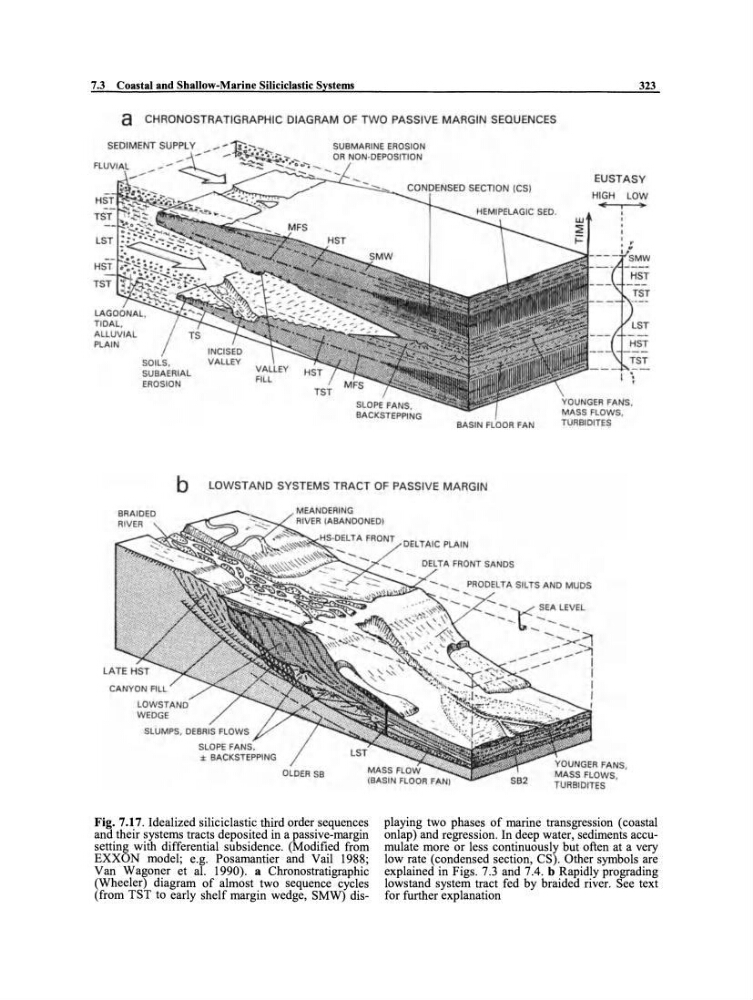
Fig. 7.17. Idealized siliciclastic third order sequences
and their systems tracts deposited in a passive-margin
setting with differential subsidence. (Modified from
EXXON model; e.g. Posamantier and Vail 1988;
Van Wagoner et al. 1990). a Chronostratigraphic
(Wheeler) diagram of almost two sequence cycles
(from TST to early shelf margin wedge, SMW) disDELTAIC PLAIN
PRODELTA SILTS AND MUDS
....... - ~ SEA LEVEL
....
-
...
-
- ....... -
--':.:--:?i
__ --- -- __ -4
---- --~
I
- -
I
I
I
YOUNGER FANS,
MASS FLOWS.
TURBIDITES
playing two phases of marine transgression (coastal
onlap) and regression. In deep water, sediments ac cumulate more or less continuously but often at a very
low rate (condensed section, CS). Other symbols are
explained in Figs. 7.3 and 7.4. b Rapidly prograding
lowstand system tract fed by braided river. See text
for further explanation
323
a CHRONOSTRATIGRAPHIC DIAGRAM OF TWO PASSIVE MAAGIN SEQUENCES
SEDIMENT SUPPL Y
_ -1i:!~":-_
~
~ ~~.-:-- . . -.
SUBMARINE EROSION
OR NON·DEPOSITION
FLUVIAL
_ -~.:::
...... 0 b-' __
--BASIN FLOOR FAN
EUSTASY
HIGH LOW
. ~
I " ,
YOUNGER FANS.
MASS FLOWS ,
TURBIDITES
b LOWSTAND SYSTEMS TRACT OF PASSIVE MARGIN
CANYON FILL
LOWSTAND
WEDGE
SLUMPS. DEBRIS FLOWS
SLOPE FANS.
± BACKSTEPPING
OLOER SB
Fig. 7.17. Idealized siliciclastic third order sequences
and their systems tracts deposited in a passive-margin
setting with differential subsidence. (Modified from
EXXON model; e.g. Posamantier and Vail 1988;
Van Wagoner et al. 1990). a Chronostratigraphic
(Wheeler) diagram of almost two sequence cycles
(from TST to early shelf margin wedge, SMW) disDELTAIC PLAIN
PRODELTA SILTS AND MUDS
....... - ~ SEA LEVEL
....
-
...
-
- ....... -
--':.:--:?i
__ --- -- __ -4
---- --~
I
- -
I
I
I
YOUNGER FANS,
MASS FLOWS.
TURBIDITES
playing two phases of marine transgression (coastal
onlap) and regression. In deep water, sediments ac cumulate more or less continuously but often at a very
low rate (condensed section, CS). Other symbols are
explained in Figs. 7.3 and 7.4. b Rapidly prograding
lowstand system tract fed by braided river. See text
for further explanation