

2.1 Glacial Deposits
..........
\-...
23
ICE TUNNEl
-... ...... -...-- -... ---...
--. ....... --. ..... ......
-WITH MASSIVE SAND
CROSS L AMINATION
W ITH BALL AND
CROSS BEDD\NG
PILLOW STRUCTURES
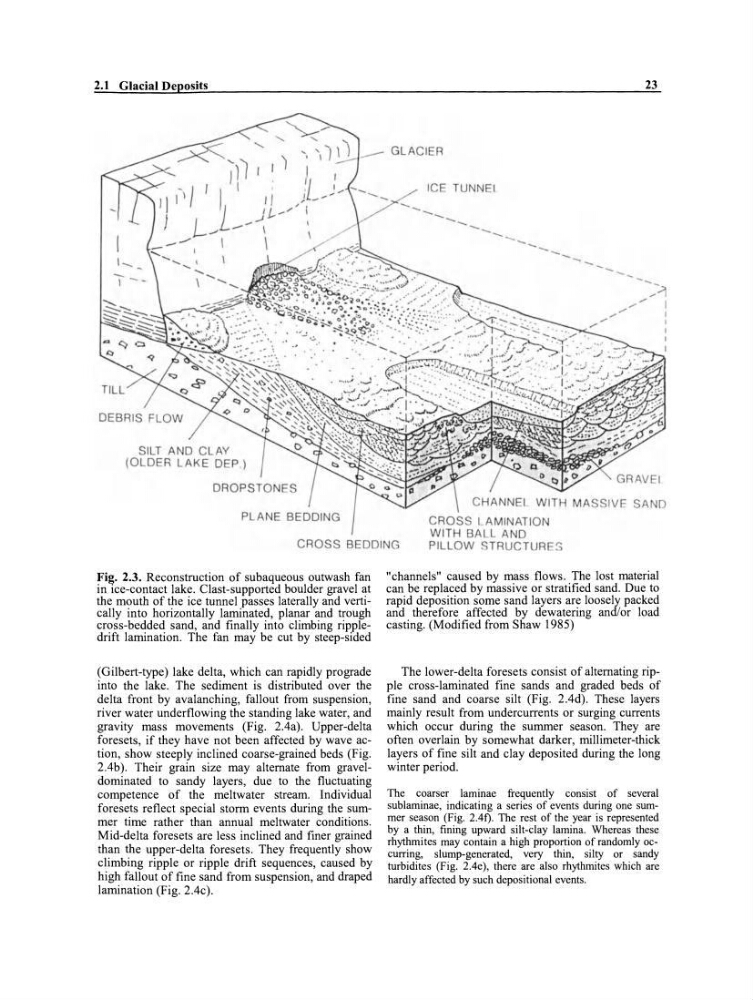
Fig. 2.3. Reconstruction of subaqueous outwash fan
in ice-contact lake. Clast-supported boulder gravel at
the mouth of the ice tunnel passes laterally and vertically into horizontally laminated, planar and trough
cross-bedded sand, and finally into climbing rippledrift larnination. The fan may be cut by steep-sided
(Gilbert-type) lake delta, which can rapidly pro grade
into the lake. The sediment is distributed over the
delta front by avalanching, fallout from suspension,
river water underflowing the standing lake water, and
gravity mass movements (Fig. 2.4a). Upper-delta
foresets, if they have not been affected by wave action, show steeply inclined coarse-grained beds (Fig.
2.4b). Their grain size may alternate from graveldominated to sandy layers, due to the fluctuating
competence of the meltwater stream. Individual
foresets reflect special storm events during the summer time rather than annual meltwater conditions.
Mid-delta fore sets are less inclined and finer grained
than the upper-delta foresets. They frequently show
climbing ripple or ripple drift sequences, caused by
high fallout of fine sand from suspension, and draped
lamination (Fig. 2.4c).
"channels" caused by mass flows. The lost material
can be replaced by massive or stratified sand. Due to
rapid deposition some sand layers are loosely packcd
and therefore affected by dewatering and/or load
casting. (Modified from Shaw 1985)
The lower-delta foresets consist of alternating ripple cross-laminated fine sands and graded beds of
fine sand and coarse silt (Fig. 2.4d). These layers
mainly result from undercurrents or surging currents
which occur during the summer season. They are
often overlain by somewhat darker, millimeter-thick
layers of fine silt and clay deposited during the long
winter period.
The coarser laminae frequently consist of several
sublaminae, indicating aseries of evcnts during one summer season (Fig. 2Af). The rest of the year is represented
by a thin, fining upward silt-clay lamina. Whereas these
rhythmites may contain a high proportion of randomly occurring, slump-generated, very thin, silty or sandy
turbidites (Fig. 2Ae), there are also rhythmites which are
hardly affected by such depositional events.
..........
\-...
23
ICE TUNNEl
-... ...... -...-- -... ---...
--. ....... --. ..... ......
-WITH MASSIVE SAND
CROSS L AMINATION
W ITH BALL AND
CROSS BEDD\NG
PILLOW STRUCTURES
Fig. 2.3. Reconstruction of subaqueous outwash fan
in ice-contact lake. Clast-supported boulder gravel at
the mouth of the ice tunnel passes laterally and vertically into horizontally laminated, planar and trough
cross-bedded sand, and finally into climbing rippledrift larnination. The fan may be cut by steep-sided
(Gilbert-type) lake delta, which can rapidly pro grade
into the lake. The sediment is distributed over the
delta front by avalanching, fallout from suspension,
river water underflowing the standing lake water, and
gravity mass movements (Fig. 2.4a). Upper-delta
foresets, if they have not been affected by wave action, show steeply inclined coarse-grained beds (Fig.
2.4b). Their grain size may alternate from graveldominated to sandy layers, due to the fluctuating
competence of the meltwater stream. Individual
foresets reflect special storm events during the summer time rather than annual meltwater conditions.
Mid-delta fore sets are less inclined and finer grained
than the upper-delta foresets. They frequently show
climbing ripple or ripple drift sequences, caused by
high fallout of fine sand from suspension, and draped
lamination (Fig. 2.4c).
"channels" caused by mass flows. The lost material
can be replaced by massive or stratified sand. Due to
rapid deposition some sand layers are loosely packcd
and therefore affected by dewatering and/or load
casting. (Modified from Shaw 1985)
The lower-delta foresets consist of alternating ripple cross-laminated fine sands and graded beds of
fine sand and coarse silt (Fig. 2.4d). These layers
mainly result from undercurrents or surging currents
which occur during the summer season. They are
often overlain by somewhat darker, millimeter-thick
layers of fine silt and clay deposited during the long
winter period.
The coarser laminae frequently consist of several
sublaminae, indicating aseries of evcnts during one summer season (Fig. 2Af). The rest of the year is represented
by a thin, fining upward silt-clay lamina. Whereas these
rhythmites may contain a high proportion of randomly occurring, slump-generated, very thin, silty or sandy
turbidites (Fig. 2Ae), there are also rhythmites which are
hardly affected by such depositional events.