

7.2 Basic Concepts
309
ASYMMETRIC SEA- OR LAKE-LEVEL CHANGE
LAKE
SLF>SUB
c
RAPID
DEEPEN.
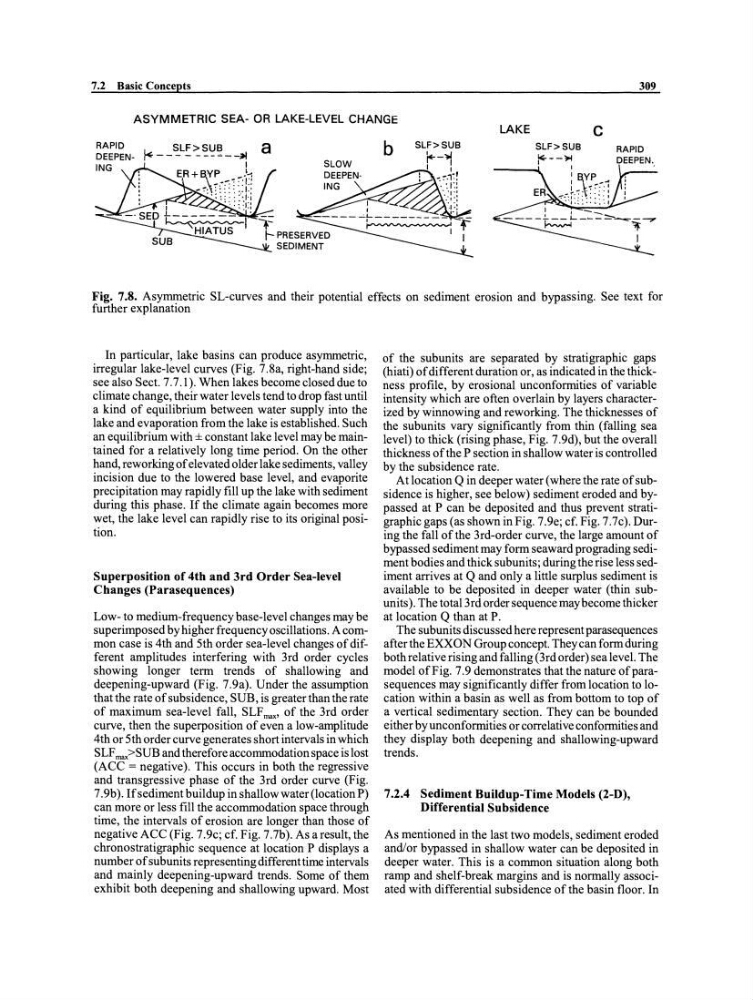
Fig. 7.8. Asymmetrie SL-eurves and their potential effeets on sediment erosion and bypassing. See text for
further explanation
In partieular, lake basins ean produee asymmetrie,
irregular lake-level eurves (Fig. 7.8a, right-hand side;
see also Seet. 7.7.1). When lakes beeome closed due to
climate change, their water levels tend to drop fast until
a kind of equilibrium between water supply into the
lake and evaporation from the lake is established. Such
an equilibrium with ± eonstant lake level may be maintained for a relatively long time period. On the other
hand, reworking of elevated older lake sediments, valley
ineision due to the lowered base level, and evaporite
preeipitation may rapidly fill up the lake with sediment
during this phase. If the climate again beeomes more
wet, the lake level ean rapidly rise to its original position.
Superposition of 4th and 3rd Order Sea-Ievel
Changes (Parasequences)
Low- to medium-frequeney base-level ehanges rnay be
superimposed by higher frequeney oseillations. A eommon ease is 4th and 5th order sea-Ievel ehanges of different amplitudes interfering with 3rd order eycles
showing longer term trends of shallowing and
deepening-upward (Fig. 7.9a). Under the assumption
that the rate of subsidence, SUB, is greater than the rate
of maximum sea-level fall, SLF max' of the 3rd order
eurve, then the superposition of even a low-amplitude
4th or 5th order eurve generates short intervals in whieh
SLF max>SUB and therefore aceommodation spaee is lost
(ACC = negative). This oeeurs in both the regressive
and transgressive phase of the 3rd order eurve (Fig.
7. 9b). If sediment buildup in shallow water (loeation P)
ean more or less fill the aeeommodation spaee through
time, the intervals of erosion are longer than those of
negative ACC (Fig. 7.ge; cf. Fig. 7. 7b). As a result, the
ehronostratigraphie sequenee at loeation P displays a
number of subunits representing different time intervals
and mainly deepening-upward trends. Some of them
exhibit both deepening and shallowing upward. Most
of the subunits are separated by stratigraphie gaps
(hiati) of different duration or, as indieated in the thiekness profile, by erosional uneonforrnities of variable
intensity whieh are often overlain by layers eharaeterized by winnowing and reworking. The thieknesses of
the subunits vary signifieantly from thin (falling sea
level) to thiek (rising phase, Fig. 7.9d), but the overall
thiekness of the P seetion in shallow water is eontrolled
by the subsidenee rate.
At loeation Q in deeper water (where the rate of subsidenee is higher, see below) sediment eroded and bypassed at P ean be deposited and thus prevent stratigraphie gaps (as shown in Fig. 7.ge; cf. Fig. 7.7e). During the fall of the 3rd-order eurve, the large amount of
bypassed sediment may form seaward prograding sediment bodies and thiek subunits; during the rise less sediment arrives at Q and only a little surplus sediment is
available to be deposited in deeper water (thin subunits). The total3rd order sequenee may beeome thieker
at loeation Q than at P.
The subunits diseussed here represent parasequenees
after the EXXON Group eoneept. Theyean form during
bothrelative rising and falling (3rd order) sea level. The
model ofFig. 7.9 demonstrates that the nature ofparasequenees may signifieantly differ from loeation to 10eation within a basin as weil as from bottom to top of
a vertieal sedimentary seetion. They ean be bounded
either byuneonforrnities or eorrelative eonforrnities and
they display both deepening and shallowing-upward
trends.
7.2.4 Sediment Buildup-Time Models (2-D),
Differential Subsidence
As mentioned in the last two models, sediment eroded
andlor bypassed in shallow water ean be deposited in
deeper water. This is a eommon situation along both
ramp and shelf-break margins and is normally assoeiated with differential subsidenee of the basin floor. In
309
ASYMMETRIC SEA- OR LAKE-LEVEL CHANGE
LAKE
SLF>SUB
c
RAPID
DEEPEN.
Fig. 7.8. Asymmetrie SL-eurves and their potential effeets on sediment erosion and bypassing. See text for
further explanation
In partieular, lake basins ean produee asymmetrie,
irregular lake-level eurves (Fig. 7.8a, right-hand side;
see also Seet. 7.7.1). When lakes beeome closed due to
climate change, their water levels tend to drop fast until
a kind of equilibrium between water supply into the
lake and evaporation from the lake is established. Such
an equilibrium with ± eonstant lake level may be maintained for a relatively long time period. On the other
hand, reworking of elevated older lake sediments, valley
ineision due to the lowered base level, and evaporite
preeipitation may rapidly fill up the lake with sediment
during this phase. If the climate again beeomes more
wet, the lake level ean rapidly rise to its original position.
Superposition of 4th and 3rd Order Sea-Ievel
Changes (Parasequences)
Low- to medium-frequeney base-level ehanges rnay be
superimposed by higher frequeney oseillations. A eommon ease is 4th and 5th order sea-Ievel ehanges of different amplitudes interfering with 3rd order eycles
showing longer term trends of shallowing and
deepening-upward (Fig. 7.9a). Under the assumption
that the rate of subsidence, SUB, is greater than the rate
of maximum sea-level fall, SLF max' of the 3rd order
eurve, then the superposition of even a low-amplitude
4th or 5th order eurve generates short intervals in whieh
SLF max>SUB and therefore aceommodation spaee is lost
(ACC = negative). This oeeurs in both the regressive
and transgressive phase of the 3rd order eurve (Fig.
7. 9b). If sediment buildup in shallow water (loeation P)
ean more or less fill the aeeommodation spaee through
time, the intervals of erosion are longer than those of
negative ACC (Fig. 7.ge; cf. Fig. 7. 7b). As a result, the
ehronostratigraphie sequenee at loeation P displays a
number of subunits representing different time intervals
and mainly deepening-upward trends. Some of them
exhibit both deepening and shallowing upward. Most
of the subunits are separated by stratigraphie gaps
(hiati) of different duration or, as indieated in the thiekness profile, by erosional uneonforrnities of variable
intensity whieh are often overlain by layers eharaeterized by winnowing and reworking. The thieknesses of
the subunits vary signifieantly from thin (falling sea
level) to thiek (rising phase, Fig. 7.9d), but the overall
thiekness of the P seetion in shallow water is eontrolled
by the subsidenee rate.
At loeation Q in deeper water (where the rate of subsidenee is higher, see below) sediment eroded and bypassed at P ean be deposited and thus prevent stratigraphie gaps (as shown in Fig. 7.ge; cf. Fig. 7.7e). During the fall of the 3rd-order eurve, the large amount of
bypassed sediment may form seaward prograding sediment bodies and thiek subunits; during the rise less sediment arrives at Q and only a little surplus sediment is
available to be deposited in deeper water (thin subunits). The total3rd order sequenee may beeome thieker
at loeation Q than at P.
The subunits diseussed here represent parasequenees
after the EXXON Group eoneept. Theyean form during
bothrelative rising and falling (3rd order) sea level. The
model ofFig. 7.9 demonstrates that the nature ofparasequenees may signifieantly differ from loeation to 10eation within a basin as weil as from bottom to top of
a vertieal sedimentary seetion. They ean be bounded
either byuneonforrnities or eorrelative eonforrnities and
they display both deepening and shallowing-upward
trends.
7.2.4 Sediment Buildup-Time Models (2-D),
Differential Subsidence
As mentioned in the last two models, sediment eroded
andlor bypassed in shallow water ean be deposited in
deeper water. This is a eommon situation along both
ramp and shelf-break margins and is normally assoeiated with differential subsidenee of the basin floor. In