

280
a
HYDRAULIC GRADIENT
WITHIN SALT LAYER
I
I
I
I
Chapter 6 Special Depositional Environments
TENOENCY TO FORM
SALT STRUCTURE
SALT FLOW
(DR
PB -Pc < Os ( Zc .- ZR )
I
I
SALT , DENSITY Os = 2.2 g/ cm 3
Pr PB > DS(ZB - ZA)
A f
I
I
I
I
Zc
ZA
ZB
I
,
I
I
--..l.--- - - - - - - - - - Z = 0 - __ ..L _ _ _ _ _ _ _ _ _ _ _ _ _ _ _ L _ _
b DELTA LOBE
c
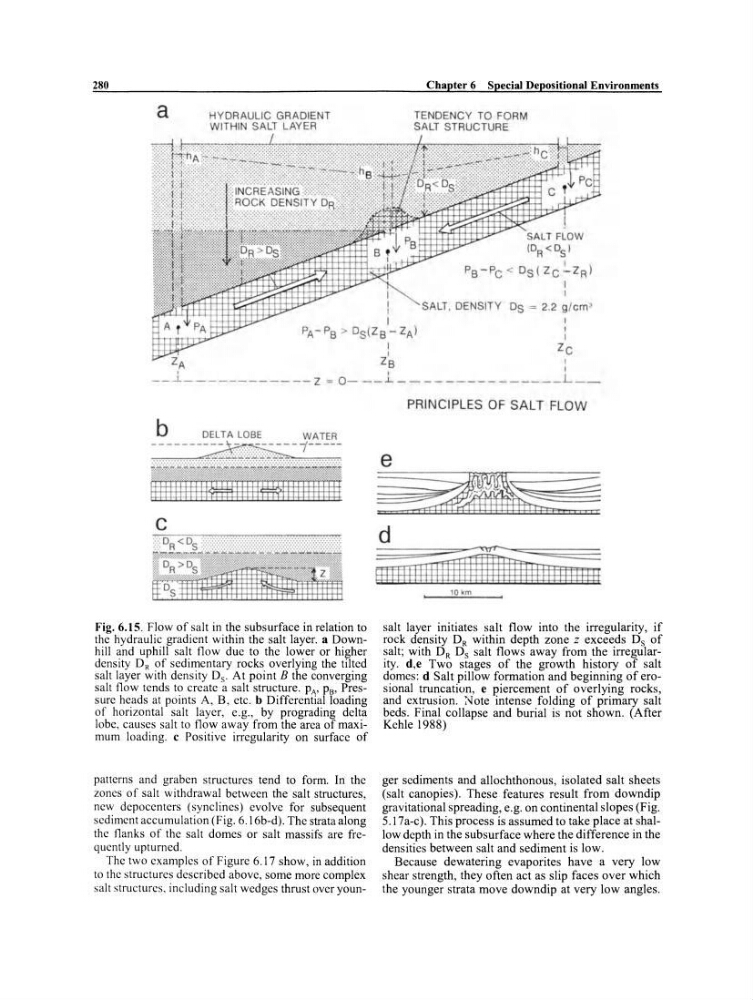
Fig. 6.15. Flow of salt in the subsurface in relation to
the hydraulic gradient within the salt layer. a Downhili and uphill salt flow due to the lower or higher
density D R of sedimentary rocks overlying the tilted
salt layer with density D s . At point B the eonverging
salt flow tends to ereate a salt strueture. PA' PB' Pressure heads at points A, B, etc. b Differentialloading
of horizontal salt layer, e.g., by prograding delta
lobe, eauses salt to flow away from the area of maximum loading. c Positive irregularity on surfaee of
patterns and graben structures tend to form. In the
zones of salt withdrawal between the salt structures,
new depocenters (sync\ines) evolve for sub se quent
sediment accumulation (Fig. 6.l6b-d). The strata along
the Danks of the salt domes or salt massifs are frequently upturned.
The two examples of Figure 6.17 show, in addition
to the struetures described above, some more eomplex
salt strueturcs, ine luding salt wedgcs thrust over younPRINCIPLES OF SAL T FLOW
e
d
10 km
salt layer initiates salt flow into the irregularity, if
rock density D R within depth zone z exceeds D s of
salt; with D R D s salt flows away from the irregularity. d,e Two stages of the growth history of salt
domes: d Salt pillow formation and beginning of erosional truncation, e piercement of overlying rocks,
and extrusion. Note intense folding of primary salt
beds. Final collapse and burial is not shown. (After
Kehle 1988)
ger sediments and allochthonous, isolated salt sheets
(salt canopies). These features result from downdip
gravitational spreading, e.g. on continental slopes (Fig.
5.17a-e). This process is assumed to take place at shallow depth in the subsurface where the difference in the
densities between salt and sediment is low.
Because dewatering evaporites have a very low
shear strength, they often act as slip faces over which
the younger strata move downdip at very low angles.
a
HYDRAULIC GRADIENT
WITHIN SALT LAYER
I
I
I
I
Chapter 6 Special Depositional Environments
TENOENCY TO FORM
SALT STRUCTURE
SALT FLOW
(DR
PB -Pc < Os ( Zc .- ZR )
I
I
SALT , DENSITY Os = 2.2 g/ cm 3
Pr PB > DS(ZB - ZA)
A f
I
I
I
I
Zc
ZA
ZB
I
,
I
I
--..l.--- - - - - - - - - - Z = 0 - __ ..L _ _ _ _ _ _ _ _ _ _ _ _ _ _ _ L _ _
b DELTA LOBE
c
Fig. 6.15. Flow of salt in the subsurface in relation to
the hydraulic gradient within the salt layer. a Downhili and uphill salt flow due to the lower or higher
density D R of sedimentary rocks overlying the tilted
salt layer with density D s . At point B the eonverging
salt flow tends to ereate a salt strueture. PA' PB' Pressure heads at points A, B, etc. b Differentialloading
of horizontal salt layer, e.g., by prograding delta
lobe, eauses salt to flow away from the area of maximum loading. c Positive irregularity on surfaee of
patterns and graben structures tend to form. In the
zones of salt withdrawal between the salt structures,
new depocenters (sync\ines) evolve for sub se quent
sediment accumulation (Fig. 6.l6b-d). The strata along
the Danks of the salt domes or salt massifs are frequently upturned.
The two examples of Figure 6.17 show, in addition
to the struetures described above, some more eomplex
salt strueturcs, ine luding salt wedgcs thrust over younPRINCIPLES OF SAL T FLOW
e
d
10 km
salt layer initiates salt flow into the irregularity, if
rock density D R within depth zone z exceeds D s of
salt; with D R D s salt flows away from the irregularity. d,e Two stages of the growth history of salt
domes: d Salt pillow formation and beginning of erosional truncation, e piercement of overlying rocks,
and extrusion. Note intense folding of primary salt
beds. Final collapse and burial is not shown. (After
Kehle 1988)
ger sediments and allochthonous, isolated salt sheets
(salt canopies). These features result from downdip
gravitational spreading, e.g. on continental slopes (Fig.
5.17a-e). This process is assumed to take place at shallow depth in the subsurface where the difference in the
densities between salt and sediment is low.
Because dewatering evaporites have a very low
shear strength, they often act as slip faces over which
the younger strata move downdip at very low angles.