

240
STATIC SYSTEM
(± CLOSED)
Chapter 5 Oceanic Sediments
a SOLUTION PUMP
DYNAMIC SYSTEM
TA1R = T SEA
(LOCALL Y AND REGIONALL Y OPEN)
OUTGASSING
COLD SEA W A TER,
RICH IN CO 2
d HEAT PUMP
COLD AIR
b BIOLOGICAL PUMP
C COMBINED EFFECTS OF
BIOLOGICAL PUMP AND SOLUTION PUMP
LOW-LATITUDE UPWELUNG
± INPUT AND
BURIAL OF
(HIGH PRODUCTION _UTTLE OUTGASSINGI
TERRESTRIAL
\
ORG . MATTER
CO 2
\ . . -
~
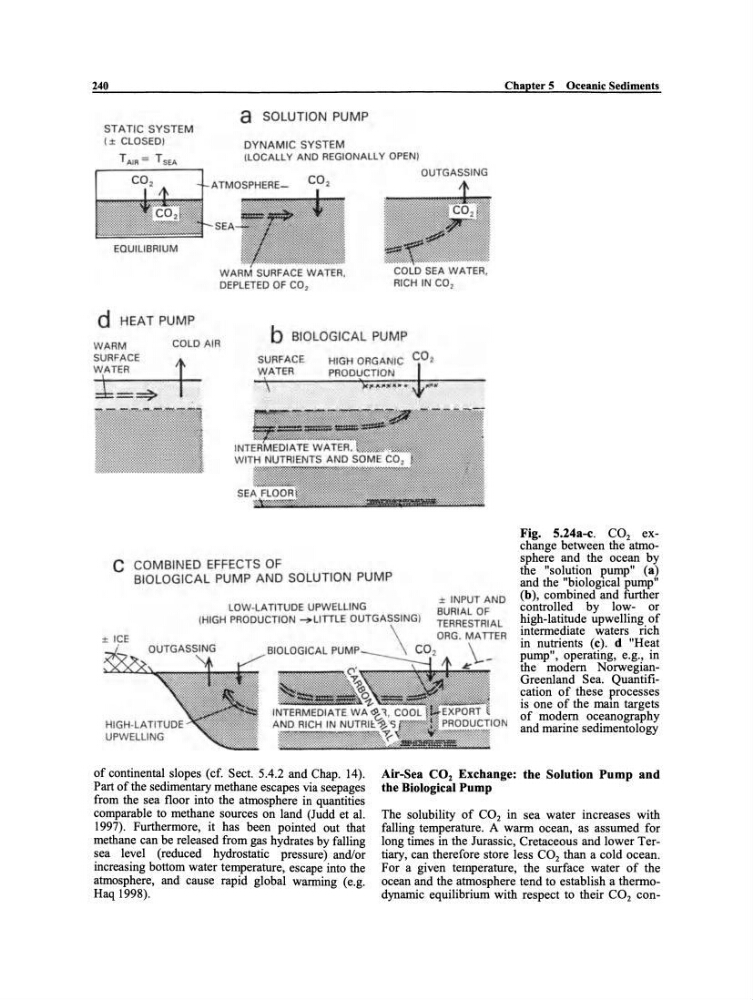
Fig. 5.24a-c. CO 2 exchange between the atmosphere and the ocean by
HIGH-LATITUDE
UPWELLING
the "solution {lump" (a)
and the "biologlcal pump"
(b), combined and further
controlled by low- or
high-latitude upwelling of
intermediate waters rich
in nutrients (c). d "Heat
pump", operating, e.g., in
the modem NorwegianGreenland Sea. Quantification of these processes
is one of the rnain targets
of modem oceanography
illli~~llllii ON and marine sedimentology
of continental slopes (cf. Sect. 5.4.2 and Chap. 14).
Part of the sedimentary methane escapes via seepages
from the sea floor into the atmosphere in quantities
comparable to methane sources on land (Judd et al.
1997). Furthermore, it has been pointed out that
methane can be released from gas hydrates by falling
sea level (reduced hydrostatic pressure) and/or
increasing bottom water temperature, escape into the
atmosphere, and cause rapid global warming (e.g.
Haq 1998).
Air-Sea CO 2 Exchange: the Solution Pump and
the Biological Pump
The solubility of CO 2 in sea water increases with
falling temperature. A warm ocean, as assumed for
long times in the Jurassie, Cretaceous and lower Tertiary, can therefore store less CO 2 than a cold ocean.
For a given temperature, the surface water of the
ocean and the atmosphere tend to establish a thermodynamic equilibrium with respect to their CO 2 con-
STATIC SYSTEM
(± CLOSED)
Chapter 5 Oceanic Sediments
a SOLUTION PUMP
DYNAMIC SYSTEM
TA1R = T SEA
(LOCALL Y AND REGIONALL Y OPEN)
OUTGASSING
COLD SEA W A TER,
RICH IN CO 2
d HEAT PUMP
COLD AIR
b BIOLOGICAL PUMP
C COMBINED EFFECTS OF
BIOLOGICAL PUMP AND SOLUTION PUMP
LOW-LATITUDE UPWELUNG
± INPUT AND
BURIAL OF
(HIGH PRODUCTION _UTTLE OUTGASSINGI
TERRESTRIAL
\
ORG . MATTER
CO 2
\ . . -
~
Fig. 5.24a-c. CO 2 exchange between the atmosphere and the ocean by
HIGH-LATITUDE
UPWELLING
the "solution {lump" (a)
and the "biologlcal pump"
(b), combined and further
controlled by low- or
high-latitude upwelling of
intermediate waters rich
in nutrients (c). d "Heat
pump", operating, e.g., in
the modem NorwegianGreenland Sea. Quantification of these processes
is one of the rnain targets
of modem oceanography
illli~~llllii ON and marine sedimentology
of continental slopes (cf. Sect. 5.4.2 and Chap. 14).
Part of the sedimentary methane escapes via seepages
from the sea floor into the atmosphere in quantities
comparable to methane sources on land (Judd et al.
1997). Furthermore, it has been pointed out that
methane can be released from gas hydrates by falling
sea level (reduced hydrostatic pressure) and/or
increasing bottom water temperature, escape into the
atmosphere, and cause rapid global warming (e.g.
Haq 1998).
Air-Sea CO 2 Exchange: the Solution Pump and
the Biological Pump
The solubility of CO 2 in sea water increases with
falling temperature. A warm ocean, as assumed for
long times in the Jurassie, Cretaceous and lower Tertiary, can therefore store less CO 2 than a cold ocean.
For a given temperature, the surface water of the
ocean and the atmosphere tend to establish a thermodynamic equilibrium with respect to their CO 2 con-