

4.2 Water Circulation and Sediments
169
a
"HUMID": ESTUARINE CIRCULATION. HIGH FERTILITY
SHALLOW (BALltC SEA)
E
R
VERTICAL MIXING
' \
°2-MINIMUM
DEEP (BLACK SEA)
PYCNOCLlNE.
CHEMOCLlNE
/
E
R
LAMINATED. VERY RICH IN ORG. C
AND HEAVY METAL SULFIDES
b
"ARID": ANTI-ESTUARINE CIRCULATION. LOW FERTILITY
SHALLOW OR DEEP (RED SEA)
SINKING OF HIGH·DENSITY WATER
(EVAPORATION. COOLING IN WINTER)
DEEP, SEGMENTED (MEDITERRANEAN SEA)
PJ.
E
R
-------- ------,-----.- --------HIGH SALINITY PARTIALLY LAMINATED
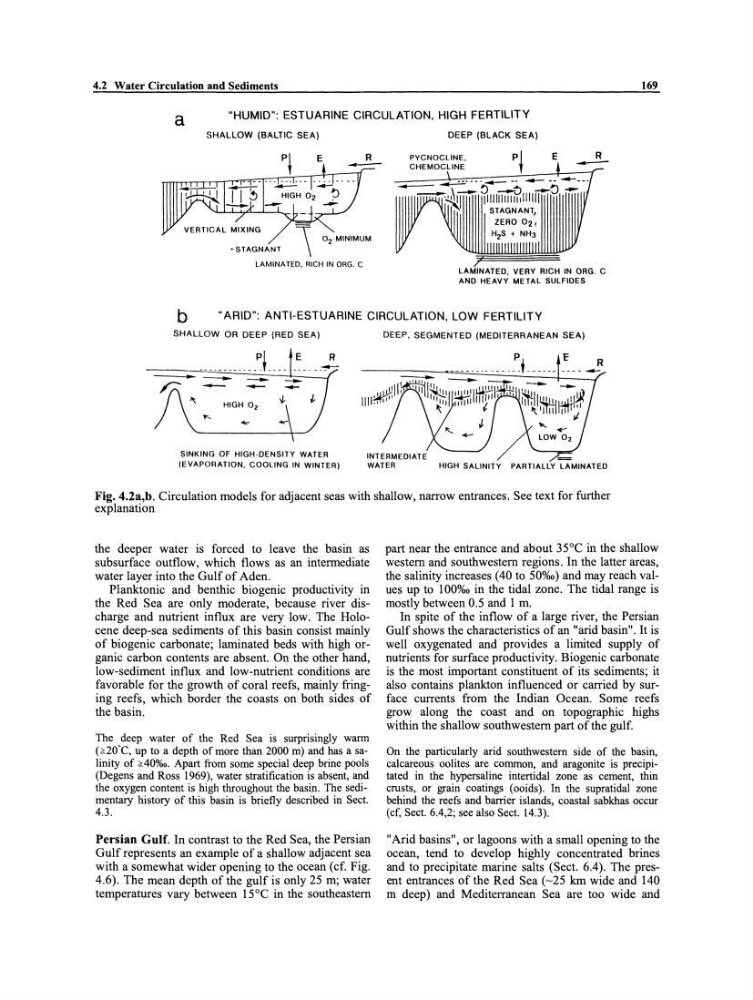
Fig. 4.2a,b. Circulation models for adjacent seas with shallow, narrow entrances. See text for further
explanation
the deeper water is forced to· leave the basin as
subsurface outflow, which flows as an intermediate
water layer into the Gulf of Aden.
Planktonic and benthic bio genie productivity in
the Red Sea are only moderate, because river discharge and nutrient influx are very low. The Holocene deep-sea sediments of this basin consist mainly
of biogenie carbonate; laminated beds with high organic carbon contents are absent. On the other hand,
low-sediment influx and low-nutrient conditions are
favorable for the growth of coral reefs, mainly fringing reefs, which border the coasts on both sides of
the basin.
The deep water of the Red Sea is surprisingly warm
(~20°C, up to a depth of more than 2000 m) and has a salinity of ~40%o. Apart from some special deep brine pools
(Degens and Ross 1969), water stratification is absent, and
the oxygen content is high throughout the basin. The sedimentary history of this basin is briefly described in Sect.
4.3.
Persian Gulf. In contrast to the Red Sea, the Persian
Gulf represents an example of a shallow adjacent sea
with a somewhat wider opening to the ocean (cf. Fig.
4.6). The mean dcpth of the gulf is only 25 m; water
temperatures vary between 15°C in the southeastern
part near the entrance and about 35°C in the shallow
western and southwestern regions. In the latter areas,
the salinity increases (40 to 50%0) and may reach values up to 100%0 in the tidal zone. The tidal range is
mostly between 0.5 and 1 m.
In spite of the inflow of a large river, the Persian
Gulf shows the characteristics of an "arid basin". It is
well oxygenated and provides a limited supply of
nutrients for surface productivity. Biogenie carbonate
is the most important constituent of its sediments; it
also contains plankton influenced or carried by surface currents from the Indian Ocean. Some reefs
grow along the coast and on topographie highs
within the shallow southwestem part of the gulf.
On the particularly arid southwestem side of the basin,
ealeareous oolites are eommon, and aragonite is preeipitated in the hypersaline intertidal zone as eement, thin
erusts, or grain coatings (ooids). In the supratidal zone
behind the reefs and barrier islands, coastal sabkhas occur
(cf, Seet. 6.4,2; see also Sect. 14.3).
"Arid basins", or lagoons with a small opening to the
ocean, tend to develop highly concentrated brines
and to precipitate marine salts (Sect. 6.4). The present entrances of the Red Sea (~25 km wide and 140
m deep) and Mediterranean Sea are too wide and
169
a
"HUMID": ESTUARINE CIRCULATION. HIGH FERTILITY
SHALLOW (BALltC SEA)
E
R
VERTICAL MIXING
' \
°2-MINIMUM
DEEP (BLACK SEA)
PYCNOCLlNE.
CHEMOCLlNE
/
E
R
LAMINATED. VERY RICH IN ORG. C
AND HEAVY METAL SULFIDES
b
"ARID": ANTI-ESTUARINE CIRCULATION. LOW FERTILITY
SHALLOW OR DEEP (RED SEA)
SINKING OF HIGH·DENSITY WATER
(EVAPORATION. COOLING IN WINTER)
DEEP, SEGMENTED (MEDITERRANEAN SEA)
PJ.
E
R
-------- ------,-----.- --------HIGH SALINITY PARTIALLY LAMINATED
Fig. 4.2a,b. Circulation models for adjacent seas with shallow, narrow entrances. See text for further
explanation
the deeper water is forced to· leave the basin as
subsurface outflow, which flows as an intermediate
water layer into the Gulf of Aden.
Planktonic and benthic bio genie productivity in
the Red Sea are only moderate, because river discharge and nutrient influx are very low. The Holocene deep-sea sediments of this basin consist mainly
of biogenie carbonate; laminated beds with high organic carbon contents are absent. On the other hand,
low-sediment influx and low-nutrient conditions are
favorable for the growth of coral reefs, mainly fringing reefs, which border the coasts on both sides of
the basin.
The deep water of the Red Sea is surprisingly warm
(~20°C, up to a depth of more than 2000 m) and has a salinity of ~40%o. Apart from some special deep brine pools
(Degens and Ross 1969), water stratification is absent, and
the oxygen content is high throughout the basin. The sedimentary history of this basin is briefly described in Sect.
4.3.
Persian Gulf. In contrast to the Red Sea, the Persian
Gulf represents an example of a shallow adjacent sea
with a somewhat wider opening to the ocean (cf. Fig.
4.6). The mean dcpth of the gulf is only 25 m; water
temperatures vary between 15°C in the southeastern
part near the entrance and about 35°C in the shallow
western and southwestern regions. In the latter areas,
the salinity increases (40 to 50%0) and may reach values up to 100%0 in the tidal zone. The tidal range is
mostly between 0.5 and 1 m.
In spite of the inflow of a large river, the Persian
Gulf shows the characteristics of an "arid basin". It is
well oxygenated and provides a limited supply of
nutrients for surface productivity. Biogenie carbonate
is the most important constituent of its sediments; it
also contains plankton influenced or carried by surface currents from the Indian Ocean. Some reefs
grow along the coast and on topographie highs
within the shallow southwestem part of the gulf.
On the particularly arid southwestem side of the basin,
ealeareous oolites are eommon, and aragonite is preeipitated in the hypersaline intertidal zone as eement, thin
erusts, or grain coatings (ooids). In the supratidal zone
behind the reefs and barrier islands, coastal sabkhas occur
(cf, Seet. 6.4,2; see also Sect. 14.3).
"Arid basins", or lagoons with a small opening to the
ocean, tend to develop highly concentrated brines
and to precipitate marine salts (Sect. 6.4). The present entrances of the Red Sea (~25 km wide and 140
m deep) and Mediterranean Sea are too wide and