

120
Chapter 3 Coastal and Shallow Sea Sediments
EROSION
SURFACE
d3
BACKBARRIER
~=~~ WASHOVER~~~~
/
OLDER
ROCKS
LAGOONAL MUD, FLOOD-TiDAL
DEt. TA SANDS, CHANNEL FILLS
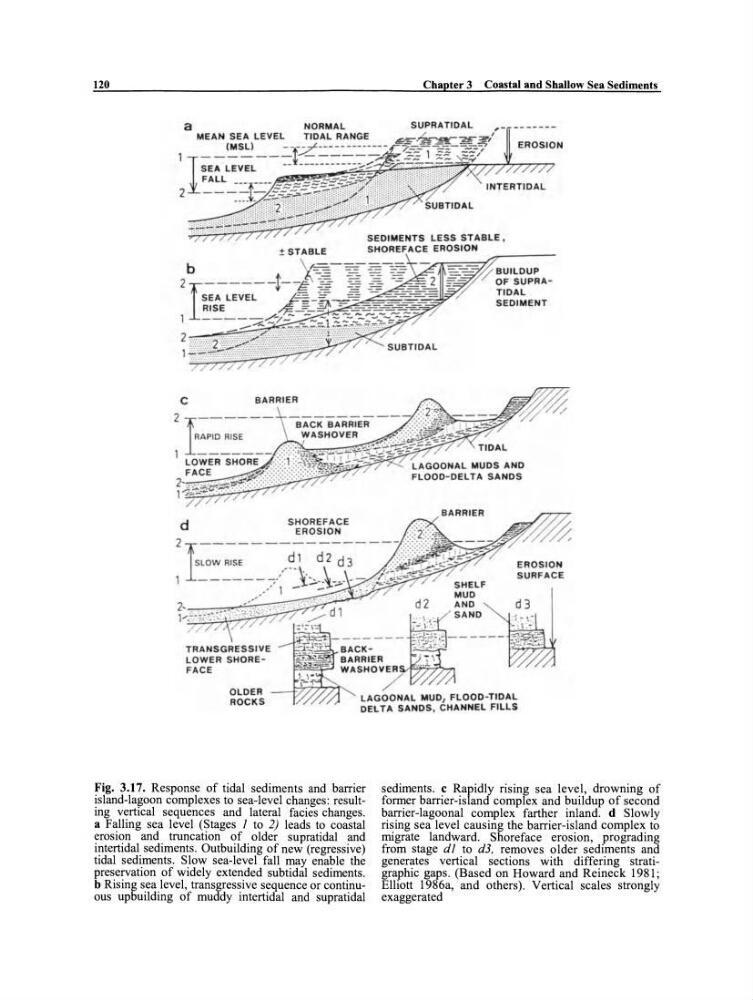
Fig. 3.17. Response of tidal sediments and barrier
island-Iagoon eomplexes to sea-Ievel ehanges: resulting vertieal sequenees and lateral facies ehanges.
a Falling sea level (Stages I to 2) leads to eoastal
erosion and truneation of older supratidal and
intertidal sediments. Outbuilding of new (regressive)
tidal sediments. Siow sea-Ievel fall may enable the
preservation of widely extended subtidal sediments.
b Rising sea level, transgressive sequence or eontinuous upbuilding of muddy intertidal and supratidal
sediments. c Rapidly rising sea level, drowning of
former barrier-island eomplex and buildup of seeond
barrier-Iagoonal complex farther inland. d Slowly
rising sea level causing the barrier-island complex to
migrate landward. Shorefaee erosion, prograding
from stage dl to d3, removes older sediments and
generates vertical seetions with differing stratigraphie gaps. (Based on Howard and Reineek 1981;
Elliott 1986a, and others). Vertieal seales strongly
exaggerated
Chapter 3 Coastal and Shallow Sea Sediments
EROSION
SURFACE
d3
BACKBARRIER
~=~~ WASHOVER~~~~
/
OLDER
ROCKS
LAGOONAL MUD, FLOOD-TiDAL
DEt. TA SANDS, CHANNEL FILLS
Fig. 3.17. Response of tidal sediments and barrier
island-Iagoon eomplexes to sea-Ievel ehanges: resulting vertieal sequenees and lateral facies ehanges.
a Falling sea level (Stages I to 2) leads to eoastal
erosion and truneation of older supratidal and
intertidal sediments. Outbuilding of new (regressive)
tidal sediments. Siow sea-Ievel fall may enable the
preservation of widely extended subtidal sediments.
b Rising sea level, transgressive sequence or eontinuous upbuilding of muddy intertidal and supratidal
sediments. c Rapidly rising sea level, drowning of
former barrier-island eomplex and buildup of seeond
barrier-Iagoonal complex farther inland. d Slowly
rising sea level causing the barrier-island complex to
migrate landward. Shorefaee erosion, prograding
from stage dl to d3, removes older sediments and
generates vertical seetions with differing stratigraphie gaps. (Based on Howard and Reineek 1981;
Elliott 1986a, and others). Vertieal seales strongly
exaggerated