

16 Embankments and Their Ecological Impacts
179
Mangroves
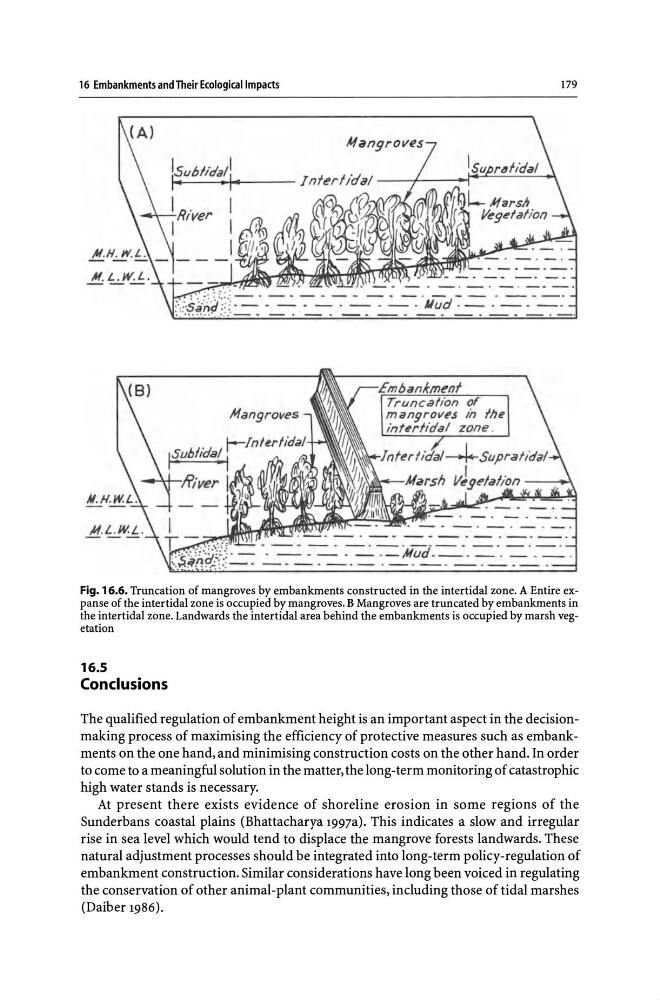
Fig. 16.6. Truncation of mangroves by embankments constructed in the intertidal zone. A Entire expanse of the intertidal zone is occupied by mangroves. B Mangroves are truncated by embankments in
the intertidal zone. Landwards the intertidal area behind the embankments is occupied by marsh vegetation
16.5
Conclusions
The qualified regulation of embankment height is an important aspect in the decisionmaking process of maximising the efficiency of protective measures such as embankments on the one hand, and minimising construction costs on the other hand. In order
to come to a meaningful solution in the matter, the long-term monitoring of catastrophic
high water stands is necessary.
At present there exists evidence of shoreline erosion in some regions of the
Sunderbans coastal plains (Bhattacharya 1997a). This indicates a slow and irregular
rise in sea level which would tend to displace the mangrove forests landwards. These
natural adjustment processes should be integrated into long-term policy-regulation of
embankment construction. Similar considerations have long been voiced in regulating
the conservation of other animal-plant communities, including those of tidal marshes
(Daiber 1986).
179
Mangroves
Fig. 16.6. Truncation of mangroves by embankments constructed in the intertidal zone. A Entire expanse of the intertidal zone is occupied by mangroves. B Mangroves are truncated by embankments in
the intertidal zone. Landwards the intertidal area behind the embankments is occupied by marsh vegetation
16.5
Conclusions
The qualified regulation of embankment height is an important aspect in the decisionmaking process of maximising the efficiency of protective measures such as embankments on the one hand, and minimising construction costs on the other hand. In order
to come to a meaningful solution in the matter, the long-term monitoring of catastrophic
high water stands is necessary.
At present there exists evidence of shoreline erosion in some regions of the
Sunderbans coastal plains (Bhattacharya 1997a). This indicates a slow and irregular
rise in sea level which would tend to displace the mangrove forests landwards. These
natural adjustment processes should be integrated into long-term policy-regulation of
embankment construction. Similar considerations have long been voiced in regulating
the conservation of other animal-plant communities, including those of tidal marshes
(Daiber 1986).