

12 Managing the Ecology and Economy of Modified Estuaries
137
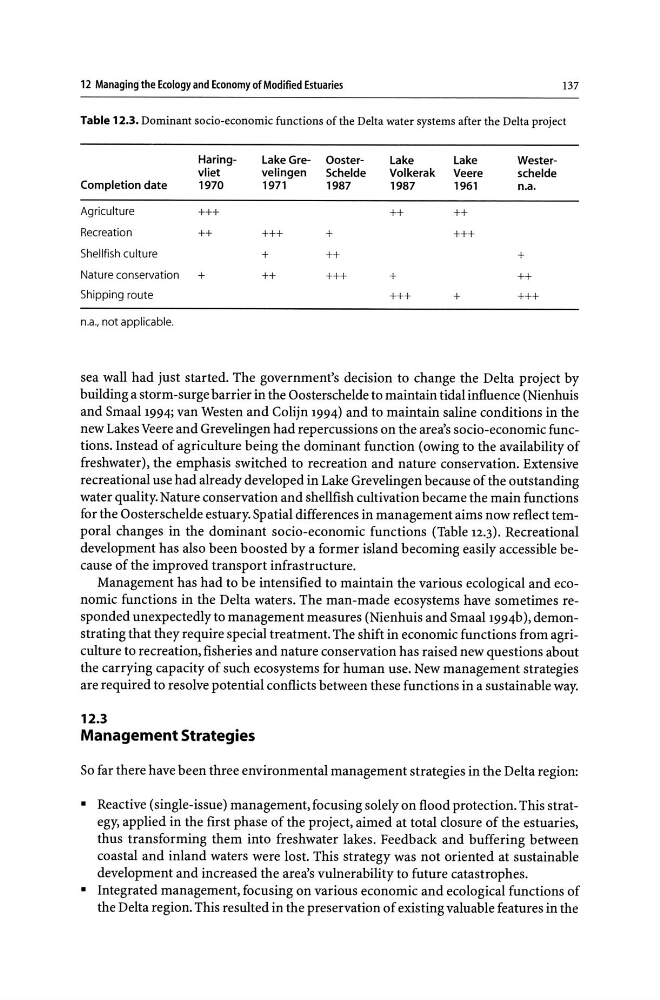
Table 12.3. Dominant socio-economic functions of the Delta water systems after the Delta project
HaringLake Gre- OosterLake
Lake
Westervliet
velingen
Schelde
Volkerak
Veere
schelde
Completion date
1970
1971
1987
1987
1961
n.a.
Agriculture
+++
++
++
Recreation
++
+++
+
+++
Shellfish culture
+
++
+
Nature conservation
+
++
+++
+
++
Shipping route
+++
+
+++
n.a., not applicable.
sea wall had just started. The government's decision to change the Delta project by
building a storm-surge barrier in the Oosterschelde to maintain tidal influence (Nienhuis
and Smaa11994; van Westen and Colijn 1994) and to maintain saline conditions in the
new Lakes Veere and Grevelingen had repercussions on the area's socio-economic functions. Instead of agriculture being the dominant function (owing to the availability of
freshwater), the emphasis switched to recreation and nature conservation. Extensive
recreational use had already developed in Lake Grevelingen because of the outstanding
water quality. Nature conservation and shellfish cultivation became the main functions
for the Oosterschelde estuary. Spatial differences in management aims now reflect temporal changes in the dominant socio-economic functions (Table 12.3). Recreational
development has also been boosted by a former island becoming easily accessible because of the improved transport infrastructure.
Management has had to be intensified to maintain the various ecological and economic functions in the Delta waters. The man-made ecosystems have sometimes responded unexpectedly to management measures (Nienhuis and SmaaI1994b), demonstrating that they require special treatment. The shift in economic functions from agriculture to recreation, fisheries and nature conservation has raised new questions about
the carrying capacity of such ecosystems for human use. New management strategies
are required to resolve potential conflicts between these functions in a sustainable way.
12.3
Management Strategies
So far there have been three environmental management strategies in the Delta region:
• Reactive (single-issue) management, focusing solely on flood protection. This strategy, applied in the first phase of the project, aimed at total closure of the estuaries,
thus transforming them into freshwater lakes. Feedback and buffering between
coastal and inland waters were lost. This strategy was not oriented at sustainable
development and increased the area's vulnerability to future catastrophes.
• Integrated management, focusing on various economic and ecological functions of
the Delta region. This resulted in the preservation of existing valuable features in the
137
Table 12.3. Dominant socio-economic functions of the Delta water systems after the Delta project
HaringLake Gre- OosterLake
Lake
Westervliet
velingen
Schelde
Volkerak
Veere
schelde
Completion date
1970
1971
1987
1987
1961
n.a.
Agriculture
+++
++
++
Recreation
++
+++
+
+++
Shellfish culture
+
++
+
Nature conservation
+
++
+++
+
++
Shipping route
+++
+
+++
n.a., not applicable.
sea wall had just started. The government's decision to change the Delta project by
building a storm-surge barrier in the Oosterschelde to maintain tidal influence (Nienhuis
and Smaa11994; van Westen and Colijn 1994) and to maintain saline conditions in the
new Lakes Veere and Grevelingen had repercussions on the area's socio-economic functions. Instead of agriculture being the dominant function (owing to the availability of
freshwater), the emphasis switched to recreation and nature conservation. Extensive
recreational use had already developed in Lake Grevelingen because of the outstanding
water quality. Nature conservation and shellfish cultivation became the main functions
for the Oosterschelde estuary. Spatial differences in management aims now reflect temporal changes in the dominant socio-economic functions (Table 12.3). Recreational
development has also been boosted by a former island becoming easily accessible because of the improved transport infrastructure.
Management has had to be intensified to maintain the various ecological and economic functions in the Delta waters. The man-made ecosystems have sometimes responded unexpectedly to management measures (Nienhuis and SmaaI1994b), demonstrating that they require special treatment. The shift in economic functions from agriculture to recreation, fisheries and nature conservation has raised new questions about
the carrying capacity of such ecosystems for human use. New management strategies
are required to resolve potential conflicts between these functions in a sustainable way.
12.3
Management Strategies
So far there have been three environmental management strategies in the Delta region:
• Reactive (single-issue) management, focusing solely on flood protection. This strategy, applied in the first phase of the project, aimed at total closure of the estuaries,
thus transforming them into freshwater lakes. Feedback and buffering between
coastal and inland waters were lost. This strategy was not oriented at sustainable
development and increased the area's vulnerability to future catastrophes.
• Integrated management, focusing on various economic and ecological functions of
the Delta region. This resulted in the preservation of existing valuable features in the