

9 Seawater Desalination Plants: Heavy Coastal Industry
99
Table 9.1. Index of sensitivities to desalination plant emissions of coastal marine sub-ecosystems.
Note, this it not general but refers to the special situation of the western and southern coasts of the
Arabian Gulf. It is not transferable to other marine ecosystems without adaptation to corresponding
conditions
Index rank and description
1. High energy oceanic coast,
rocky or sandy, with coastparallel currents
2. Exposed rocky coasts
3. Mature shoreline
4. Coastal upwelling
5. High energy soft tidal coast
6. Estuaries and estuarysimilar systems
7. Low energy sand-, mudand beachrock-flats
8. Coastal sabkhas
9. Fiords
10. Shallow low-energy bays
and semi-enclosed lagoons
11. Algal (cyanobacterial) mats
12. Seaweed bays and shallows
1 3. Cora I reefs
14. Saltmarsh
15. Mangal (mangrove flats)
Properties
Rapid water exchange limits salinity and temperature increase.
Energy input prevents local accumulations. Provision of oxygen,
nutrients and energy provides good conditions of biodegradation
Good water exchange, even in small niches
Coast-parallel currents. Accumulation of loads in coastal waters is
possible. Sediment mobility limits local accumulations of particleadsorbed matter
The danger of stagnant beach-near water is greater than in
category 1. Conditions may change seasonally
Large intertidal areas and large sediment surfaces susceptible to
adsorption and accumulation, but good water exchange and
sediment mobility
Similar to category 5. Load consequences add to those of terrestrial
and anthropogenic loads
High individual numbers at low species numbers. Loads may
accumulate because of adsorption to large surfaces. Limited
water exchange
Stress biotope. Exposed to irradiation, wind and dust. Degradations
work only during the rare inundation periods
Semi-enclosed deep water bodies of limited exchange. Danger of
thermoclines and oxygen deficits. Shelter and breeding areas of sea
animals
Similar to category 7, but exchange is still lower. Load consequences add to natural stress factors like high and changing
salinities, changing water level and solar irradiation
Wide intertidal areas at very low beach slopes. High biomass
density, but mainly internal cycles of matter. Rather unknown
importance for sea organisms. The high position in the index is
a question of precaution
Shares sensitivity of category 10 and bears additionally sensitivity
of seaweed and animals which feed from plants, look for shelter
and use seaweed for breeding (e.g. dugongs and turtles)
Basis of a species rich community the species of which have different sensitivities. To range reefs among the sub-systems of highest
sensitivity means to regard community members ofthe highest
sensitivity, e.g. fish schools
Saltmarshes share sensitivity of category 7 and exhibit in addition
the sensitivity of macrophytes and of animals which inhabit them.
Occasional flooding and precipitates limit degradation periods.lnfluence of loads adds to stress by salt, dryness, irradiation, dust and
grazing
Sensitivity is assumed to be close to category 14, but rapid decline
of mangrove areas in the past argues for a still higher sensitivity to
many impacts
99
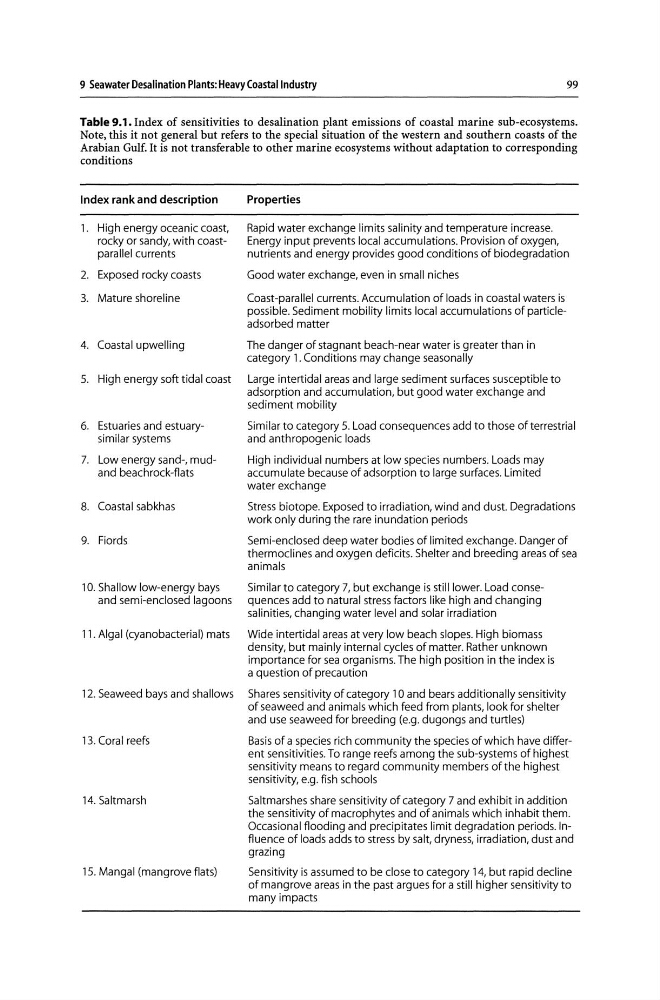
Table 9.1. Index of sensitivities to desalination plant emissions of coastal marine sub-ecosystems.
Note, this it not general but refers to the special situation of the western and southern coasts of the
Arabian Gulf. It is not transferable to other marine ecosystems without adaptation to corresponding
conditions
Index rank and description
1. High energy oceanic coast,
rocky or sandy, with coastparallel currents
2. Exposed rocky coasts
3. Mature shoreline
4. Coastal upwelling
5. High energy soft tidal coast
6. Estuaries and estuarysimilar systems
7. Low energy sand-, mudand beachrock-flats
8. Coastal sabkhas
9. Fiords
10. Shallow low-energy bays
and semi-enclosed lagoons
11. Algal (cyanobacterial) mats
12. Seaweed bays and shallows
1 3. Cora I reefs
14. Saltmarsh
15. Mangal (mangrove flats)
Properties
Rapid water exchange limits salinity and temperature increase.
Energy input prevents local accumulations. Provision of oxygen,
nutrients and energy provides good conditions of biodegradation
Good water exchange, even in small niches
Coast-parallel currents. Accumulation of loads in coastal waters is
possible. Sediment mobility limits local accumulations of particleadsorbed matter
The danger of stagnant beach-near water is greater than in
category 1. Conditions may change seasonally
Large intertidal areas and large sediment surfaces susceptible to
adsorption and accumulation, but good water exchange and
sediment mobility
Similar to category 5. Load consequences add to those of terrestrial
and anthropogenic loads
High individual numbers at low species numbers. Loads may
accumulate because of adsorption to large surfaces. Limited
water exchange
Stress biotope. Exposed to irradiation, wind and dust. Degradations
work only during the rare inundation periods
Semi-enclosed deep water bodies of limited exchange. Danger of
thermoclines and oxygen deficits. Shelter and breeding areas of sea
animals
Similar to category 7, but exchange is still lower. Load consequences add to natural stress factors like high and changing
salinities, changing water level and solar irradiation
Wide intertidal areas at very low beach slopes. High biomass
density, but mainly internal cycles of matter. Rather unknown
importance for sea organisms. The high position in the index is
a question of precaution
Shares sensitivity of category 10 and bears additionally sensitivity
of seaweed and animals which feed from plants, look for shelter
and use seaweed for breeding (e.g. dugongs and turtles)
Basis of a species rich community the species of which have different sensitivities. To range reefs among the sub-systems of highest
sensitivity means to regard community members ofthe highest
sensitivity, e.g. fish schools
Saltmarshes share sensitivity of category 7 and exhibit in addition
the sensitivity of macrophytes and of animals which inhabit them.
Occasional flooding and precipitates limit degradation periods.lnfluence of loads adds to stress by salt, dryness, irradiation, dust and
grazing
Sensitivity is assumed to be close to category 14, but rapid decline
of mangrove areas in the past argues for a still higher sensitivity to
many impacts