

12
Y. Fouquet and D. Lacroix
studied by drilling. Samples show that the surface of most deposits is rich in copper
and zinc, together representing over 10 % for more than 65 % of sites (values based
on the study of 75 sites and 3,300 samples). These surface data suggest that submarine hydrothermal mineral deposits could be as rich as their land-based counterparts.
With the exception of the specific case of metal-rich sediments in the Red Sea, these
are massive ore deposits which generate little waste. Due to their location on the
seabed, mining does not require tunnels to be dug as is the case on land. Furthermore, equipment installed on vessels can easily be relocated. These technical elements should help to minimise costs and reduce the environmental impact of mining.
Other than copper and zinc, most sites are rich in silver and often gold. Some
specific sites in the Atlantic associated with mantle rocks show high cobalt contents.
Several rare elements are found alongside the main metals. Copper ore deposits,
characterised by their formation at temperatures of over 300°C, may also be rich
in selenium, cobalt, nickel, molybdenum, tellurium, bismuth and gold. Zinc ore deposits, formed at between 100 and 250 °C, are often rich in cadmium, lead, arsenic,
antimony, germanium, indium and barium (Fig. 1.5).
While site formation conditions are well enough known, the inventory of sites
remains largely incomplete (with several 100 sites believed to exist). Exploration
technologies can only locate active sites, whereas inactive sites need to be searched
for more systematically and can only, based on current technologies, be located by
operations close to the bottom.
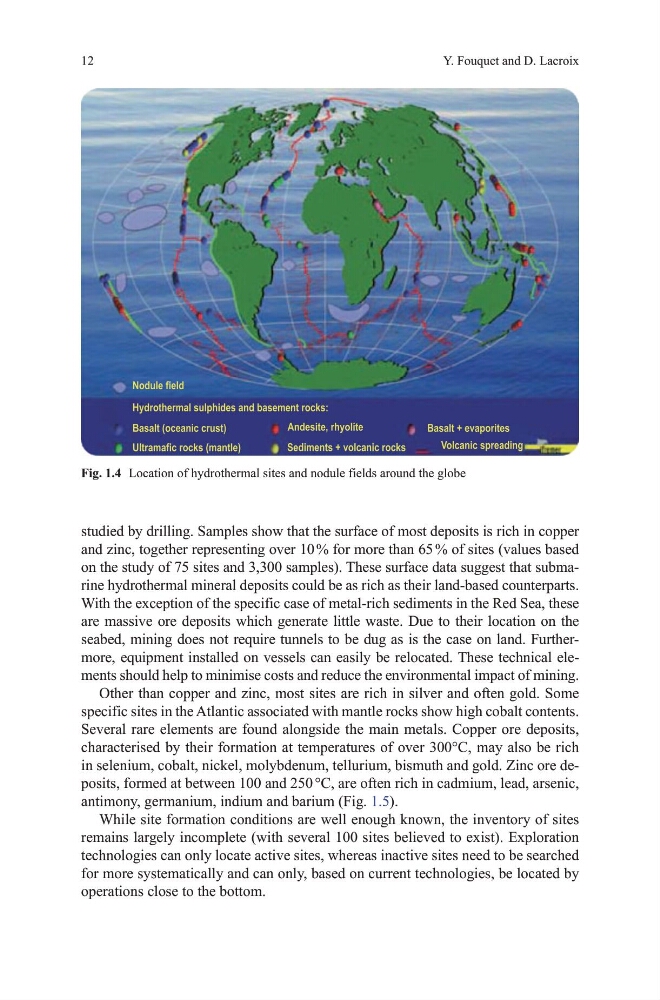
Fig. 1.4 Location of hydrothermal sites and nodule fields around the globe
Y. Fouquet and D. Lacroix
studied by drilling. Samples show that the surface of most deposits is rich in copper
and zinc, together representing over 10 % for more than 65 % of sites (values based
on the study of 75 sites and 3,300 samples). These surface data suggest that submarine hydrothermal mineral deposits could be as rich as their land-based counterparts.
With the exception of the specific case of metal-rich sediments in the Red Sea, these
are massive ore deposits which generate little waste. Due to their location on the
seabed, mining does not require tunnels to be dug as is the case on land. Furthermore, equipment installed on vessels can easily be relocated. These technical elements should help to minimise costs and reduce the environmental impact of mining.
Other than copper and zinc, most sites are rich in silver and often gold. Some
specific sites in the Atlantic associated with mantle rocks show high cobalt contents.
Several rare elements are found alongside the main metals. Copper ore deposits,
characterised by their formation at temperatures of over 300°C, may also be rich
in selenium, cobalt, nickel, molybdenum, tellurium, bismuth and gold. Zinc ore deposits, formed at between 100 and 250 °C, are often rich in cadmium, lead, arsenic,
antimony, germanium, indium and barium (Fig. 1.5).
While site formation conditions are well enough known, the inventory of sites
remains largely incomplete (with several 100 sites believed to exist). Exploration
technologies can only locate active sites, whereas inactive sites need to be searched
for more systematically and can only, based on current technologies, be located by
operations close to the bottom.
Fig. 1.4 Location of hydrothermal sites and nodule fields around the globe