

11
1 Study Summary
Hydrothermal sulphides are characterised by high base metal contents in relation
to crusts and nodules. Submarine hydrothermal mineral deposits have been studied
by submersible and by dredging. These two techniques can be used to take samples,
mainly at the surface. Chemical and mineral zones according to vertical depth can be
18.5%
Manganese
12.7%
Iron
0.24%
Colbalt
0.63%
Nickel
+ Rare earths,
P, Ti, TI, V, Te,
Zr, Mo, Te
Zinc 0,09%
Copper 0,4%
Barium 0,2%
Nodules
28.8%
Sulphur
21.44%
Iron
Nickel 0.01%
Cobalt 0.05%
11.5%
Silica
5.3%
Copper
5.8%
Barium
11.1%
Zinc
+ Au, Ag, Pb, Co In, Ge, Se,
Co, Cd, Bi, Te, Ga, Ge
+ Natural hydrogen
21.95%
Manganese
15.99%
Iron
0.69%
Colbalt
0,41%
Nickel
4.14%
Silica
+ Rare earths,
Pt, P, Ti, TI, V,
Te, Zr, Mo
Copper 0.09%
Zinc 0.07%
Barium 0.2%
Crusts
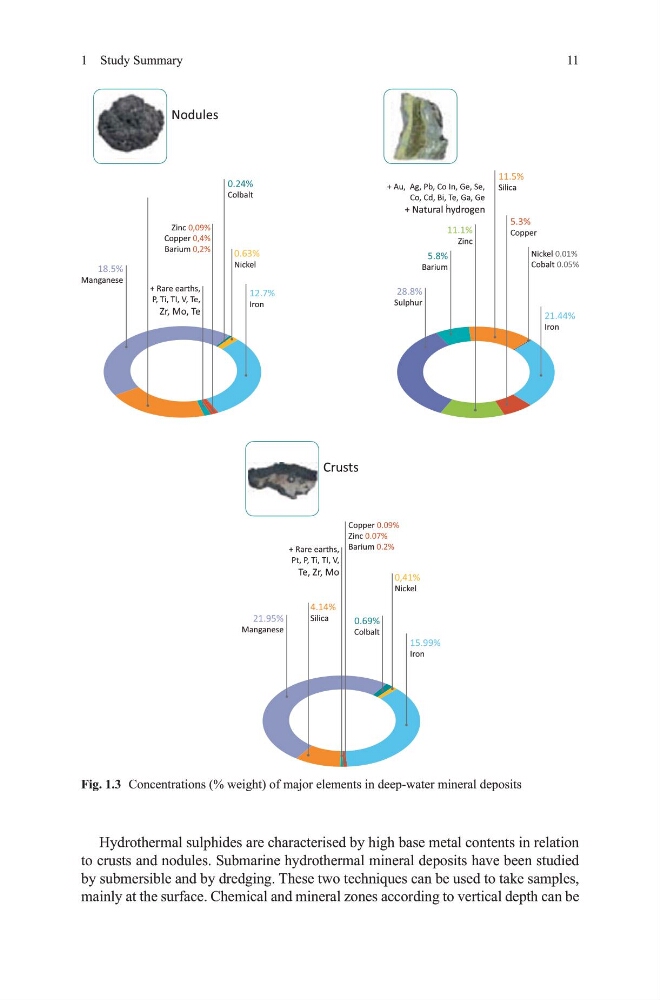
Fig. 1.3 Concentrations (% weight) of major elements in deep-water mineral deposits
1 Study Summary
Hydrothermal sulphides are characterised by high base metal contents in relation
to crusts and nodules. Submarine hydrothermal mineral deposits have been studied
by submersible and by dredging. These two techniques can be used to take samples,
mainly at the surface. Chemical and mineral zones according to vertical depth can be
18.5%
Manganese
12.7%
Iron
0.24%
Colbalt
0.63%
Nickel
+ Rare earths,
P, Ti, TI, V, Te,
Zr, Mo, Te
Zinc 0,09%
Copper 0,4%
Barium 0,2%
Nodules
28.8%
Sulphur
21.44%
Iron
Nickel 0.01%
Cobalt 0.05%
11.5%
Silica
5.3%
Copper
5.8%
Barium
11.1%
Zinc
+ Au, Ag, Pb, Co In, Ge, Se,
Co, Cd, Bi, Te, Ga, Ge
+ Natural hydrogen
21.95%
Manganese
15.99%
Iron
0.69%
Colbalt
0,41%
Nickel
4.14%
Silica
+ Rare earths,
Pt, P, Ti, TI, V,
Te, Zr, Mo
Copper 0.09%
Zinc 0.07%
Barium 0.2%
Crusts
Fig. 1.3 Concentrations (% weight) of major elements in deep-water mineral deposits