

120
of various raw materials (bauxite, magnesium, manganese…); the United States and
Mexico made similar requests
15
.
However, according to the Panel Report issued on 5 July 2011, the panel established by the DSB to examine these disputes noted the incompatibility between
China’s exportation rights and the commitments it made in its Accession Protocol,
as well as the incompatibility between the export quotas it has imposed for certain
raw materials and the rules of the WTO. It is also worth noting that while China
decided, in December 2010, to cut its rare earth export quotas by 35 % in the first
quarter of 2011 (compared to the same period in 2010), it then decided to double
them for the second quarter of 2011
16
.
Over and above these observations, it is clear that issues relating to raw materials
now fall within the competence of the WTO.
However, effective regulation requires a control and enforcement system, somewhat like what has been introduced offshore by the United Nations through the
United Nations Convention on the Law of the Sea of 10 December 1982 with the
ISA and its international tribunal.
Yet for onshore resources, the issue is even more delicate as it challenges State
sovereignty, and only strong political will can enable such a change.
15
DS 394 and DS 398.
16
Les Échos, 15 July 2011.
A. Valéry
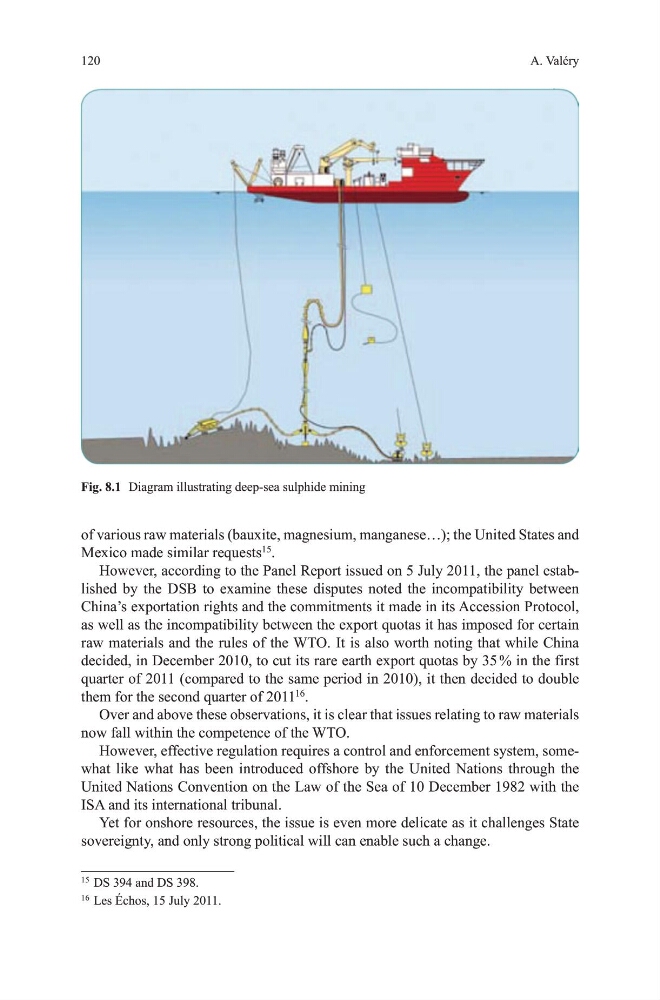
Fig. 8.1 Diagram illustrating deep-sea sulphide mining
of various raw materials (bauxite, magnesium, manganese…); the United States and
Mexico made similar requests
15
.
However, according to the Panel Report issued on 5 July 2011, the panel established by the DSB to examine these disputes noted the incompatibility between
China’s exportation rights and the commitments it made in its Accession Protocol,
as well as the incompatibility between the export quotas it has imposed for certain
raw materials and the rules of the WTO. It is also worth noting that while China
decided, in December 2010, to cut its rare earth export quotas by 35 % in the first
quarter of 2011 (compared to the same period in 2010), it then decided to double
them for the second quarter of 2011
16
.
Over and above these observations, it is clear that issues relating to raw materials
now fall within the competence of the WTO.
However, effective regulation requires a control and enforcement system, somewhat like what has been introduced offshore by the United Nations through the
United Nations Convention on the Law of the Sea of 10 December 1982 with the
ISA and its international tribunal.
Yet for onshore resources, the issue is even more delicate as it challenges State
sovereignty, and only strong political will can enable such a change.
15
DS 394 and DS 398.
16
Les Échos, 15 July 2011.
A. Valéry
Fig. 8.1 Diagram illustrating deep-sea sulphide mining