

5 Scientific Knowledge and Challenges Related to Hydrogen
91
in the magnetics produced during hydration. Alongside the hydration of oceanic
peridotites, progressive oxidation of the rock therefore occurs, made possible by
the simultaneous reduction of seawater. In the laboratory, it is therefore possible to
show that one mole of dihydrogen is formed per mole of magnetite produced according to the following redox reaction: 3Fe
2+
O + H 2 O → Fe
2+
(Fe
3+
) 2 O 4 + H 2 .
Recent experimental and spectroscopic data obtained at the Institut des sciences
de la Terre (ISTerre) and at Swiss Light Source (SLS) have fine-tuned this balance by showing that the formation of serpentines could itself produce hydrogen.
Thanks to fine measurements of reactions’ progress by X-ray absorption spectroscopy, as well as magnetic methods through collaboration between ISTerre and the
Laboratoire de géologie de l’écolenormalesupérieure (Paris), we now know that it
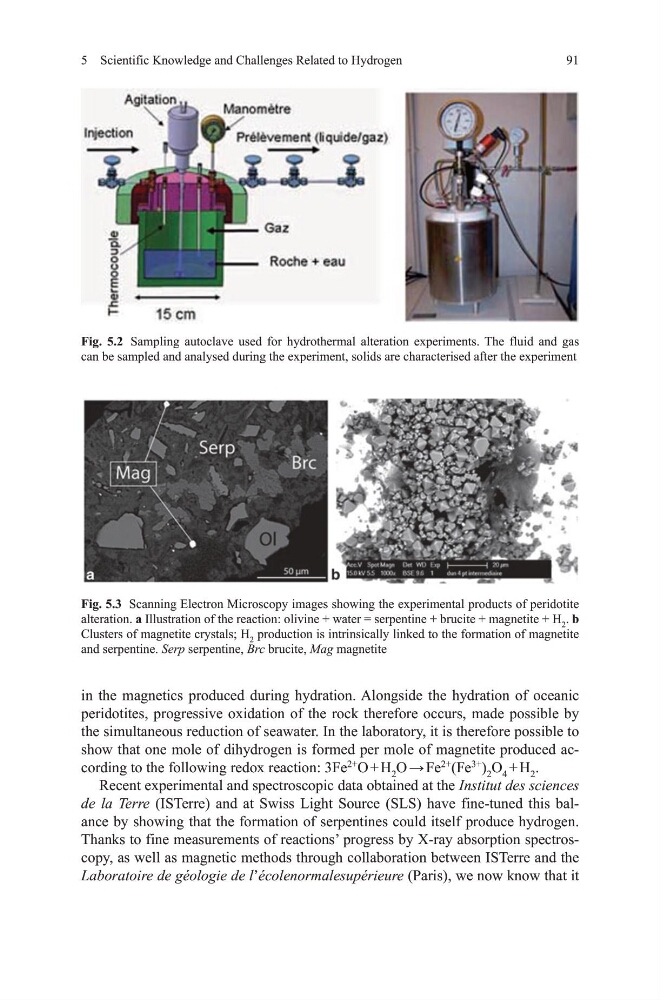
Fig. 5.3 Scanning Electron Microscopy images showing the experimental products of peridotite
alteration. a Illustration of the reaction: olivine + water = serpentine + brucite + magnetite + H 2 . b
Clusters of magnetite crystals; H 2 production is intrinsically linked to the formation of magnetite
and serpentine. Serp serpentine, Brc brucite, Mag magnetite
Fig. 5.2 Sampling autoclave used for hydrothermal alteration experiments. The fluid and gas
can be sampled and analysed during the experiment, solids are characterised after the experiment
91
in the magnetics produced during hydration. Alongside the hydration of oceanic
peridotites, progressive oxidation of the rock therefore occurs, made possible by
the simultaneous reduction of seawater. In the laboratory, it is therefore possible to
show that one mole of dihydrogen is formed per mole of magnetite produced according to the following redox reaction: 3Fe
2+
O + H 2 O → Fe
2+
(Fe
3+
) 2 O 4 + H 2 .
Recent experimental and spectroscopic data obtained at the Institut des sciences
de la Terre (ISTerre) and at Swiss Light Source (SLS) have fine-tuned this balance by showing that the formation of serpentines could itself produce hydrogen.
Thanks to fine measurements of reactions’ progress by X-ray absorption spectroscopy, as well as magnetic methods through collaboration between ISTerre and the
Laboratoire de géologie de l’écolenormalesupérieure (Paris), we now know that it
Fig. 5.3 Scanning Electron Microscopy images showing the experimental products of peridotite
alteration. a Illustration of the reaction: olivine + water = serpentine + brucite + magnetite + H 2 . b
Clusters of magnetite crystals; H 2 production is intrinsically linked to the formation of magnetite
and serpentine. Serp serpentine, Brc brucite, Mag magnetite
Fig. 5.2 Sampling autoclave used for hydrothermal alteration experiments. The fluid and gas
can be sampled and analysed during the experiment, solids are characterised after the experiment