

86
S. LI, Z. CHENG, AND W.F. WEEKS
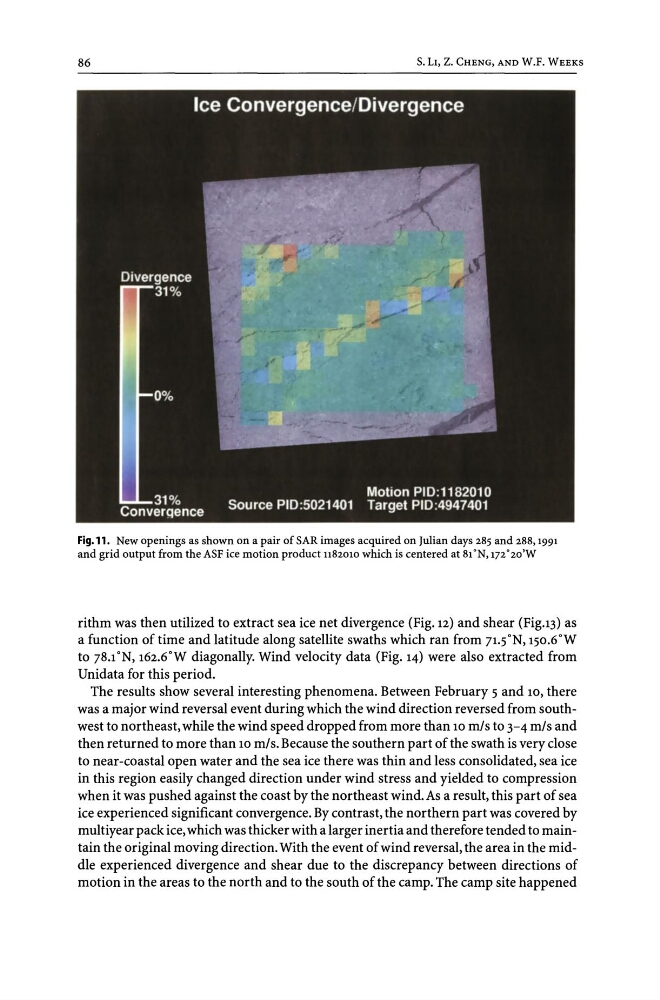
Fig.11. New openings as shown on a pair of SAR images acquired on Julian days 285 and 288, 1991
and grid output from the ASF ice motion product 1182010 which is centered at 81°N, 172°20'W
rithm was then utilized to extract sea ice net divergence (Fig. 12) and shear (Fig.13) as
a function of time and latitude along satellite swaths which ran from 71.SoN, Iso.6°W
to 78.1°N, 162.6'W diagonally. Wind velocity data (Fig. 14) were also extracted from
Unidata for this period.
The results show several interesting phenomena. Between February sand 10, there
was a major wind reversal event during which the wind direction reversed from southwest to northeast, while the wind speed dropped from more than lO mls to 3-4 mls and
then returned to more than 10 m/s. Because the southern part of the swath is very close
to near-coastal open water and the sea ice there was thin and less consolidated, sea ice
in this region easily changed direction under wind stress and yielded to compression
when it was pushed against the coast by the northeast wind. As a result, this part of sea
ice experienced significant convergence. By contrast, the northern part was covered by
multiyear pack ice, which was thicker with a larger inertia and therefore tended to maintain the original moving direction. With the event of wind reversal, the area in the middle experienced divergence and shear due to the discrepancy between directions of
motion in the areas to the north and to the south of the camp. The camp site happened
S. LI, Z. CHENG, AND W.F. WEEKS
Fig.11. New openings as shown on a pair of SAR images acquired on Julian days 285 and 288, 1991
and grid output from the ASF ice motion product 1182010 which is centered at 81°N, 172°20'W
rithm was then utilized to extract sea ice net divergence (Fig. 12) and shear (Fig.13) as
a function of time and latitude along satellite swaths which ran from 71.SoN, Iso.6°W
to 78.1°N, 162.6'W diagonally. Wind velocity data (Fig. 14) were also extracted from
Unidata for this period.
The results show several interesting phenomena. Between February sand 10, there
was a major wind reversal event during which the wind direction reversed from southwest to northeast, while the wind speed dropped from more than lO mls to 3-4 mls and
then returned to more than 10 m/s. Because the southern part of the swath is very close
to near-coastal open water and the sea ice there was thin and less consolidated, sea ice
in this region easily changed direction under wind stress and yielded to compression
when it was pushed against the coast by the northeast wind. As a result, this part of sea
ice experienced significant convergence. By contrast, the northern part was covered by
multiyear pack ice, which was thicker with a larger inertia and therefore tended to maintain the original moving direction. With the event of wind reversal, the area in the middle experienced divergence and shear due to the discrepancy between directions of
motion in the areas to the north and to the south of the camp. The camp site happened