

474
JOHN HARDING AND JAMES RIGNEY
synoptic analyses as well as near-real-time evaluation capability for certain
dynamic features in the ocean prediction models.
4.2
Data processing and relevance to NAVY applications
As noted in the introduction, the tendency for U.S. naval operational
oceanography has been toward more synoptic and real-time capabilities with
less emphasis on ocean climatologies that support longer-term requirements.
In this light, there has been growing emphasis toward surge efforts directly
supporting warfare areas such as ASW, NSW, and MIW. Today, emphasis
is placed on rapid response capabilities for description of ocean parameters
such as currents, temperature and salinity, waves, and optical properties. A
key change is the emphasis on including forecasters in the process in order
to interpret prediction model output and to generate targeted products of
immediate use to the warfighter.
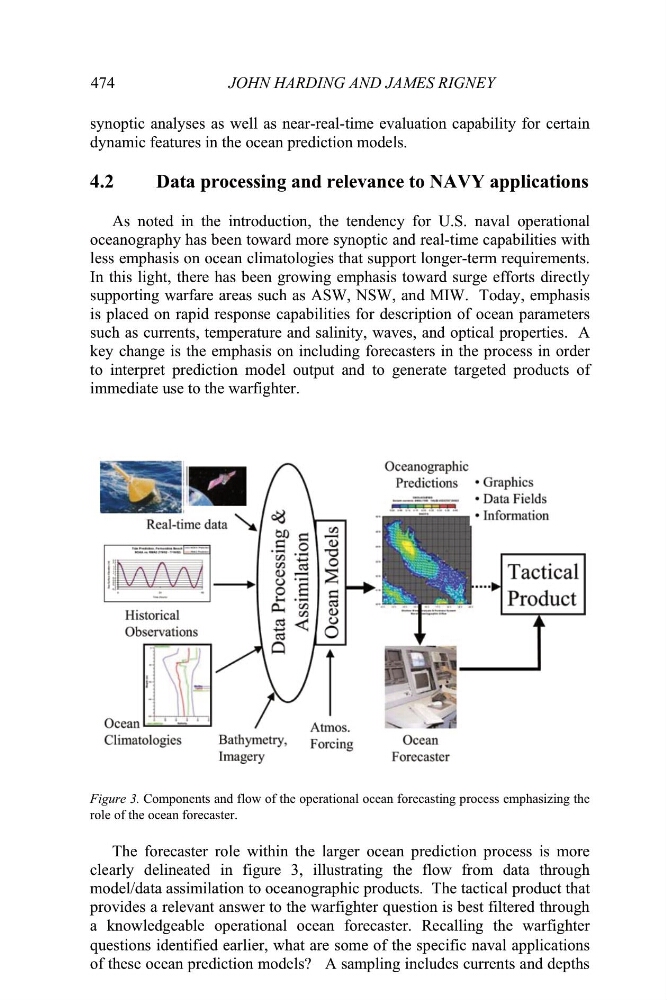
Figure 3. Components and flow of the operational ocean forecasting process emphasizing the
role of the ocean forecaster.
The forecaster role within the larger ocean prediction process is more
clearly delineated in figure 3, illustrating the flow from data through
model/data assimilation to oceanographic products. The tactical product that
provides a relevant answer to the warfighter question is best filtered through
a knowledgeable operational ocean forecaster. Recalling the warfighter
questions identified earlier, what are some of the specific naval applications
of these ocean prediction models? A sampling includes currents and depths
JOHN HARDING AND JAMES RIGNEY
synoptic analyses as well as near-real-time evaluation capability for certain
dynamic features in the ocean prediction models.
4.2
Data processing and relevance to NAVY applications
As noted in the introduction, the tendency for U.S. naval operational
oceanography has been toward more synoptic and real-time capabilities with
less emphasis on ocean climatologies that support longer-term requirements.
In this light, there has been growing emphasis toward surge efforts directly
supporting warfare areas such as ASW, NSW, and MIW. Today, emphasis
is placed on rapid response capabilities for description of ocean parameters
such as currents, temperature and salinity, waves, and optical properties. A
key change is the emphasis on including forecasters in the process in order
to interpret prediction model output and to generate targeted products of
immediate use to the warfighter.
Figure 3. Components and flow of the operational ocean forecasting process emphasizing the
role of the ocean forecaster.
The forecaster role within the larger ocean prediction process is more
clearly delineated in figure 3, illustrating the flow from data through
model/data assimilation to oceanographic products. The tactical product that
provides a relevant answer to the warfighter question is best filtered through
a knowledgeable operational ocean forecaster. Recalling the warfighter
questions identified earlier, what are some of the specific naval applications
of these ocean prediction models? A sampling includes currents and depths