

294
PIERRE BRASSEUR
sampling procedures such as that described above. As pointed out by
Houtekamer and Mitchell [1998], the accurate estimation of small correlation coe!cients would necessitate a very large number of independent
model samples to guarantee the statistical convergence of the computations. In order to keep the number of samples within tractable limits and
prevent the data from exerting a spurious influence at remote distances
through large-scale signatures in the EOFs, a technique based on EOFs
with compact support has been setup by Testut et al. [2003] in which
regional sub-domains of adjustable size are considered to characterize
the error sub-space. From a theoretical point of view this approximation can be justified by the argument that, when the ocean surface is
divided into local regions of moderate size, the background error in such
regions tends to lie in a sub-space of much smaller dimension than the
full ocean state. Similar hypotheses have been put forward to develop
local ensemble Kalman filters for atmospheric data assimilation [Ott et
al., 2004].
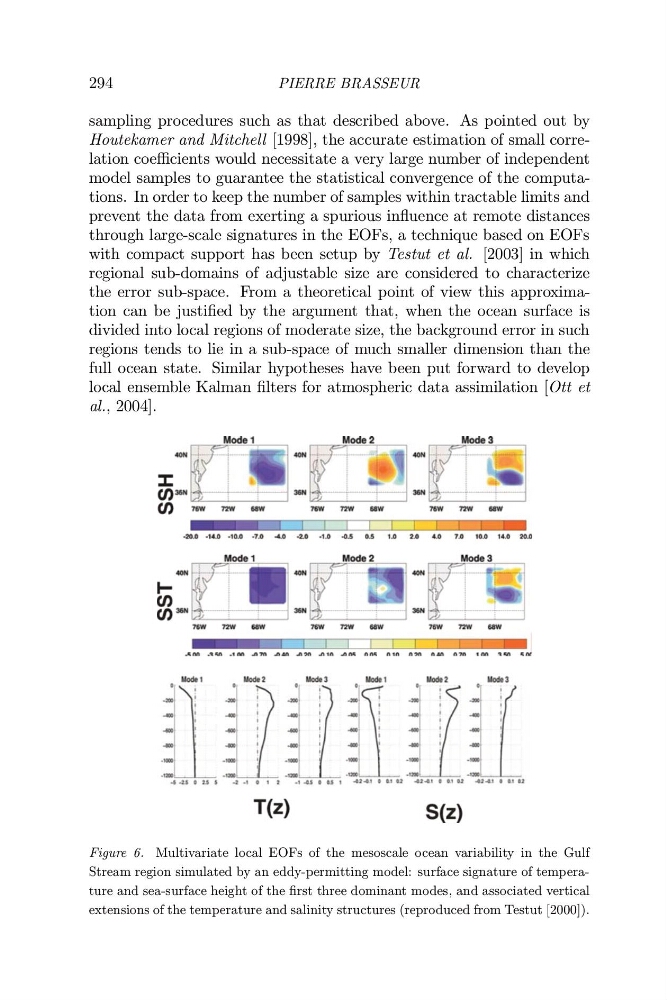
Figure 6. Multivariate local EOFs of the mesoscale ocean variability in the Gulf
Stream region simulated by an eddy-permitting model: surface signature of temperature and sea-surface height of the first three dominant modes, and associated vertical
extensions of the temperature and salinity structures (reproduced from Testut [2000]).
PIERRE BRASSEUR
sampling procedures such as that described above. As pointed out by
Houtekamer and Mitchell [1998], the accurate estimation of small correlation coe!cients would necessitate a very large number of independent
model samples to guarantee the statistical convergence of the computations. In order to keep the number of samples within tractable limits and
prevent the data from exerting a spurious influence at remote distances
through large-scale signatures in the EOFs, a technique based on EOFs
with compact support has been setup by Testut et al. [2003] in which
regional sub-domains of adjustable size are considered to characterize
the error sub-space. From a theoretical point of view this approximation can be justified by the argument that, when the ocean surface is
divided into local regions of moderate size, the background error in such
regions tends to lie in a sub-space of much smaller dimension than the
full ocean state. Similar hypotheses have been put forward to develop
local ensemble Kalman filters for atmospheric data assimilation [Ott et
al., 2004].
Figure 6. Multivariate local EOFs of the mesoscale ocean variability in the Gulf
Stream region simulated by an eddy-permitting model: surface signature of temperature and sea-surface height of the first three dominant modes, and associated vertical
extensions of the temperature and salinity structures (reproduced from Testut [2000]).