

SURFACE FLUXES
261
6.2
The mean flux fields and balances
The ocean surface fluxes forcing any GODAE system should not only
produce mean net fields comparable to climatologies, but the component
balances should also be similar. Significant departures may be indicators
of errors in the data and/or the model. The climatological mean air-sea
heat flux (f o Q as ) computed from 1984 through 2000 is shown in Fig. 10.
All the expected features are evident; strong heating along the equator
with a maximum in the eastern Pacific in excess of 125W/m 2 , a band of
predominant heating along 50 ◦ S, heating along the eastern boundaries
of the subtropical gyres of the Pacific and Atlantic, strong cooling in the
Nordic seas between Greenland and Europe and between Greenland and
Labrador, and strong cooling over the western boundary currents and
their extensions, including the Agulhas retroflection. The uncertainties
in all fluxes climatologies means that there are always similarities and
differences in detail. However, one large scale difference between Fig. 10
and the SOC climatology is the much greater SOC heating in the tropics
from Africa east to the dateline. The area is great enough to factor significantly in the SOC global heat imbalance of 30W/m 2 . It includes the
TOGA COARE region of the western Pacific where SOC shows 60W/m 2
heating compared to less than 25W/m 2 . Ocean budget (e.g. Gent, 1991)
and observational estimates place the net heat flux at between 10 and
20W/m 2 .
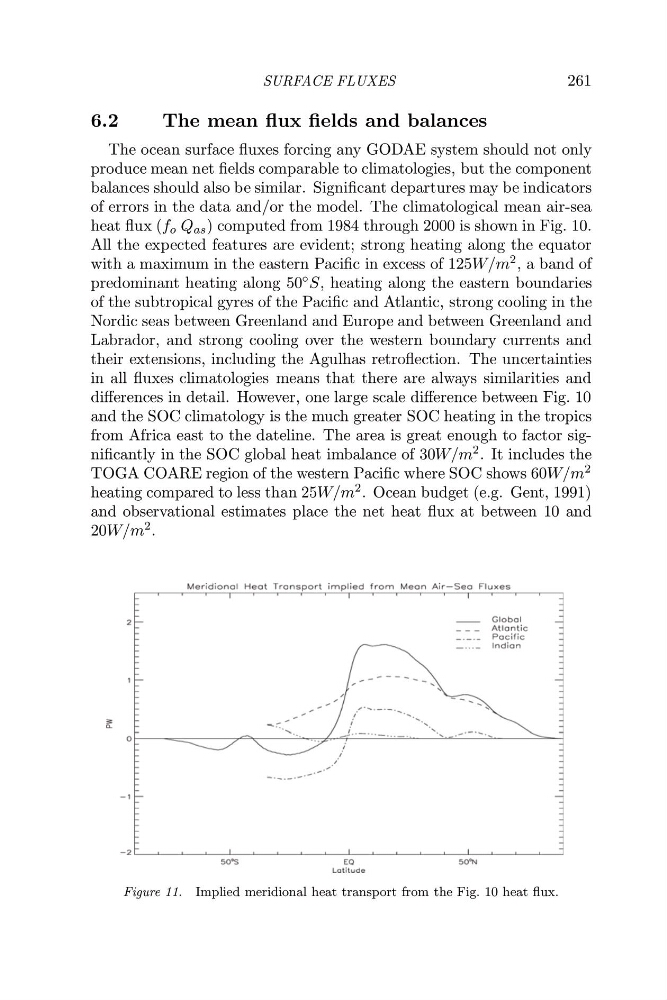
Figure 11. Implied meridional heat transport from the Fig. 10 heat flux.
261
6.2
The mean flux fields and balances
The ocean surface fluxes forcing any GODAE system should not only
produce mean net fields comparable to climatologies, but the component
balances should also be similar. Significant departures may be indicators
of errors in the data and/or the model. The climatological mean air-sea
heat flux (f o Q as ) computed from 1984 through 2000 is shown in Fig. 10.
All the expected features are evident; strong heating along the equator
with a maximum in the eastern Pacific in excess of 125W/m 2 , a band of
predominant heating along 50 ◦ S, heating along the eastern boundaries
of the subtropical gyres of the Pacific and Atlantic, strong cooling in the
Nordic seas between Greenland and Europe and between Greenland and
Labrador, and strong cooling over the western boundary currents and
their extensions, including the Agulhas retroflection. The uncertainties
in all fluxes climatologies means that there are always similarities and
differences in detail. However, one large scale difference between Fig. 10
and the SOC climatology is the much greater SOC heating in the tropics
from Africa east to the dateline. The area is great enough to factor significantly in the SOC global heat imbalance of 30W/m 2 . It includes the
TOGA COARE region of the western Pacific where SOC shows 60W/m 2
heating compared to less than 25W/m 2 . Ocean budget (e.g. Gent, 1991)
and observational estimates place the net heat flux at between 10 and
20W/m 2 .
Figure 11. Implied meridional heat transport from the Fig. 10 heat flux.