

SURFACE FLUXES
245
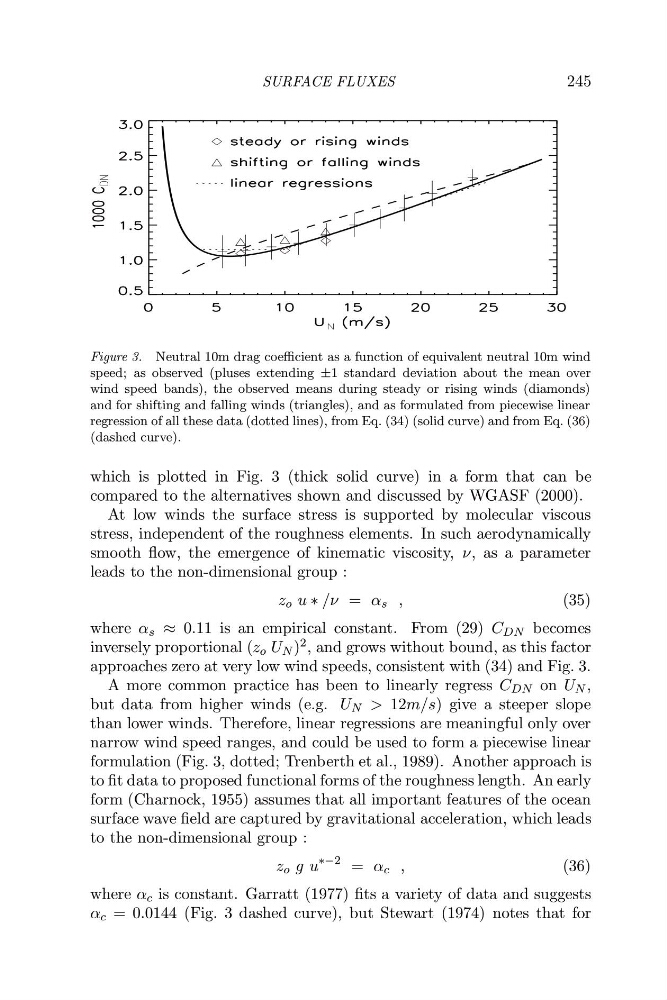
Figure 3. Neutral 10m drag coefficient as a function of equivalent neutral 10m wind
speed; as observed (pluses extending ±1 standard deviation about the mean over
wind speed bands), the observed means during steady or rising winds (diamonds)
and for shifting and falling winds (triangles), and as formulated from piecewise linear
regression of all these data (dotted lines), from Eq. (34) (solid curve) and from Eq. (36)
(dashed curve).
which is plotted in Fig. 3 (thick solid curve) in a form that can be
compared to the alternatives shown and discussed by WGASF (2000).
At low winds the surface stress is supported by molecular viscous
stress, independent of the roughness elements. In such aerodynamically
smooth flow, the emergence of kinematic viscosity, ν, as a parameter
leads to the non-dimensional group :
z o u ∗ /ν = α s ,
(35)
where α s ≈ 0.11 is an empirical constant. From (29) C DN becomes
inversely proportional (z o U N ) 2 , and grows without bound, as this factor
approaches zero at very low wind speeds, consistent with (34) and Fig. 3.
A more common practice has been to linearly regress C DN on U N ,
but data from higher winds (e.g. U N > 12m/s) give a steeper slope
than lower winds. Therefore, linear regressions are meaningful only over
narrow wind speed ranges, and could be used to form a piecewise linear
formulation (Fig. 3, dotted; Trenberth et al., 1989). Another approach is
to fit data to proposed functional forms of the roughness length. An early
form (Charnock, 1955) assumes that all important features of the ocean
surface wave field are captured by gravitational acceleration, which leads
to the non-dimensional group :
z o g u
∗−2 = α c ,
(36)
where α c is constant. Garratt (1977) fits a variety of data and suggests
α c = 0.0144 (Fig. 3 dashed curve), but Stewart (1974) notes that for
245
Figure 3. Neutral 10m drag coefficient as a function of equivalent neutral 10m wind
speed; as observed (pluses extending ±1 standard deviation about the mean over
wind speed bands), the observed means during steady or rising winds (diamonds)
and for shifting and falling winds (triangles), and as formulated from piecewise linear
regression of all these data (dotted lines), from Eq. (34) (solid curve) and from Eq. (36)
(dashed curve).
which is plotted in Fig. 3 (thick solid curve) in a form that can be
compared to the alternatives shown and discussed by WGASF (2000).
At low winds the surface stress is supported by molecular viscous
stress, independent of the roughness elements. In such aerodynamically
smooth flow, the emergence of kinematic viscosity, ν, as a parameter
leads to the non-dimensional group :
z o u ∗ /ν = α s ,
(35)
where α s ≈ 0.11 is an empirical constant. From (29) C DN becomes
inversely proportional (z o U N ) 2 , and grows without bound, as this factor
approaches zero at very low wind speeds, consistent with (34) and Fig. 3.
A more common practice has been to linearly regress C DN on U N ,
but data from higher winds (e.g. U N > 12m/s) give a steeper slope
than lower winds. Therefore, linear regressions are meaningful only over
narrow wind speed ranges, and could be used to form a piecewise linear
formulation (Fig. 3, dotted; Trenberth et al., 1989). Another approach is
to fit data to proposed functional forms of the roughness length. An early
form (Charnock, 1955) assumes that all important features of the ocean
surface wave field are captured by gravitational acceleration, which leads
to the non-dimensional group :
z o g u
∗−2 = α c ,
(36)
where α c is constant. Garratt (1977) fits a variety of data and suggests
α c = 0.0144 (Fig. 3 dashed curve), but Stewart (1974) notes that for