

3.6 Inclusion of Variable Density
35
3.5.6 Results
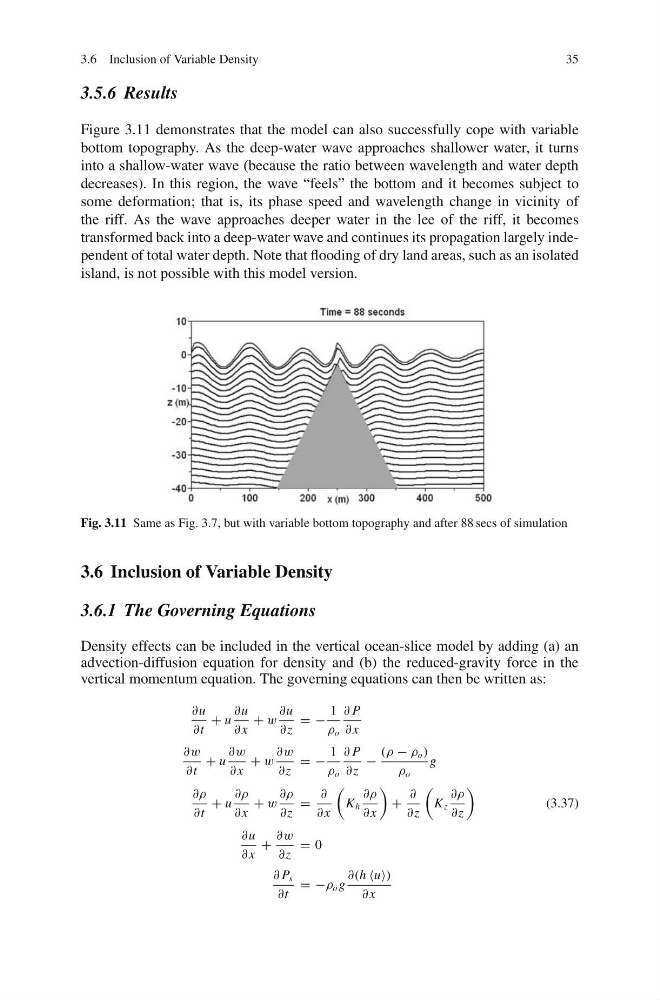
Figure 3.11 demonstrates that the model can also successfully cope with variable
bottom topography. As the deep-water wave approaches shallower water, it turns
into a shallow-water wave (because the ratio between wavelength and water depth
decreases). In this region, the wave “feels” the bottom and it becomes subject to
some deformation; that is, its phase speed and wavelength change in vicinity of
the riff. As the wave approaches deeper water in the lee of the riff, it becomes
transformed back into a deep-water wave and continues its propagation largely independent of total water depth. Note that flooding of dry land areas, such as an isolated
island, is not possible with this model version.
Fig. 3.11 Same as Fig. 3.7, but with variable bottom topography and after 88 secs of simulation
3.6 Inclusion of Variable Density
3.6.1 The Governing Equations
Density effects can be included in the vertical ocean-slice model by adding (a) an
advection-diffusion equation for density and (b) the reduced-gravity force in the
vertical momentum equation. The governing equations can then be written as:
∂u
∂t
+ u
∂u
∂ x
+ w
∂u
∂z
= −
1
ρ o
∂ P
∂ x
∂w
∂t
+ u
∂w
∂ x
+ w
∂w
∂z
= −
1
ρ o
∂ P
∂z
−
(ρ − ρ o )
ρ o
g
∂ρ
∂t
+ u
∂ρ
∂ x
+ w
∂ρ
∂z
=
∂
∂ x
K h
∂ρ
∂ x
+
∂
∂z
K z
∂ρ
∂z
(3.37)
∂u
∂ x
+
∂w
∂z
= 0
∂ P s
∂t
= −ρ o g
∂(h u)
∂ x
35
3.5.6 Results
Figure 3.11 demonstrates that the model can also successfully cope with variable
bottom topography. As the deep-water wave approaches shallower water, it turns
into a shallow-water wave (because the ratio between wavelength and water depth
decreases). In this region, the wave “feels” the bottom and it becomes subject to
some deformation; that is, its phase speed and wavelength change in vicinity of
the riff. As the wave approaches deeper water in the lee of the riff, it becomes
transformed back into a deep-water wave and continues its propagation largely independent of total water depth. Note that flooding of dry land areas, such as an isolated
island, is not possible with this model version.
Fig. 3.11 Same as Fig. 3.7, but with variable bottom topography and after 88 secs of simulation
3.6 Inclusion of Variable Density
3.6.1 The Governing Equations
Density effects can be included in the vertical ocean-slice model by adding (a) an
advection-diffusion equation for density and (b) the reduced-gravity force in the
vertical momentum equation. The governing equations can then be written as:
∂u
∂t
+ u
∂u
∂ x
+ w
∂u
∂z
= −
1
ρ o
∂ P
∂ x
∂w
∂t
+ u
∂w
∂ x
+ w
∂w
∂z
= −
1
ρ o
∂ P
∂z
−
(ρ − ρ o )
ρ o
g
∂ρ
∂t
+ u
∂ρ
∂ x
+ w
∂ρ
∂z
=
∂
∂ x
K h
∂ρ
∂ x
+
∂
∂z
K z
∂ρ
∂z
(3.37)
∂u
∂ x
+
∂w
∂z
= 0
∂ P s
∂t
= −ρ o g
∂(h u)
∂ x