

134
5 3D Level Modelling
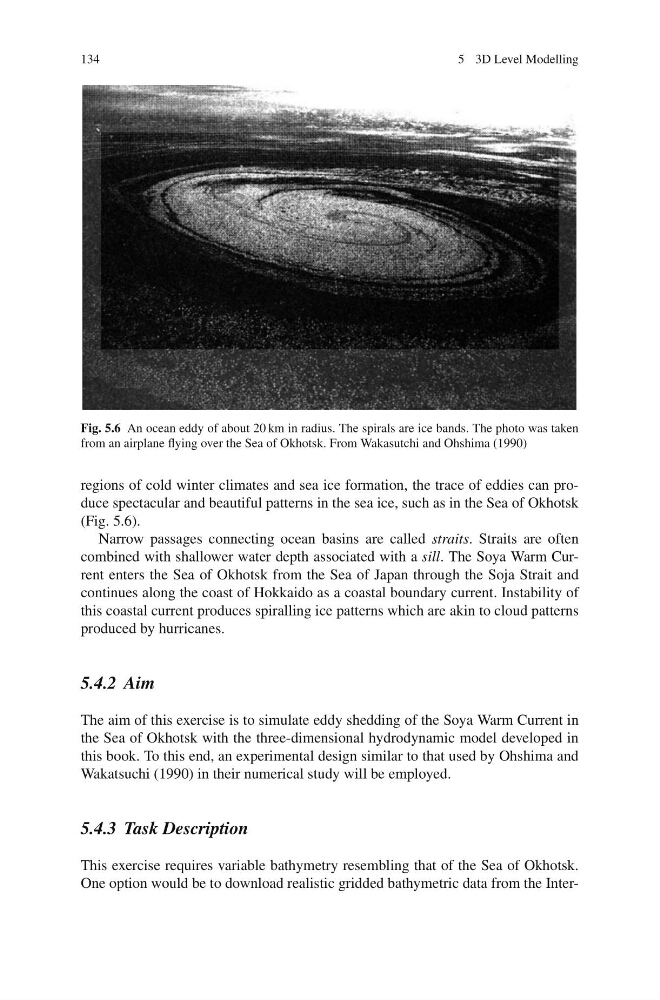
Fig. 5.6 An ocean eddy of about 20 km in radius. The spirals are ice bands. The photo was taken
from an airplane flying over the Sea of Okhotsk. From Wakasutchi and Ohshima (1990)
regions of cold winter climates and sea ice formation, the trace of eddies can produce spectacular and beautiful patterns in the sea ice, such as in the Sea of Okhotsk
(Fig. 5.6).
Narrow passages connecting ocean basins are called straits. Straits are often
combined with shallower water depth associated with a sill. The Soya Warm Current enters the Sea of Okhotsk from the Sea of Japan through the Soja Strait and
continues along the coast of Hokkaido as a coastal boundary current. Instability of
this coastal current produces spiralling ice patterns which are akin to cloud patterns
produced by hurricanes.
5.4.2 Aim
The aim of this exercise is to simulate eddy shedding of the Soya Warm Current in
the Sea of Okhotsk with the three-dimensional hydrodynamic model developed in
this book. To this end, an experimental design similar to that used by Ohshima and
Wakatsuchi (1990) in their numerical study will be employed.
5.4.3 Task Description
This exercise requires variable bathymetry resembling that of the Sea of Okhotsk.
One option would be to download realistic gridded bathymetric data from the Inter-
5 3D Level Modelling
Fig. 5.6 An ocean eddy of about 20 km in radius. The spirals are ice bands. The photo was taken
from an airplane flying over the Sea of Okhotsk. From Wakasutchi and Ohshima (1990)
regions of cold winter climates and sea ice formation, the trace of eddies can produce spectacular and beautiful patterns in the sea ice, such as in the Sea of Okhotsk
(Fig. 5.6).
Narrow passages connecting ocean basins are called straits. Straits are often
combined with shallower water depth associated with a sill. The Soya Warm Current enters the Sea of Okhotsk from the Sea of Japan through the Soja Strait and
continues along the coast of Hokkaido as a coastal boundary current. Instability of
this coastal current produces spiralling ice patterns which are akin to cloud patterns
produced by hurricanes.
5.4.2 Aim
The aim of this exercise is to simulate eddy shedding of the Soya Warm Current in
the Sea of Okhotsk with the three-dimensional hydrodynamic model developed in
this book. To this end, an experimental design similar to that used by Ohshima and
Wakatsuchi (1990) in their numerical study will be employed.
5.4.3 Task Description
This exercise requires variable bathymetry resembling that of the Sea of Okhotsk.
One option would be to download realistic gridded bathymetric data from the Inter-