

4.4 Exercise 6: The Flooding Algorithm
77
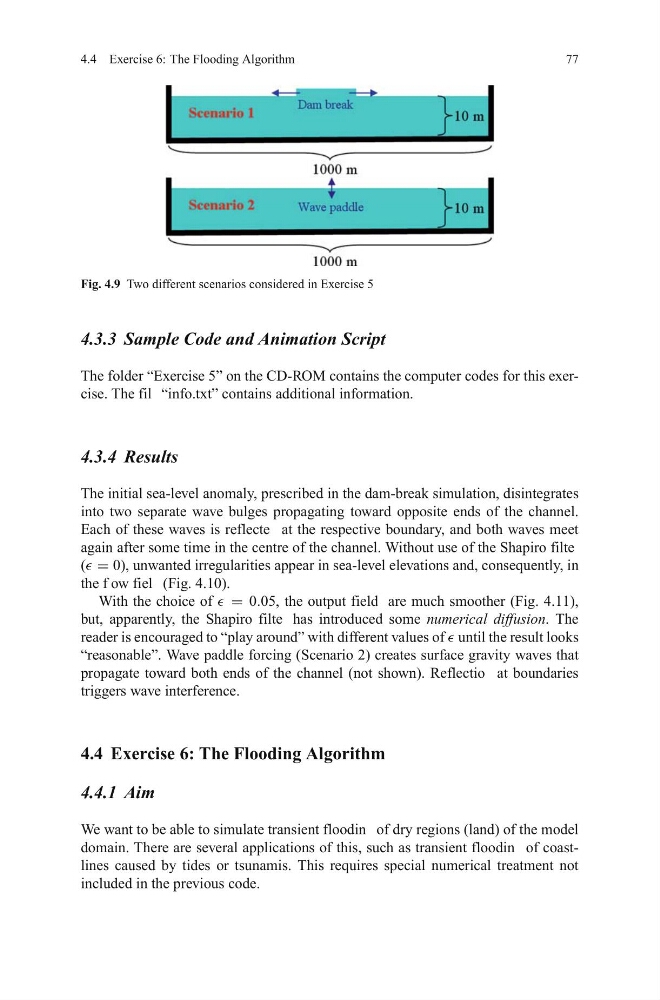
Fig. 4.9 Two different scenarios considered in Exercise 5
4.3.3 Sample Code and Animation Script
The folder “Exercise 5” on the CD-ROM contains the computer codes for this exercise. The fil “info.txt” contains additional information.
4.3.4 Results
The initial sea-level anomaly, prescribed in the dam-break simulation, disintegrates
into two separate wave bulges propagating toward opposite ends of the channel.
Each of these waves is reflecte at the respective boundary, and both waves meet
again after some time in the centre of the channel. Without use of the Shapiro filte
( = 0), unwanted irregularities appear in sea-level elevations and, consequently, in
the f ow fiel (Fig. 4.10).
With the choice of = 0.05, the output field are much smoother (Fig. 4.11),
but, apparently, the Shapiro filte has introduced some numerical diffusion. The
reader is encouraged to “play around” with different values of until the result looks
“reasonable”. Wave paddle forcing (Scenario 2) creates surface gravity waves that
propagate toward both ends of the channel (not shown). Reflectio at boundaries
triggers wave interference.
4.4 Exercise 6: The Flooding Algorithm
4.4.1 Aim
We want to be able to simulate transient floodin of dry regions (land) of the model
domain. There are several applications of this, such as transient floodin of coastlines caused by tides or tsunamis. This requires special numerical treatment not
included in the previous code.
77
Fig. 4.9 Two different scenarios considered in Exercise 5
4.3.3 Sample Code and Animation Script
The folder “Exercise 5” on the CD-ROM contains the computer codes for this exercise. The fil “info.txt” contains additional information.
4.3.4 Results
The initial sea-level anomaly, prescribed in the dam-break simulation, disintegrates
into two separate wave bulges propagating toward opposite ends of the channel.
Each of these waves is reflecte at the respective boundary, and both waves meet
again after some time in the centre of the channel. Without use of the Shapiro filte
( = 0), unwanted irregularities appear in sea-level elevations and, consequently, in
the f ow fiel (Fig. 4.10).
With the choice of = 0.05, the output field are much smoother (Fig. 4.11),
but, apparently, the Shapiro filte has introduced some numerical diffusion. The
reader is encouraged to “play around” with different values of until the result looks
“reasonable”. Wave paddle forcing (Scenario 2) creates surface gravity waves that
propagate toward both ends of the channel (not shown). Reflectio at boundaries
triggers wave interference.
4.4 Exercise 6: The Flooding Algorithm
4.4.1 Aim
We want to be able to simulate transient floodin of dry regions (land) of the model
domain. There are several applications of this, such as transient floodin of coastlines caused by tides or tsunamis. This requires special numerical treatment not
included in the previous code.