

5.3 Exercise 9: Wave Refraction
95
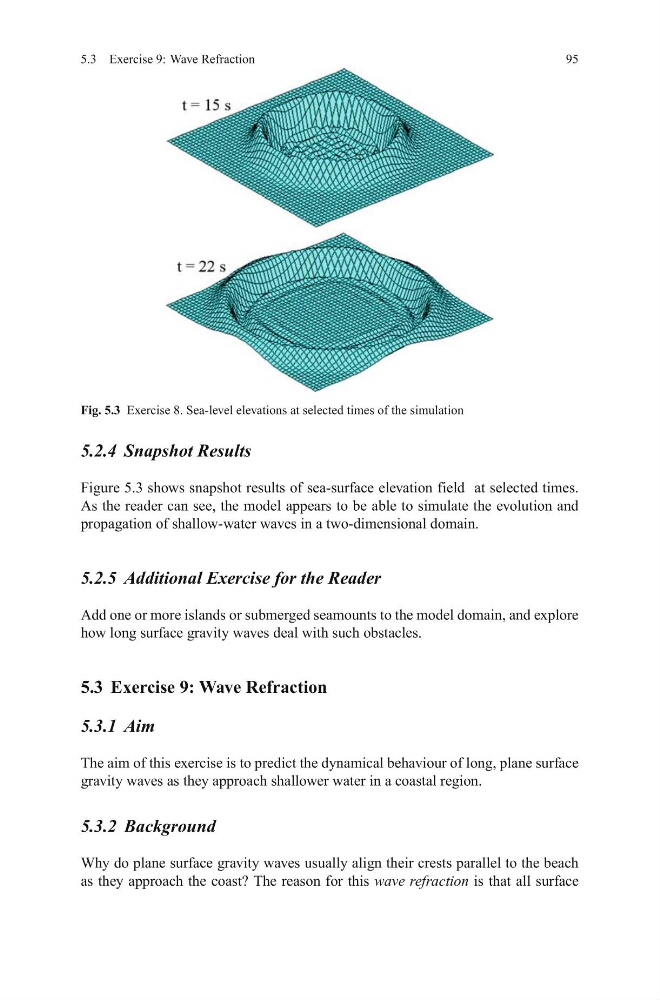
Fig. 5.3 Exercise 8. Sea-level elevations at selected times of the simulation
5.2.4 Snapshot Results
Figure 5.3 shows snapshot results of sea-surface elevation field at selected times.
As the reader can see, the model appears to be able to simulate the evolution and
propagation of shallow-water waves in a two-dimensional domain.
5.2.5 Additional Exercise for the Reader
Add one or more islands or submerged seamounts to the model domain, and explore
how long surface gravity waves deal with such obstacles.
5.3 Exercise 9: Wave Refraction
5.3.1 Aim
The aim of this exercise is to predict the dynamical behaviour of long, plane surface
gravity waves as they approach shallower water in a coastal region.
5.3.2 Background
Why do plane surface gravity waves usually align their crests parallel to the beach
as they approach the coast? The reason for this wave refraction is that all surface
95
Fig. 5.3 Exercise 8. Sea-level elevations at selected times of the simulation
5.2.4 Snapshot Results
Figure 5.3 shows snapshot results of sea-surface elevation field at selected times.
As the reader can see, the model appears to be able to simulate the evolution and
propagation of shallow-water waves in a two-dimensional domain.
5.2.5 Additional Exercise for the Reader
Add one or more islands or submerged seamounts to the model domain, and explore
how long surface gravity waves deal with such obstacles.
5.3 Exercise 9: Wave Refraction
5.3.1 Aim
The aim of this exercise is to predict the dynamical behaviour of long, plane surface
gravity waves as they approach shallower water in a coastal region.
5.3.2 Background
Why do plane surface gravity waves usually align their crests parallel to the beach
as they approach the coast? The reason for this wave refraction is that all surface