

Other dolerites were also sampled in a talus pile (site #11) at 3493 m. However,
the first dolerite sampled (site #14) in situ was at 3040 m depth. The sampled
dolerite was associated with alternating brecciated peridotite crossed by veins of
gabbro at 3004 m. The dive ended at 17:28 in this mixed variety of rock types
marking a transition zone, which appears to be near the contact between the
peridotite dominated outcrops and the intrusive gabbro-dolerite complex. This
observation was confirmed with the next dive, which was planned to continue the
ascension of the wall.
The second dive (PI 17) along the transform wall was a continuation of dive PI
16 (Fig. 8.14a–h). The scientific observer was Jacques Girardeau from the University of Nantes. His specialization on the physics of rock deformation during
tectonic stress coupled with his experience in subaerial peridotite-gabbroic rock
formations provided us with additional input for the project. The Nautile reached
the site to be explored at 11:38 on November 23, 1993, at a depth of 3286 m. They
found themselves close to an abundant series of serpentinized peridotite outcrops
with schistose structures, which were veined by lighter colored gabbroic intrusions. After passing the peridotite-gabbro outcrops, they observed a dolerite dyke
complex marked by hydrothermalism at 14:45 at a depth of 2603 m. The hydrothermal site consisted of a crowd of dead serpulite worms that were attached to a
rusty-colored vertical dyke complex about 130 m high. At 15:01, Girardeau saw
another area with living serpulidae worms (Fig. 8.14g) along with starfish and
anemones, on another dyke outcrop 153 m high at 2408 m depths. The serpulidae
worms (Neovermila species) were less than 30 cm long and formed bunches
within a warm hydrothermal venting area where shimmering warm water was
observed exiting from small cracks in the rock. The observation of the dyke
complex on the near vertical cliff ended at 15:35 at a depth of 2305 m. At this
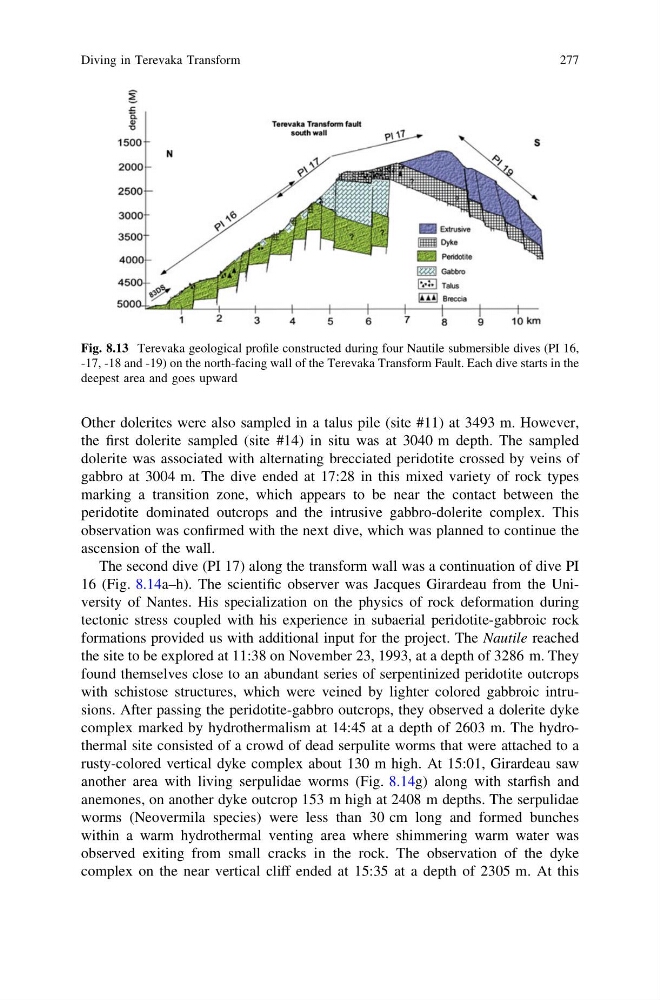
Fig. 8.13 Terevaka geological profile constructed during four Nautile submersible dives (PI 16,
-17, -18 and -19) on the north-facing wall of the Terevaka Transform Fault. Each dive starts in the
deepest area and goes upward
Diving in Terevaka Transform
277
the first dolerite sampled (site #14) in situ was at 3040 m depth. The sampled
dolerite was associated with alternating brecciated peridotite crossed by veins of
gabbro at 3004 m. The dive ended at 17:28 in this mixed variety of rock types
marking a transition zone, which appears to be near the contact between the
peridotite dominated outcrops and the intrusive gabbro-dolerite complex. This
observation was confirmed with the next dive, which was planned to continue the
ascension of the wall.
The second dive (PI 17) along the transform wall was a continuation of dive PI
16 (Fig. 8.14a–h). The scientific observer was Jacques Girardeau from the University of Nantes. His specialization on the physics of rock deformation during
tectonic stress coupled with his experience in subaerial peridotite-gabbroic rock
formations provided us with additional input for the project. The Nautile reached
the site to be explored at 11:38 on November 23, 1993, at a depth of 3286 m. They
found themselves close to an abundant series of serpentinized peridotite outcrops
with schistose structures, which were veined by lighter colored gabbroic intrusions. After passing the peridotite-gabbro outcrops, they observed a dolerite dyke
complex marked by hydrothermalism at 14:45 at a depth of 2603 m. The hydrothermal site consisted of a crowd of dead serpulite worms that were attached to a
rusty-colored vertical dyke complex about 130 m high. At 15:01, Girardeau saw
another area with living serpulidae worms (Fig. 8.14g) along with starfish and
anemones, on another dyke outcrop 153 m high at 2408 m depths. The serpulidae
worms (Neovermila species) were less than 30 cm long and formed bunches
within a warm hydrothermal venting area where shimmering warm water was
observed exiting from small cracks in the rock. The observation of the dyke
complex on the near vertical cliff ended at 15:35 at a depth of 2305 m. At this
Fig. 8.13 Terevaka geological profile constructed during four Nautile submersible dives (PI 16,
-17, -18 and -19) on the north-facing wall of the Terevaka Transform Fault. Each dive starts in the
deepest area and goes upward
Diving in Terevaka Transform
277