

during volcanic explosion (see Chap. 5). This type of material was mainly
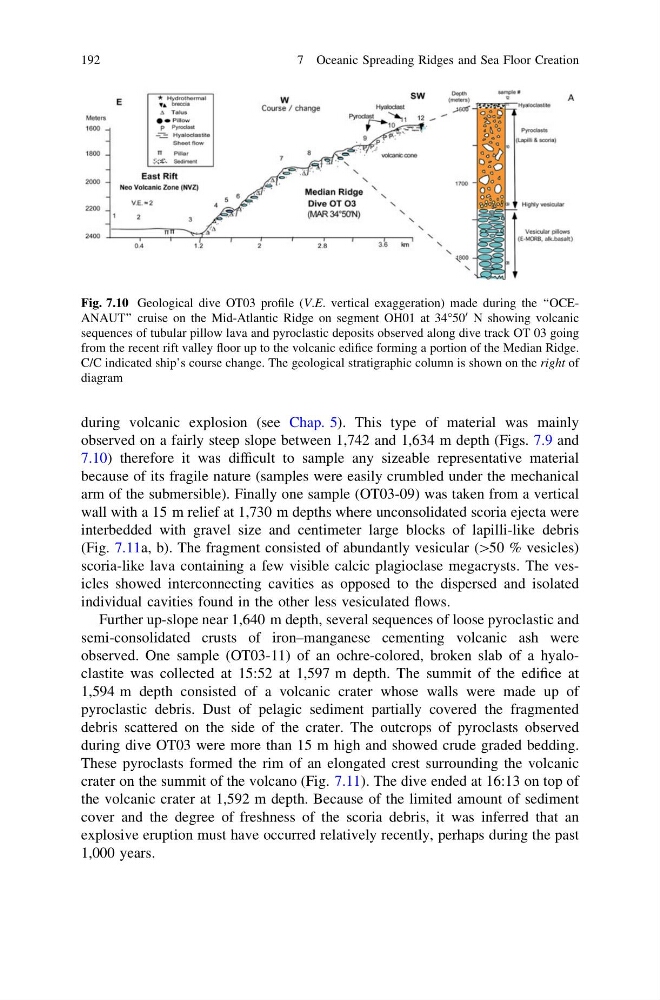
observed on a fairly steep slope between 1,742 and 1,634 m depth (Figs. 7.9 and
7.10) therefore it was difficult to sample any sizeable representative material
because of its fragile nature (samples were easily crumbled under the mechanical
arm of the submersible). Finally one sample (OT03-09) was taken from a vertical
wall with a 15 m relief at 1,730 m depths where unconsolidated scoria ejecta were
interbedded with gravel size and centimeter large blocks of lapilli-like debris
(Fig. 7.11a, b). The fragment consisted of abundantly vesicular ([50 % vesicles)
scoria-like lava containing a few visible calcic plagioclase megacrysts. The vesicles showed interconnecting cavities as opposed to the dispersed and isolated
individual cavities found in the other less vesiculated flows.
Further up-slope near 1,640 m depth, several sequences of loose pyroclastic and
semi-consolidated crusts of iron–manganese cementing volcanic ash were
observed. One sample (OT03-11) of an ochre-colored, broken slab of a hyaloclastite was collected at 15:52 at 1,597 m depth. The summit of the edifice at
1,594 m depth consisted of a volcanic crater whose walls were made up of
pyroclastic debris. Dust of pelagic sediment partially covered the fragmented
debris scattered on the side of the crater. The outcrops of pyroclasts observed
during dive OT03 were more than 15 m high and showed crude graded bedding.
These pyroclasts formed the rim of an elongated crest surrounding the volcanic
crater on the summit of the volcano (Fig. 7.11). The dive ended at 16:13 on top of
the volcanic crater at 1,592 m depth. Because of the limited amount of sediment
cover and the degree of freshness of the scoria debris, it was inferred that an
explosive eruption must have occurred relatively recently, perhaps during the past
1,000 years.
Fig. 7.10 Geological dive OT03 profile (V.E. vertical exaggeration) made during the ‘‘OCEANAUT’’ cruise on the Mid-Atlantic Ridge on segment OH01 at 34°50
0 N showing volcanic
sequences of tubular pillow lava and pyroclastic deposits observed along dive track OT 03 going
from the recent rift valley floor up to the volcanic edifice forming a portion of the Median Ridge.
C/C indicated ship’s course change. The geological stratigraphic column is shown on the right of
diagram
192
7 Oceanic Spreading Ridges and Sea Floor Creation
observed on a fairly steep slope between 1,742 and 1,634 m depth (Figs. 7.9 and
7.10) therefore it was difficult to sample any sizeable representative material
because of its fragile nature (samples were easily crumbled under the mechanical
arm of the submersible). Finally one sample (OT03-09) was taken from a vertical
wall with a 15 m relief at 1,730 m depths where unconsolidated scoria ejecta were
interbedded with gravel size and centimeter large blocks of lapilli-like debris
(Fig. 7.11a, b). The fragment consisted of abundantly vesicular ([50 % vesicles)
scoria-like lava containing a few visible calcic plagioclase megacrysts. The vesicles showed interconnecting cavities as opposed to the dispersed and isolated
individual cavities found in the other less vesiculated flows.
Further up-slope near 1,640 m depth, several sequences of loose pyroclastic and
semi-consolidated crusts of iron–manganese cementing volcanic ash were
observed. One sample (OT03-11) of an ochre-colored, broken slab of a hyaloclastite was collected at 15:52 at 1,597 m depth. The summit of the edifice at
1,594 m depth consisted of a volcanic crater whose walls were made up of
pyroclastic debris. Dust of pelagic sediment partially covered the fragmented
debris scattered on the side of the crater. The outcrops of pyroclasts observed
during dive OT03 were more than 15 m high and showed crude graded bedding.
These pyroclasts formed the rim of an elongated crest surrounding the volcanic
crater on the summit of the volcano (Fig. 7.11). The dive ended at 16:13 on top of
the volcanic crater at 1,592 m depth. Because of the limited amount of sediment
cover and the degree of freshness of the scoria debris, it was inferred that an
explosive eruption must have occurred relatively recently, perhaps during the past
1,000 years.
Fig. 7.10 Geological dive OT03 profile (V.E. vertical exaggeration) made during the ‘‘OCEANAUT’’ cruise on the Mid-Atlantic Ridge on segment OH01 at 34°50
0 N showing volcanic
sequences of tubular pillow lava and pyroclastic deposits observed along dive track OT 03 going
from the recent rift valley floor up to the volcanic edifice forming a portion of the Median Ridge.
C/C indicated ship’s course change. The geological stratigraphic column is shown on the right of
diagram
192
7 Oceanic Spreading Ridges and Sea Floor Creation