

(Bishoff 1980). The metals most suitable for leaching are the transition metals such
as Cu, Zn, Fe, Mn Ag, and Au, which form metallic compounds along with sulfur
and chlorine.
The hydrothermal fluid spewing out on the sea floor is heavily charged with
Mn, Si (OH) 4 , H 2 S, CH 4 , Li, CO 2 , and metals such as Fe, Zn and Cu, in amounts
that are more than a hundred times greater than what is found in ambient sea water
(Charlou and Donval 1993). The fluid rising immediately above active chimneys
(hydrothermal vents) is found in a concentrated jet, only a few centimeters in
diameter, similar in flow intensity to the fluid exiting a water-hose. As the vent
fluid is discharged and rises above the chimney, it is quickly diluted with seawater
creating a hydrothermal plume. This hydrothermal plume rises up to a few hundreds of meters above the sea floor. Indeed, plumes were often observed and
tracked by human eyes up to about 50 m above strongly active ‘‘black smoker’’
chimneys. Obviously, the fluid will rise higher until it is completely diluted to a
density the same as the ambient seawater and can then be transported by undersea
currents.
Hydrothermal fluids at contact with ambient seawater near the vents precipitate
particles of ore-forming elements at the site of venting. These precipitations form
sulfide edifices. Other elements form Fe and Mn oxyhydroxides (which are oxide
compounds created with the oxygen extracted from sea water) that co-precipitate
with transitional trace elements such as Cr, As, Co and Ni. The hydrothermal fluid
comprised of Fe, Mn and transition metals is dissipated in the seawater and then
transported in the water column. This transported material will eventually contribute to the formation of polymetallic sediment and/or nodules, which can be
found thousands of kilometers away from their sources.
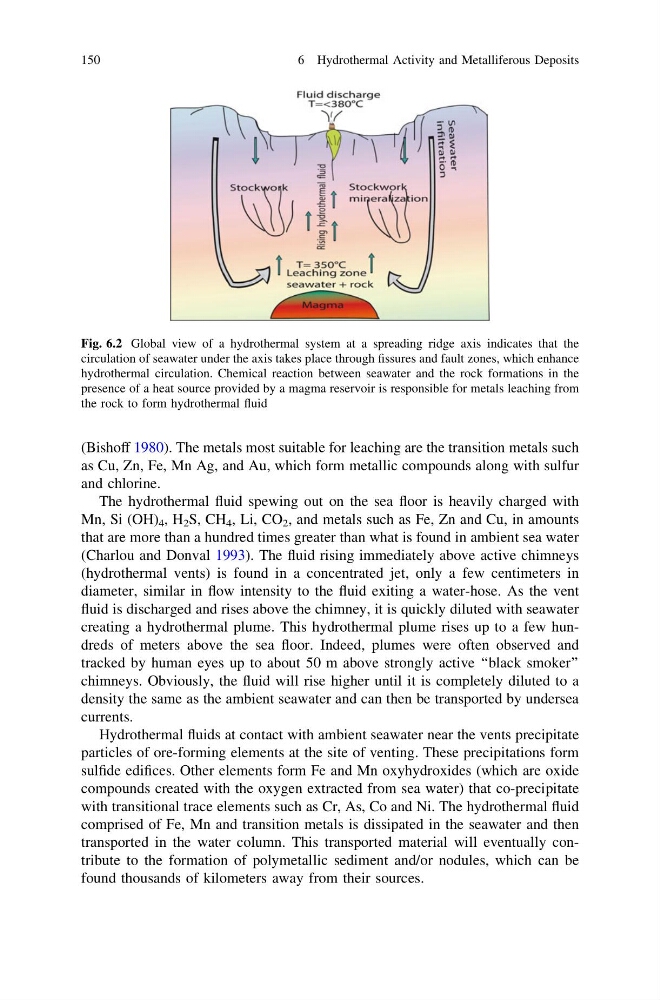
Fig. 6.2 Global view of a hydrothermal system at a spreading ridge axis indicates that the
circulation of seawater under the axis takes place through fissures and fault zones, which enhance
hydrothermal circulation. Chemical reaction between seawater and the rock formations in the
presence of a heat source provided by a magma reservoir is responsible for metals leaching from
the rock to form hydrothermal fluid
150
6 Hydrothermal Activity and Metalliferous Deposits
as Cu, Zn, Fe, Mn Ag, and Au, which form metallic compounds along with sulfur
and chlorine.
The hydrothermal fluid spewing out on the sea floor is heavily charged with
Mn, Si (OH) 4 , H 2 S, CH 4 , Li, CO 2 , and metals such as Fe, Zn and Cu, in amounts
that are more than a hundred times greater than what is found in ambient sea water
(Charlou and Donval 1993). The fluid rising immediately above active chimneys
(hydrothermal vents) is found in a concentrated jet, only a few centimeters in
diameter, similar in flow intensity to the fluid exiting a water-hose. As the vent
fluid is discharged and rises above the chimney, it is quickly diluted with seawater
creating a hydrothermal plume. This hydrothermal plume rises up to a few hundreds of meters above the sea floor. Indeed, plumes were often observed and
tracked by human eyes up to about 50 m above strongly active ‘‘black smoker’’
chimneys. Obviously, the fluid will rise higher until it is completely diluted to a
density the same as the ambient seawater and can then be transported by undersea
currents.
Hydrothermal fluids at contact with ambient seawater near the vents precipitate
particles of ore-forming elements at the site of venting. These precipitations form
sulfide edifices. Other elements form Fe and Mn oxyhydroxides (which are oxide
compounds created with the oxygen extracted from sea water) that co-precipitate
with transitional trace elements such as Cr, As, Co and Ni. The hydrothermal fluid
comprised of Fe, Mn and transition metals is dissipated in the seawater and then
transported in the water column. This transported material will eventually contribute to the formation of polymetallic sediment and/or nodules, which can be
found thousands of kilometers away from their sources.
Fig. 6.2 Global view of a hydrothermal system at a spreading ridge axis indicates that the
circulation of seawater under the axis takes place through fissures and fault zones, which enhance
hydrothermal circulation. Chemical reaction between seawater and the rock formations in the
presence of a heat source provided by a magma reservoir is responsible for metals leaching from
the rock to form hydrothermal fluid
150
6 Hydrothermal Activity and Metalliferous Deposits