

324
G. Zibordi and K.J. Voss
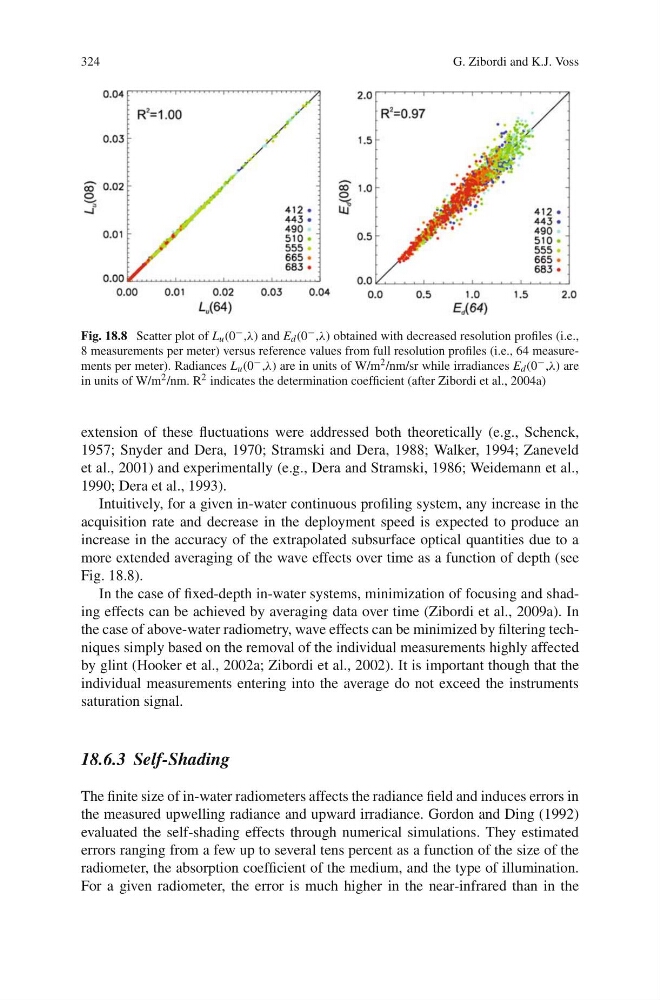
Fig. 18.8 Scatter plot of L u (0 − ,λ) and E d (0 − ,λ) obtained with decreased resolution profiles (i.e.,
8 measurements per meter) versus reference values from full resolution profiles (i.e., 64 measurements per meter). Radiances L u (0 − ,λ) are in units of W/m 2 /nm/sr while irradiances E d (0 − ,λ) are
in units of W/m 2 /nm. R 2 indicates the determination coefficient (after Zibordi et al., 2004a)
extension of these fluctuations were addressed both theoretically (e.g., Schenck,
1957; Snyder and Dera, 1970; Stramski and Dera, 1988; Walker, 1994; Zaneveld
et al., 2001) and experimentally (e.g., Dera and Stramski, 1986; Weidemann et al.,
1990; Dera et al., 1993).
Intuitively, for a given in-water continuous profiling system, any increase in the
acquisition rate and decrease in the deployment speed is expected to produce an
increase in the accuracy of the extrapolated subsurface optical quantities due to a
more extended averaging of the wave effects over time as a function of depth (see
Fig. 18.8).
In the case of fixed-depth in-water systems, minimization of focusing and shading effects can be achieved by averaging data over time (Zibordi et al., 2009a). In
the case of above-water radiometry, wave effects can be minimized by filtering techniques simply based on the removal of the individual measurements highly affected
by glint (Hooker et al., 2002a; Zibordi et al., 2002). It is important though that the
individual measurements entering into the average do not exceed the instruments
saturation signal.
18.6.3 Self-Shading
The finite size of in-water radiometers affects the radiance field and induces errors in
the measured upwelling radiance and upward irradiance. Gordon and Ding (1992)
evaluated the self-shading effects through numerical simulations. They estimated
errors ranging from a few up to several tens percent as a function of the size of the
radiometer, the absorption coefficient of the medium, and the type of illumination.
For a given radiometer, the error is much higher in the near-infrared than in the
G. Zibordi and K.J. Voss
Fig. 18.8 Scatter plot of L u (0 − ,λ) and E d (0 − ,λ) obtained with decreased resolution profiles (i.e.,
8 measurements per meter) versus reference values from full resolution profiles (i.e., 64 measurements per meter). Radiances L u (0 − ,λ) are in units of W/m 2 /nm/sr while irradiances E d (0 − ,λ) are
in units of W/m 2 /nm. R 2 indicates the determination coefficient (after Zibordi et al., 2004a)
extension of these fluctuations were addressed both theoretically (e.g., Schenck,
1957; Snyder and Dera, 1970; Stramski and Dera, 1988; Walker, 1994; Zaneveld
et al., 2001) and experimentally (e.g., Dera and Stramski, 1986; Weidemann et al.,
1990; Dera et al., 1993).
Intuitively, for a given in-water continuous profiling system, any increase in the
acquisition rate and decrease in the deployment speed is expected to produce an
increase in the accuracy of the extrapolated subsurface optical quantities due to a
more extended averaging of the wave effects over time as a function of depth (see
Fig. 18.8).
In the case of fixed-depth in-water systems, minimization of focusing and shading effects can be achieved by averaging data over time (Zibordi et al., 2009a). In
the case of above-water radiometry, wave effects can be minimized by filtering techniques simply based on the removal of the individual measurements highly affected
by glint (Hooker et al., 2002a; Zibordi et al., 2002). It is important though that the
individual measurements entering into the average do not exceed the instruments
saturation signal.
18.6.3 Self-Shading
The finite size of in-water radiometers affects the radiance field and induces errors in
the measured upwelling radiance and upward irradiance. Gordon and Ding (1992)
evaluated the self-shading effects through numerical simulations. They estimated
errors ranging from a few up to several tens percent as a function of the size of the
radiometer, the absorption coefficient of the medium, and the type of illumination.
For a given radiometer, the error is much higher in the near-infrared than in the