

158
L.-L. Fu
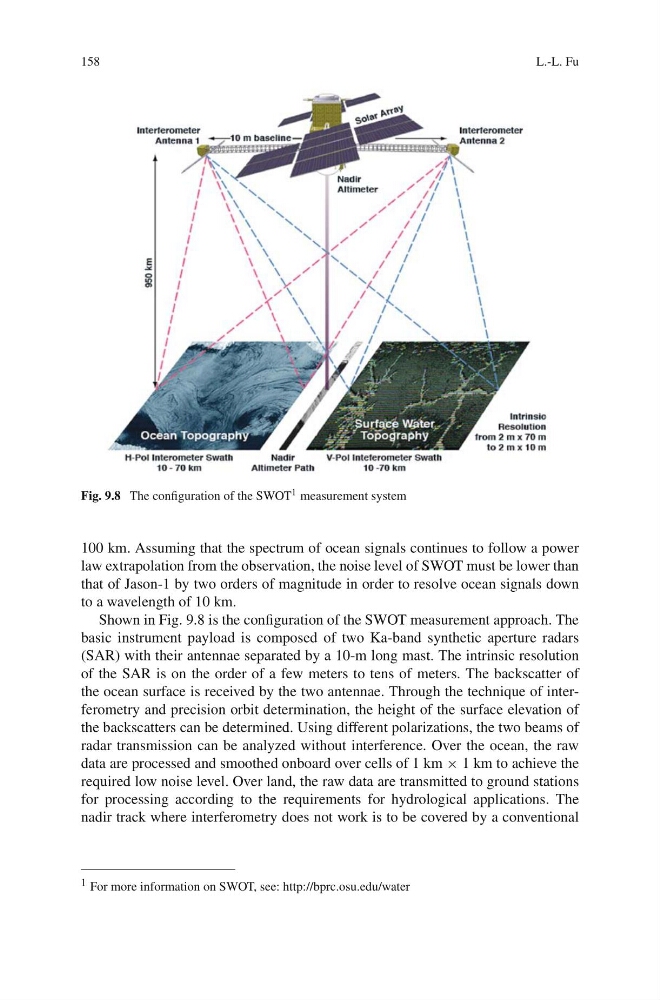
Fig. 9.8 The configuration of the SWOT 1 measurement system
100 km. Assuming that the spectrum of ocean signals continues to follow a power
law extrapolation from the observation, the noise level of SWOT must be lower than
that of Jason-1 by two orders of magnitude in order to resolve ocean signals down
to a wavelength of 10 km.
Shown in Fig. 9.8 is the configuration of the SWOT measurement approach. The
basic instrument payload is composed of two Ka-band synthetic aperture radars
(SAR) with their antennae separated by a 10-m long mast. The intrinsic resolution
of the SAR is on the order of a few meters to tens of meters. The backscatter of
the ocean surface is received by the two antennae. Through the technique of interferometry and precision orbit determination, the height of the surface elevation of
the backscatters can be determined. Using different polarizations, the two beams of
radar transmission can be analyzed without interference. Over the ocean, the raw
data are processed and smoothed onboard over cells of 1 km × 1 km to achieve the
required low noise level. Over land, the raw data are transmitted to ground stations
for processing according to the requirements for hydrological applications. The
nadir track where interferometry does not work is to be covered by a conventional
1 For more information on SWOT, see: http://bprc.osu.edu/water
L.-L. Fu
Fig. 9.8 The configuration of the SWOT 1 measurement system
100 km. Assuming that the spectrum of ocean signals continues to follow a power
law extrapolation from the observation, the noise level of SWOT must be lower than
that of Jason-1 by two orders of magnitude in order to resolve ocean signals down
to a wavelength of 10 km.
Shown in Fig. 9.8 is the configuration of the SWOT measurement approach. The
basic instrument payload is composed of two Ka-band synthetic aperture radars
(SAR) with their antennae separated by a 10-m long mast. The intrinsic resolution
of the SAR is on the order of a few meters to tens of meters. The backscatter of
the ocean surface is received by the two antennae. Through the technique of interferometry and precision orbit determination, the height of the surface elevation of
the backscatters can be determined. Using different polarizations, the two beams of
radar transmission can be analyzed without interference. Over the ocean, the raw
data are processed and smoothed onboard over cells of 1 km × 1 km to achieve the
required low noise level. Over land, the raw data are transmitted to ground stations
for processing according to the requirements for hydrological applications. The
nadir track where interferometry does not work is to be covered by a conventional
1 For more information on SWOT, see: http://bprc.osu.edu/water