

138
M. Vespe et al.
Cross-track
Along-track
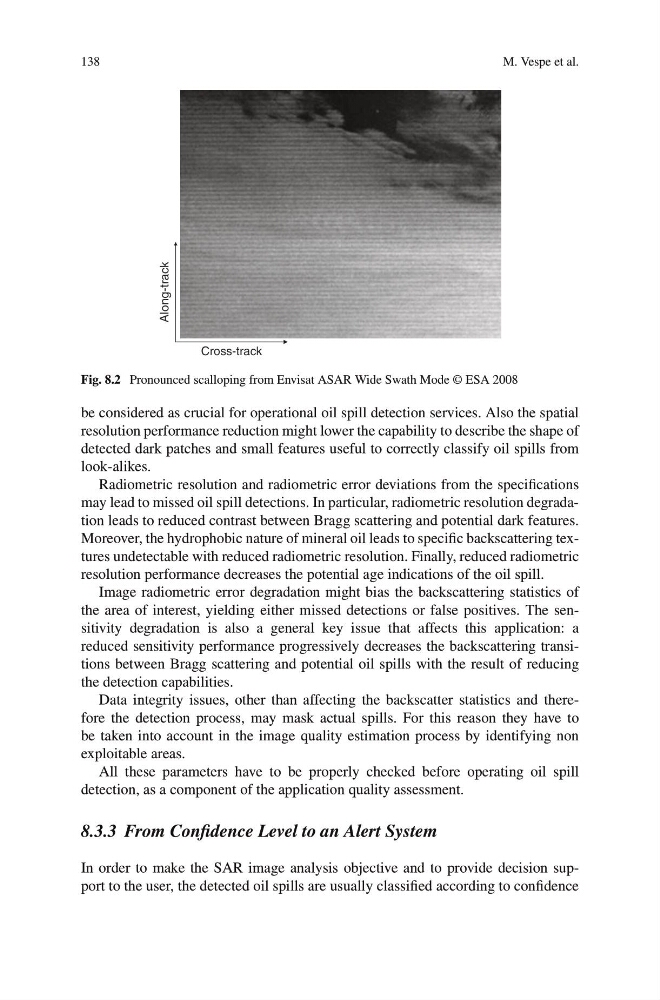
Fig. 8.2 Pronounced scalloping from Envisat ASAR Wide Swath Mode © ESA 2008
be considered as crucial for operational oil spill detection services. Also the spatial
resolution performance reduction might lower the capability to describe the shape of
detected dark patches and small features useful to correctly classify oil spills from
look-alikes.
Radiometric resolution and radiometric error deviations from the specifications
may lead to missed oil spill detections. In particular, radiometric resolution degradation leads to reduced contrast between Bragg scattering and potential dark features.
Moreover, the hydrophobic nature of mineral oil leads to specific backscattering textures undetectable with reduced radiometric resolution. Finally, reduced radiometric
resolution performance decreases the potential age indications of the oil spill.
Image radiometric error degradation might bias the backscattering statistics of
the area of interest, yielding either missed detections or false positives. The sensitivity degradation is also a general key issue that affects this application: a
reduced sensitivity performance progressively decreases the backscattering transitions between Bragg scattering and potential oil spills with the result of reducing
the detection capabilities.
Data integrity issues, other than affecting the backscatter statistics and therefore the detection process, may mask actual spills. For this reason they have to
be taken into account in the image quality estimation process by identifying non
exploitable areas.
All these parameters have to be properly checked before operating oil spill
detection, as a component of the application quality assessment.
8.3.3 From Confidence Level to an Alert System
In order to make the SAR image analysis objective and to provide decision support to the user, the detected oil spills are usually classified according to confidence
M. Vespe et al.
Cross-track
Along-track
Fig. 8.2 Pronounced scalloping from Envisat ASAR Wide Swath Mode © ESA 2008
be considered as crucial for operational oil spill detection services. Also the spatial
resolution performance reduction might lower the capability to describe the shape of
detected dark patches and small features useful to correctly classify oil spills from
look-alikes.
Radiometric resolution and radiometric error deviations from the specifications
may lead to missed oil spill detections. In particular, radiometric resolution degradation leads to reduced contrast between Bragg scattering and potential dark features.
Moreover, the hydrophobic nature of mineral oil leads to specific backscattering textures undetectable with reduced radiometric resolution. Finally, reduced radiometric
resolution performance decreases the potential age indications of the oil spill.
Image radiometric error degradation might bias the backscattering statistics of
the area of interest, yielding either missed detections or false positives. The sensitivity degradation is also a general key issue that affects this application: a
reduced sensitivity performance progressively decreases the backscattering transitions between Bragg scattering and potential oil spills with the result of reducing
the detection capabilities.
Data integrity issues, other than affecting the backscatter statistics and therefore the detection process, may mask actual spills. For this reason they have to
be taken into account in the image quality estimation process by identifying non
exploitable areas.
All these parameters have to be properly checked before operating oil spill
detection, as a component of the application quality assessment.
8.3.3 From Confidence Level to an Alert System
In order to make the SAR image analysis objective and to provide decision support to the user, the detected oil spills are usually classified according to confidence