

Pavlov et al.: Possible Causes of radioactive Contamination in the Laptev Sea
69
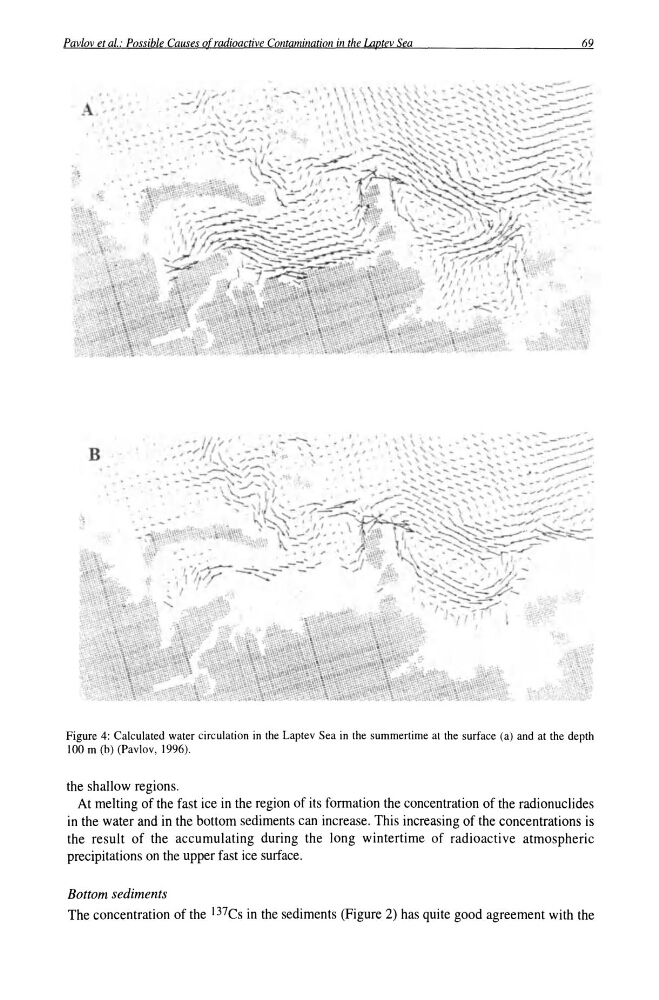
Figure 4: Calculated water circulation in the Laptev Sea in the summertime at the surface (a) and at the depth
100 m (b) (Pavlov, 1996).
the shallow regions.
At melting of the fast ice in the region of its formation the concentration of the radionuclides
in the water and in the bottom sediments can increase. This increasing of the concentrations is
the result of the accumulating during the long wintertime of radioactive atmospheric
precipitations on the upper fast ice surface.
Bottom sediments
The concentration of the 137Cs in the sediments (Figure 2) has quite good agreement with the
69
Figure 4: Calculated water circulation in the Laptev Sea in the summertime at the surface (a) and at the depth
100 m (b) (Pavlov, 1996).
the shallow regions.
At melting of the fast ice in the region of its formation the concentration of the radionuclides
in the water and in the bottom sediments can increase. This increasing of the concentrations is
the result of the accumulating during the long wintertime of radioactive atmospheric
precipitations on the upper fast ice surface.
Bottom sediments
The concentration of the 137Cs in the sediments (Figure 2) has quite good agreement with the