

Shevchenko et al.: The Composition of the Coarse Fraction of Aerosols
57
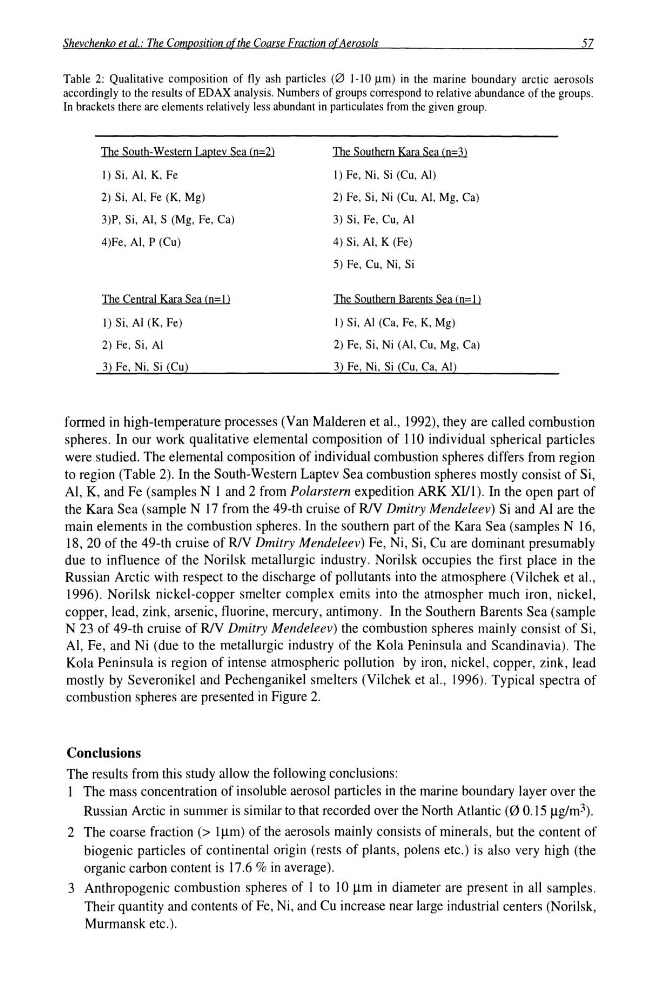
Table 2: Qualitative composition of fly ash particles (0 I-to 11m) in the marine boundary arctic aerosols
accordingly to the results of EDAX analysis. Numbers of groups correspond to relative abundance of the groups.
In brackets there are elements relatively less abundant in particulates from the given group.
The South-Western Laptev Sea (n-2)
I) Si, AI, K, Fe
2) Si, AI, Fe (K, Mg)
3)p, Si, AI, S (Mg, Fe, Cal
4)Fe, AI, P (Cu)
The Central Kara Sea (n-I)
1) Si, AI (K, Fe)
2) Fe, Si, Al
3) Fe, Ni, Si (Cu)
The Southern Kara Sea (n-3)
I) Fe, Ni, Si (Cu, AI)
2) Fe, Si, Ni (Cu, AI, Mg, Cal
3) Si, Fe, Cu, AI
4) Si, AI, K (Fe)
5) Fe, Cu, Ni, Si
The Southern Barents Sea (n-ll
I) Si, Al (Ca, Fe, K, Mg)
2) Fe, Si, Ni (AI, Cu, Mg, Cal
3) Fe, Ni, Si (Cu, Ca, AI)
formed in high-temperature processes (Van Malderen et aI., 1992), they are called combustion
spheres. In our work qualitative elemental composition of 110 individual spherical particles
were studied. The elemental composition of individual combustion spheres differs from region
to region (Table 2). In the South-Western Laptev Sea combustion spheres mostly consist of Si,
AI, K, and Fe (samples N I and 2 from Polarstern expedition ARK XIII). In the open part of
the Kara Sea (sample N 17 from the 49-th cruise of RIV Dmitry Mendeleev) Si and Al are the
main elements in the combustion spheres. In the southern part of the Kara Sea (samples N 16,
\8, 20 of the 49-th cruise of RlV Dmitry Mendeleev) Fe, Ni, Si, Cu are dominant presumably
due to influence of the Norilsk metallurgic industry. Norilsk occupies the first place in the
Russian Arctic with respect to the discharge of pollutants into the atmosphere (Vilchek et a!.,
\996). Norilsk nickel-copper smelter complex emits into the atmospher much iron, nickel,
copper, lead, zink, arsenic, fluorine, mercury, antimony. In the Southern Barents Sea (sample
N 23 of 49-th cruise of RlV Dmitry Mendeleev) the combustion spheres mainly consist of Si,
AI, Fe, and Ni (due to the metallurgic industry of the Kola Peninsula and Scandinavia). The
Kola Peninsula is region of intense atmospheric pollution by iron, nickel, copper, zink, lead
mostly by Severonikel and Pechenganikel smelters (Vilchek et aI., 1996). Typical spectra of
combustion spheres are presented in Figure 2.
Conclusions
The results from this study allow the following conclusions:
1 The mass concentration of insoluble aerosol particles in the marine boundary layer over the
Russian Arctic in summer is similar to that recorded over the North Atlantic (00.15 Ilg/m3).
2 The coarse fraction (> l/lm) of the aerosols mainly consists of minerals, but the content of
biogenic particles of continental origin (rests of plants, polens etc.) is also very high (the
organic carbon content is 17.6 % in average).
3 Anthropogenic combustion spheres of 1 to 10 /lm in diameter are present in all samples.
Their quantity and contents of Fe, Ni, and Cu increase near large industrial centers (Norilsk,
Murmansk etc.).
57
Table 2: Qualitative composition of fly ash particles (0 I-to 11m) in the marine boundary arctic aerosols
accordingly to the results of EDAX analysis. Numbers of groups correspond to relative abundance of the groups.
In brackets there are elements relatively less abundant in particulates from the given group.
The South-Western Laptev Sea (n-2)
I) Si, AI, K, Fe
2) Si, AI, Fe (K, Mg)
3)p, Si, AI, S (Mg, Fe, Cal
4)Fe, AI, P (Cu)
The Central Kara Sea (n-I)
1) Si, AI (K, Fe)
2) Fe, Si, Al
3) Fe, Ni, Si (Cu)
The Southern Kara Sea (n-3)
I) Fe, Ni, Si (Cu, AI)
2) Fe, Si, Ni (Cu, AI, Mg, Cal
3) Si, Fe, Cu, AI
4) Si, AI, K (Fe)
5) Fe, Cu, Ni, Si
The Southern Barents Sea (n-ll
I) Si, Al (Ca, Fe, K, Mg)
2) Fe, Si, Ni (AI, Cu, Mg, Cal
3) Fe, Ni, Si (Cu, Ca, AI)
formed in high-temperature processes (Van Malderen et aI., 1992), they are called combustion
spheres. In our work qualitative elemental composition of 110 individual spherical particles
were studied. The elemental composition of individual combustion spheres differs from region
to region (Table 2). In the South-Western Laptev Sea combustion spheres mostly consist of Si,
AI, K, and Fe (samples N I and 2 from Polarstern expedition ARK XIII). In the open part of
the Kara Sea (sample N 17 from the 49-th cruise of RIV Dmitry Mendeleev) Si and Al are the
main elements in the combustion spheres. In the southern part of the Kara Sea (samples N 16,
\8, 20 of the 49-th cruise of RlV Dmitry Mendeleev) Fe, Ni, Si, Cu are dominant presumably
due to influence of the Norilsk metallurgic industry. Norilsk occupies the first place in the
Russian Arctic with respect to the discharge of pollutants into the atmosphere (Vilchek et a!.,
\996). Norilsk nickel-copper smelter complex emits into the atmospher much iron, nickel,
copper, lead, zink, arsenic, fluorine, mercury, antimony. In the Southern Barents Sea (sample
N 23 of 49-th cruise of RlV Dmitry Mendeleev) the combustion spheres mainly consist of Si,
AI, Fe, and Ni (due to the metallurgic industry of the Kola Peninsula and Scandinavia). The
Kola Peninsula is region of intense atmospheric pollution by iron, nickel, copper, zink, lead
mostly by Severonikel and Pechenganikel smelters (Vilchek et aI., 1996). Typical spectra of
combustion spheres are presented in Figure 2.
Conclusions
The results from this study allow the following conclusions:
1 The mass concentration of insoluble aerosol particles in the marine boundary layer over the
Russian Arctic in summer is similar to that recorded over the North Atlantic (00.15 Ilg/m3).
2 The coarse fraction (> l/lm) of the aerosols mainly consists of minerals, but the content of
biogenic particles of continental origin (rests of plants, polens etc.) is also very high (the
organic carbon content is 17.6 % in average).
3 Anthropogenic combustion spheres of 1 to 10 /lm in diameter are present in all samples.
Their quantity and contents of Fe, Ni, and Cu increase near large industrial centers (Norilsk,
Murmansk etc.).