

Cremer: Spatial Distribution otDiatom Suiface Sediment Assemblages
539
. ~ D m
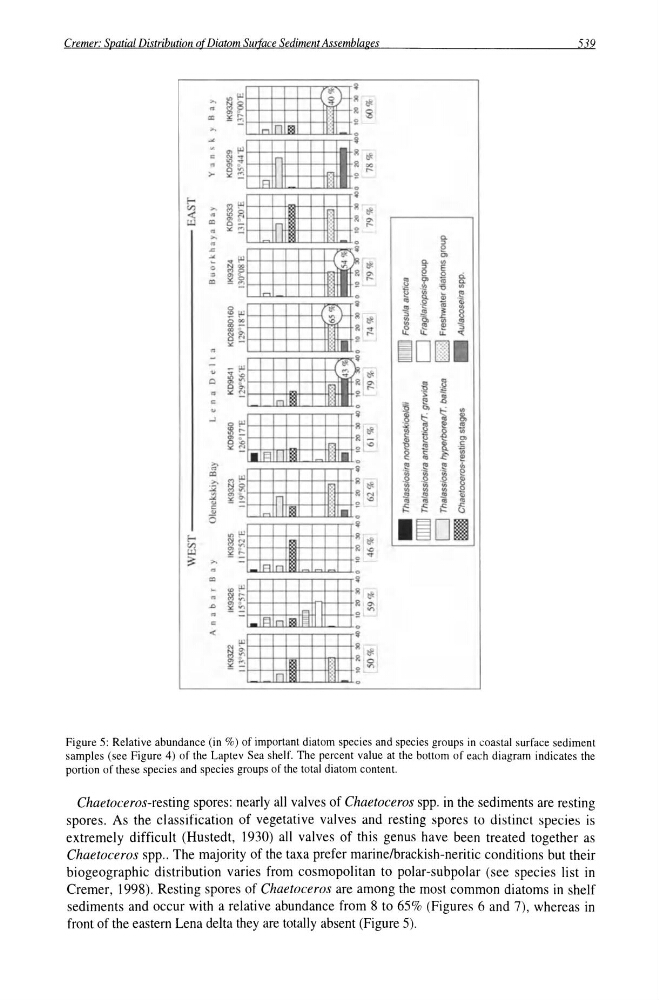
Figure 5: Relative abundance (in %) of important diatom species and species groups in coastal surface sediment
samples (see Figure 4) of the Laptev Sea shelf. The percent value at the bottom of each diagram indicates the
portion of these species and species groups of the total diatom content.
Chaetoceros-resting spores: nearly all valves of Chaetoceros spp. in the sediments are resting
spores. As the classification of vegetative valves and resting spores to distinct species is
extremely difficult (Hustedt, 1930) all valves of this genus have been treated together as
Chaetoceros spp .. The majority of the taxa prefer marinelbrackish-neritic conditions but their
biogeographic distribution varies from cosmopolitan to polar-subpolar (see species list in
Cremer, 1998). Resting spores of Chaetoceros are among the most common diatoms in shelf
sediments and occur with a relative abundance from 8 to 65% (Figures 6 and 7), whereas in
front of the eastern Lena delta they are totally absent (Figure 5).
539
. ~ D m
Figure 5: Relative abundance (in %) of important diatom species and species groups in coastal surface sediment
samples (see Figure 4) of the Laptev Sea shelf. The percent value at the bottom of each diagram indicates the
portion of these species and species groups of the total diatom content.
Chaetoceros-resting spores: nearly all valves of Chaetoceros spp. in the sediments are resting
spores. As the classification of vegetative valves and resting spores to distinct species is
extremely difficult (Hustedt, 1930) all valves of this genus have been treated together as
Chaetoceros spp .. The majority of the taxa prefer marinelbrackish-neritic conditions but their
biogeographic distribution varies from cosmopolitan to polar-subpolar (see species list in
Cremer, 1998). Resting spores of Chaetoceros are among the most common diatoms in shelf
sediments and occur with a relative abundance from 8 to 65% (Figures 6 and 7), whereas in
front of the eastern Lena delta they are totally absent (Figure 5).