

Pitul1w: Archaeological Survey in Central Taymyr
461
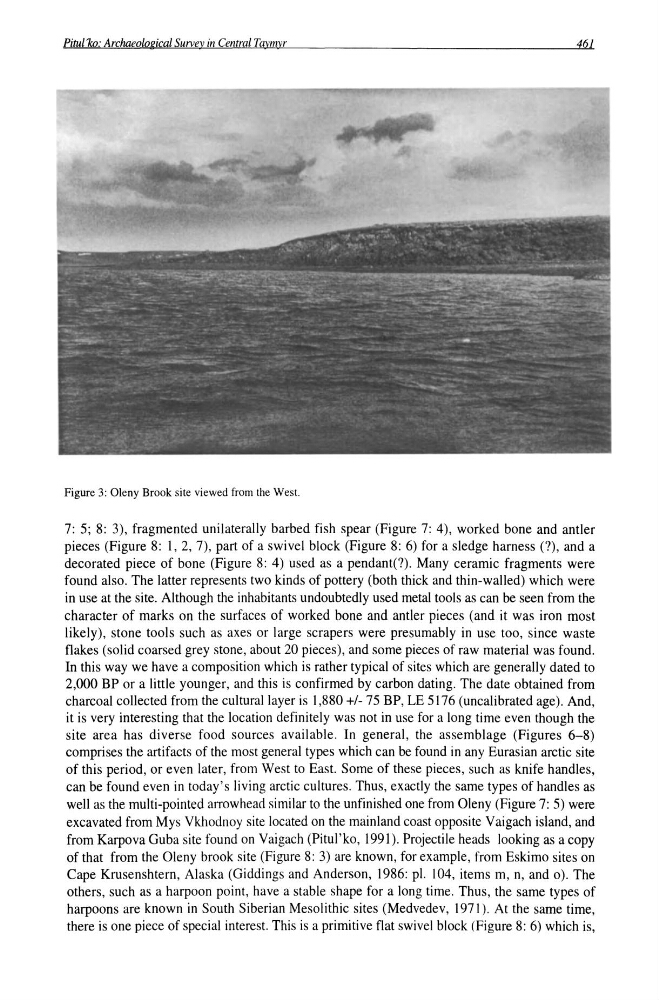
Figure 3: Oleny Brook site viewed from the West.
7: 5; 8: 3), fragmented unilaterally barbed fish spear (Figure 7: 4), worked bone and antler
pieces (Figure 8: I, 2, 7), part of a swivel block (Figure 8: 6) for a sledge harness (?), and a
decorated piece of bone (Figure 8: 4) used as a pendant(?). Many ceramic fragments were
found also. The latter represents two kinds of pottery (both thick and thin-walled) which were
in use at the site. Although the inhabitants undoubtedly used metal tools as can be seen from the
character of marks on the surfaces of worked bone and antler pieces (and it was iron most
likely), stone tools such as axes or large scrapers were presumably in use too, since waste
flakes (solid coarsed grey stone, about 20 pieces), and some pieces of raw material was found.
In this way we have a composition which is rather typical of sites which are generally dated to
2,000 BP or a little younger, and this is confirmed by carbon dating. The date obtained from
charcoal collected from the cultural layer is 1,880 +/-75 BP, LE 5176 (uncalibrated age). And,
it is very interesting that the location definitely was not in use for a long time even though the
site area has diverse food sources available. In general, the assemblage (Figures 6-8)
comprises the artifacts of the most general types which can be found in any Eurasian arctic site
of this period, or even later, from West to East. Some of these pieces, such as knife handles,
can be found even in today's living arctic cultures. Thus, exactly the same types of handles as
well as the mUlti-pointed arrowhead similar to the unfinished one from Oleny (Figure 7: 5) were
excavated from Mys Ykhodnoy site located on the mainland coast opposite Yaigach island, and
from Karpova Guba site found on Yaigach (Pitul'ko, 1991). Projectile heads looking as a copy
of that from the Oleny brook site (Figure 8: 3) are known, for example, from Eskimo sites on
Cape Krusenshtern, Alaska (Giddings and Anderson, 1986: pI. 104, items m, n, and 0). The
others, such as a harpoon point, have a stable shape for a long time. Thus, the same types of
harpoons are known in South Siberian Mesolithic sites (Medvedev, 1971). At the same time,
there is one piece of special interest. This is a primitive flat swivel block (Figure 8: 6) which is,
461
Figure 3: Oleny Brook site viewed from the West.
7: 5; 8: 3), fragmented unilaterally barbed fish spear (Figure 7: 4), worked bone and antler
pieces (Figure 8: I, 2, 7), part of a swivel block (Figure 8: 6) for a sledge harness (?), and a
decorated piece of bone (Figure 8: 4) used as a pendant(?). Many ceramic fragments were
found also. The latter represents two kinds of pottery (both thick and thin-walled) which were
in use at the site. Although the inhabitants undoubtedly used metal tools as can be seen from the
character of marks on the surfaces of worked bone and antler pieces (and it was iron most
likely), stone tools such as axes or large scrapers were presumably in use too, since waste
flakes (solid coarsed grey stone, about 20 pieces), and some pieces of raw material was found.
In this way we have a composition which is rather typical of sites which are generally dated to
2,000 BP or a little younger, and this is confirmed by carbon dating. The date obtained from
charcoal collected from the cultural layer is 1,880 +/-75 BP, LE 5176 (uncalibrated age). And,
it is very interesting that the location definitely was not in use for a long time even though the
site area has diverse food sources available. In general, the assemblage (Figures 6-8)
comprises the artifacts of the most general types which can be found in any Eurasian arctic site
of this period, or even later, from West to East. Some of these pieces, such as knife handles,
can be found even in today's living arctic cultures. Thus, exactly the same types of handles as
well as the mUlti-pointed arrowhead similar to the unfinished one from Oleny (Figure 7: 5) were
excavated from Mys Ykhodnoy site located on the mainland coast opposite Yaigach island, and
from Karpova Guba site found on Yaigach (Pitul'ko, 1991). Projectile heads looking as a copy
of that from the Oleny brook site (Figure 8: 3) are known, for example, from Eskimo sites on
Cape Krusenshtern, Alaska (Giddings and Anderson, 1986: pI. 104, items m, n, and 0). The
others, such as a harpoon point, have a stable shape for a long time. Thus, the same types of
harpoons are known in South Siberian Mesolithic sites (Medvedev, 1971). At the same time,
there is one piece of special interest. This is a primitive flat swivel block (Figure 8: 6) which is,