

Ha~edorn et at.: Lead-210 Dating and Heavy Metal Concentration in Recent Sediments
373
Based on our data, there are some arguments for an anthropogenic ongm of the
supplementary heavy metals. Besides Cu-Ni sulfides, Pb and Zn occurred in larger amounts in
the PGE deposits of Noril 'sk (Genkin and Evstigneeva, 1986) and could therefore have been
emitted as a result of mining activities. Additionally, investigations of aerosols in the Noril'sk
area from Pacyna et a!. (1985) demonstrate that Cd, Zn and Pb were emitted to the atmosphere.
According to the 210Pb dating, the onset of enrichment was about 1940. This corresponds to
the time when the Mining and Metallurgical Combine of Noril'sk was established (Kotlyakov
and Agranat, 1994). Consequently, we conclude that anthropogenic heavy metal pollution has
affected the upper 5 cm of the investigated sediments.
0
5
n
E
~
.s:::. 10
0.
III
Ql
::::I
'0
0
X
o·
N
15
0
::::I
(1)
20
0.6
0.8
8 9 10 11 12 13
Corg (wt.%)
C/N (wt. ratio)
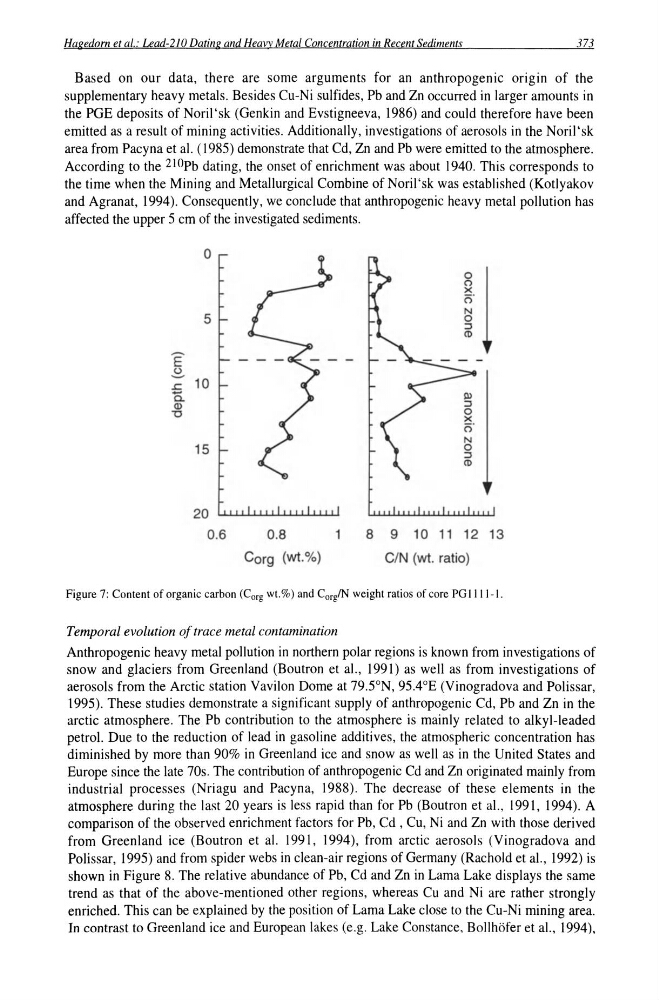
Figure 7: Content of organic carbon (Corg wt.%) and CorglN weight ratios of core PG 1111-1.
Temporal evolution of trace metal contamination
Anthropogenic heavy metal pollution in northern polar regions is known from investigations of
snow and glaciers from Greenland (Boutron et a!., 1991) as well as from investigations of
aerosols from the Arctic station Vavilon Dome at 79.5°N, 95.4°E (Vinogradova and Polissar,
1995). These studies demonstrate a significant supply of anthropogenic Cd, Pb and Zn in the
arctic atmosphere. The Pb contribution to the atmosphere is mainly related to alkyl-leaded
petrol. Due to the reduction of lead in gasoline additives, the atmospheric concentration has
diminished by more than 90% in Greenland ice and snow as well as in the United States and
Europe since the late 70s. The contribution of anthropogenic Cd and Zn originated mainly from
industrial processes (Nriagu and Pacyna, 1988). The decrease of these elements in the
atmosphere during the last 20 years is less rapid than for Pb (Boutron et aI., 1991, 1994). A
comparison of the observed enrichment factors for Pb, Cd , Cu, Ni and Zn with those derived
from Greenland ice (Boutron et a!. 1991, 1994), from arctic aerosols (Vinogradova and
Polissar, 1995) and from spider webs in clean-air regions of Germany (Rachold et aI., 1992) is
shown in Figure 8. The relative abundance of Pb, Cd and Zn in Lama Lake displays the same
trend as that of the above-mentioned other regions, whereas Cu and Ni are rather strongly
enriched. This can be explained by the position of Lama Lake close to the Cu-Ni mining area.
In contrast to Greenland ice and European lakes (e.g. Lake Constance, Bollhofer et a!., 1994),
373
Based on our data, there are some arguments for an anthropogenic ongm of the
supplementary heavy metals. Besides Cu-Ni sulfides, Pb and Zn occurred in larger amounts in
the PGE deposits of Noril 'sk (Genkin and Evstigneeva, 1986) and could therefore have been
emitted as a result of mining activities. Additionally, investigations of aerosols in the Noril'sk
area from Pacyna et a!. (1985) demonstrate that Cd, Zn and Pb were emitted to the atmosphere.
According to the 210Pb dating, the onset of enrichment was about 1940. This corresponds to
the time when the Mining and Metallurgical Combine of Noril'sk was established (Kotlyakov
and Agranat, 1994). Consequently, we conclude that anthropogenic heavy metal pollution has
affected the upper 5 cm of the investigated sediments.
0
5
n
E
~
.s:::. 10
0.
III
Ql
::::I
'0
0
X
o·
N
15
0
::::I
(1)
20
0.6
0.8
8 9 10 11 12 13
Corg (wt.%)
C/N (wt. ratio)
Figure 7: Content of organic carbon (Corg wt.%) and CorglN weight ratios of core PG 1111-1.
Temporal evolution of trace metal contamination
Anthropogenic heavy metal pollution in northern polar regions is known from investigations of
snow and glaciers from Greenland (Boutron et a!., 1991) as well as from investigations of
aerosols from the Arctic station Vavilon Dome at 79.5°N, 95.4°E (Vinogradova and Polissar,
1995). These studies demonstrate a significant supply of anthropogenic Cd, Pb and Zn in the
arctic atmosphere. The Pb contribution to the atmosphere is mainly related to alkyl-leaded
petrol. Due to the reduction of lead in gasoline additives, the atmospheric concentration has
diminished by more than 90% in Greenland ice and snow as well as in the United States and
Europe since the late 70s. The contribution of anthropogenic Cd and Zn originated mainly from
industrial processes (Nriagu and Pacyna, 1988). The decrease of these elements in the
atmosphere during the last 20 years is less rapid than for Pb (Boutron et aI., 1991, 1994). A
comparison of the observed enrichment factors for Pb, Cd , Cu, Ni and Zn with those derived
from Greenland ice (Boutron et a!. 1991, 1994), from arctic aerosols (Vinogradova and
Polissar, 1995) and from spider webs in clean-air regions of Germany (Rachold et aI., 1992) is
shown in Figure 8. The relative abundance of Pb, Cd and Zn in Lama Lake displays the same
trend as that of the above-mentioned other regions, whereas Cu and Ni are rather strongly
enriched. This can be explained by the position of Lama Lake close to the Cu-Ni mining area.
In contrast to Greenland ice and European lakes (e.g. Lake Constance, Bollhofer et a!., 1994),