

202
Land-Ocean Systems in the Siberian Arctic: Dynamics and History
sampling. Samples of the Khatanga were collected at the end of July, three weeks after ice
breakup.
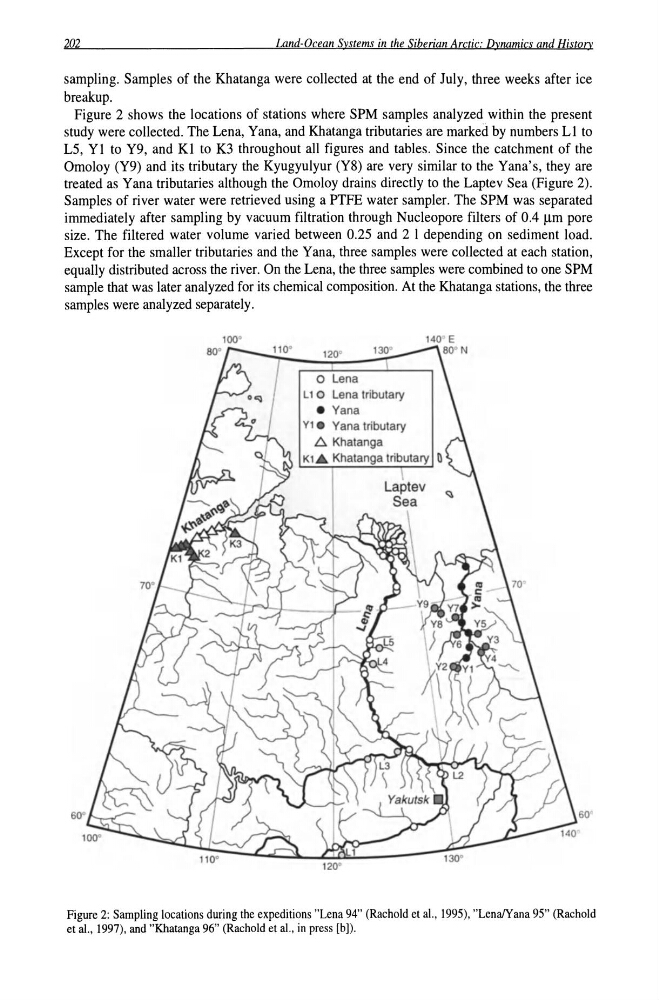
Figure 2 shows the locations of stations where SPM samples analyzed within the present
study were collected. The Lena, Yana, and Khatanga tributaries are marked by numbers Lito
L5, YI to Y9, and Kl to K3 throughout all figures and tables. Since the catchment of the
Omoloy (Y9) and its tributary the Kyugyulyur (Y8) are very similar to the Yana's, they are
treated as Yana tributaries although the Omoloy drains directly to the Laptev Sea (Figure 2).
Samples of river water were retrieved using a PTFE water sampler. The SPM was separated
immediately after sampling by vacuum filtration through Nucleopore filters of 0.4 11m pore
size. The filtered water volume varied between 0.25 and 2 I depending on sediment load.
Except for the smaller tributaries and the Yana, three samples were collected at each station,
equally distributed across the river. On the Lena, the three samples were combined to one SPM
sample that was later analyzed for its chemical composition. At the Khatanga stations, the three
samples were analyzed separately.
100·
60·
120·
o lena
L 1 0 lena tributary
• Yana
VI. Yana tributary
L:::. Khatanga
KIA. Khatanga tributary
120·
60
Figure 2: Sampling locations during the expeditions "Lena 94" (Rachold et aI., 1995), "LenaIY ana 95" (Rachold
et aI., 1997), and "Khatanga 96" (Rachold et aI., in press [b)).
Land-Ocean Systems in the Siberian Arctic: Dynamics and History
sampling. Samples of the Khatanga were collected at the end of July, three weeks after ice
breakup.
Figure 2 shows the locations of stations where SPM samples analyzed within the present
study were collected. The Lena, Yana, and Khatanga tributaries are marked by numbers Lito
L5, YI to Y9, and Kl to K3 throughout all figures and tables. Since the catchment of the
Omoloy (Y9) and its tributary the Kyugyulyur (Y8) are very similar to the Yana's, they are
treated as Yana tributaries although the Omoloy drains directly to the Laptev Sea (Figure 2).
Samples of river water were retrieved using a PTFE water sampler. The SPM was separated
immediately after sampling by vacuum filtration through Nucleopore filters of 0.4 11m pore
size. The filtered water volume varied between 0.25 and 2 I depending on sediment load.
Except for the smaller tributaries and the Yana, three samples were collected at each station,
equally distributed across the river. On the Lena, the three samples were combined to one SPM
sample that was later analyzed for its chemical composition. At the Khatanga stations, the three
samples were analyzed separately.
100·
60·
120·
o lena
L 1 0 lena tributary
• Yana
VI. Yana tributary
L:::. Khatanga
KIA. Khatanga tributary
120·
60
Figure 2: Sampling locations during the expeditions "Lena 94" (Rachold et aI., 1995), "LenaIY ana 95" (Rachold
et aI., 1997), and "Khatanga 96" (Rachold et aI., in press [b)).